This story was originally reported by Candice Norwood of The 19th. Meet Candice and read more of their reporting on gender, politics and policy.
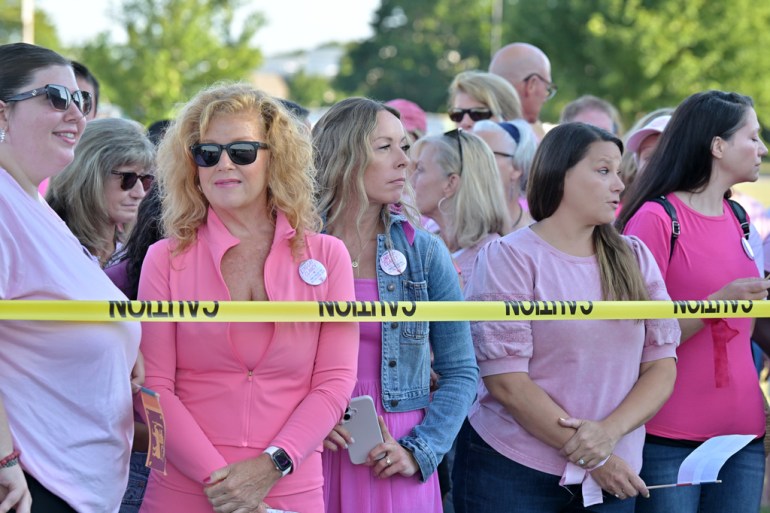
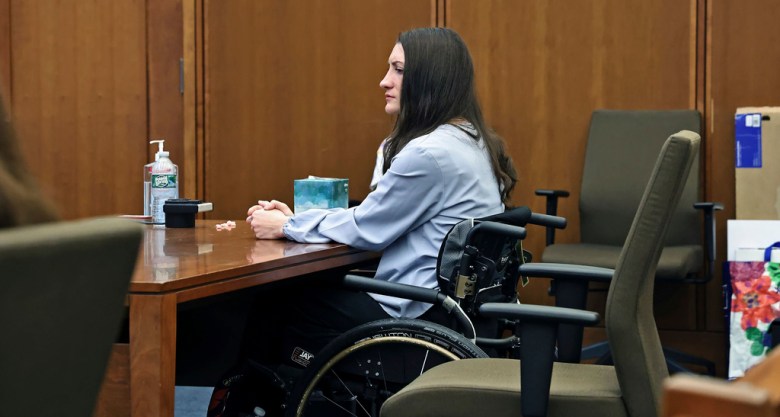
The nearly six-week murder trial for Lindsay Clancy, a woman accused of strangling her three children before attempting to kill herself in 2023, has been a fixture for women across the United States. Some gathered inside and outside the courthouse in Plymouth, Massachusetts, to show support for Clancy. Others posted videos on social media detailing their opinions on the case or sharing the ways Clancy’s story resonated with their own.
Clancy’s defense team had argued that the former labor and delivery nurse should not be held criminally responsible for the deaths of her children because she had been experiencing postpartum psychosis, a life-threatening medical condition that alters a person’s perception of reality after childbirth. About 1 to 2 in every 1,000 people experience postpartum psychosis after giving birth, research shows.
Her lawyers said Clancy sought extensive treatment that included, according to court testimony, more than a dozen visits with multiple psychiatric and medical providers and prescriptions for 13 different medications in the four months leading up to the killings.
On Friday, Judge William Sullivan said he would declare a mistrial after the jury deliberated for more than 30 hours over nearly seven days and could not reach a unanimous verdict because of a lone holdout. The judge then gave Clancy’s defense attorney Kevin Reddington one hour to file an emergency stay with a higher court — which would temporarily pause the ruling — before the judge would dismiss the jury.
Clancy’s difficult medical history — and the ultimate tragedy of three young lives taken too soon — has elevated a very different version of motherhood from the perfectly curated school lunches and multi-thousand-dollar birthday parties that flood women’s social media feeds. For many, the Clancy trial has become a mirror reflecting their own difficult, uncomfortable and sometimes scary experiences with motherhood. For others, it has sparked debates about race and privilege, as well as questions about which groups of mothers receive sympathy.
“There’s so much pressure to be this ideal mother that’s White, heterosexual, able-bodied, upper class,” said Margaret M. Quinlan, a professor at the University of North Carolina at Charlotte. “So, the media fury around this that we’re seeing online is less about the verdict and more about defending motherhood itself.”
Mental health concerns come with stigma and gaps in care
The corner of the internet dedicated to the Clancy case includes hundreds of thousands of TikTok videos, Instagram reels and posts to message boards like Reddit. It is an overwhelming stream of daily updates on the trial from true crime influencers, heated arguments over whether Clancy killed her children at all, videos of mothers holding their crying children with the words “Same, Lindsay” on the screen, and a viral reenactment of an unproven conspiracy theory featuring Bratz dolls in a shoebox replica of the crime scene.
In the midst of that noise, some women posting online are sharing a real truth: mothering in America is hard, and mothers experiencing mental health concerns often lack community spaces and grace from the public to speak about it openly.
“I had no sense of reality,” one woman said in an August 21 TikTok video discussing her postpartum psychosis. “I thought that I was either a prophet or Jesus trying to heal people.”
“I did not understand that I was sick and needed help,” she continued. “You don’t know when you’re hallucinating that you’re hallucinating, at least in my experience. I thought it was all very real.”
This mother got the care she needed and, she remarked, has been doing well in the year since. But for other women and postpartum people, multiple factors can affect access to treatment, said Elizabeth DeVore, clinical assistant professor at the University of Michigan, where she works as a reproductive psychiatrist.
Insurance coverage is frequently a first barrier, DeVore said. For example, before 2021, federal law required pregnancy-related Medicaid coverage for patients only for up to 60 days after childbirth. The American Rescue Plan passed by Congress and signed by President Joe Biden in 2021 gave states a new option to extend postpartum Medicaid coverage to 12 months after childbirth.
Still, physicians may not have the training to properly identify postpartum mental health conditions even if the new parent has the necessary insurance coverage, DeVore said. Recent studies suggest that only between 5 and 13 percent of pregnant people were being screened for depression, and only 4 to 9 percent of postpartum people were being screened, DeVore said. Even for those who do get screenings, only about half receive follow-up care.
That leaves many postpartum parents in the dark as they try to grapple with caring for a newborn on top of trying to understand their anxiety or depression without adequate resources.
There’s also the shame.
Postpartum parents manage a complex web of emotions — from excitement to fears about their child’s health and happiness and worries that they are not good enough parents. Those with anxiety and depression may also feel guilt under the weight of society’s expectations, which demand that parents think or behave in specific acceptable ways.
“I think one of the hardest things about being a new mother with a mental health condition is that oftentimes you have these sort of layers that stack up on each other,” DeVore said.
“There’s a lot of pressure and a lot of conflation between varying degrees of mental health conditions, and I think all that like guilt and shame makes it a lot harder to tell your loved ones that you’re struggling and to reach out for help,” DeVore said.
The rise of internet culture and the volume of social media depicting picture-perfect parenthood have exacerbated these feelings.
Mothers often compare themselves to what they see online, according to research from Ciera Kirkpatrick, an assistant professor of advertising and public relations at the University of Nebraska-Lincoln, who has studied how idealized portrayals of motherhood on social media influence the mental health and well-being of new mothers. Videos with more realistic discussions about the anxiety, resentment or loneliness that can come with motherhood help them feel more confident and less alone in their experience, she said.
These factors help explain why thousands of women have become invested in Clancy’s case. Researchers told The 19th that the unsettling details offer an opportunity for people who may not feel supported or heard after giving birth to find community online and voice their frustrations. Many also see the trial as an example of injustice in the court system, a controversial point for those who argue that the volume of support for Clancy overshadows the reality that three children were killed.
Race influences if and how mothers receive sympathy
For others following the case, Clancy’s trial cannot be divorced from conversations about race, class and a longstanding frustration with the amount of media and public attention given to crime cases that center White women.
One creator on TikTok who said she has a background in criminal public defense stated that she is encouraged to see the Clancy case activate White women to look for injustices in the criminal legal system — and she does not want those efforts to end there.
“What bothers me about all of this support for Lindsay is the fact that this support is selective. Black mothers are mistreated by police, and the system, and the judges and doctors.” She encouraged people to become “court watchers,” groups of trained volunteers who attend court proceedings and document potential inequities they observe.
On TikTok and Reddit threads, women have brought up the case of Latarsha Sanders, a Massachusetts mother and a Black woman convicted in 2022 of killing her two sons. Sanders’ defense team argued that she was not criminally responsible for the killing of her children because she experienced a psychotic break — a similar argument made by Clancy’s lawyers. The charges brought against Sanders came from the same district attorney’s office prosecuting Clancy, and the same judge presided over both women’s trials.
Sanders was convicted of two counts of first-degree murder; in Massachusetts, each count carries a mandatory life sentence. But then last month, the state’s supreme court ordered a new trial on the basis that the jury in her first trial did not have access to her full psychiatric history because the trial judge had ruled some of her medical records inadmissible.
Danielle Slakoff, a criminologist who analyzes the intersection of race and gender in media coverage of crime, said research indicates that women of color who commit crimes tend to be portrayed more frequently as bad people or bad mothers. Meanwhile, the public tends to have more sympathetic justifications for White women who commit crimes, depicting them as if they are driven by a circumstance out of their control, including mental health concerns, rather than being “bad” as a person, Slakoff said.
Slakoff has observed a similar tone in the coverage and conversations about Clancy’s case. “This is an important opportunity to talk about mental illness, to talk about postpartum depression, postpartum psychosis. I think that’s all very true,” she said. “I do also think that it’s worthy of taking a step back to ask: ‘What are the factors that play into why this is getting so much attention?’”
She and other researchers noted that discussing the Clancy trial is complicated and multiple things can be true at once. Women encounter systemic barriers that take a toll on their health and quality of life. And in many cases, society overlooks the ways women of color can experience the weight and stigma of these challenges more harshly.
They expressed hope that the spotlight on the real impacts of these inequitable systems is not lost in the true-crime-style attention on Clancy’s case.
“This case is exposing long-term trends about mental health, medical expertise, the expectation of mothers to be perfect, self-sacrificing, self-resilient,” Quinlan said. “A guilty or not guilty verdict doesn’t really resolve the larger issue that’s resonating with so many women online.”