


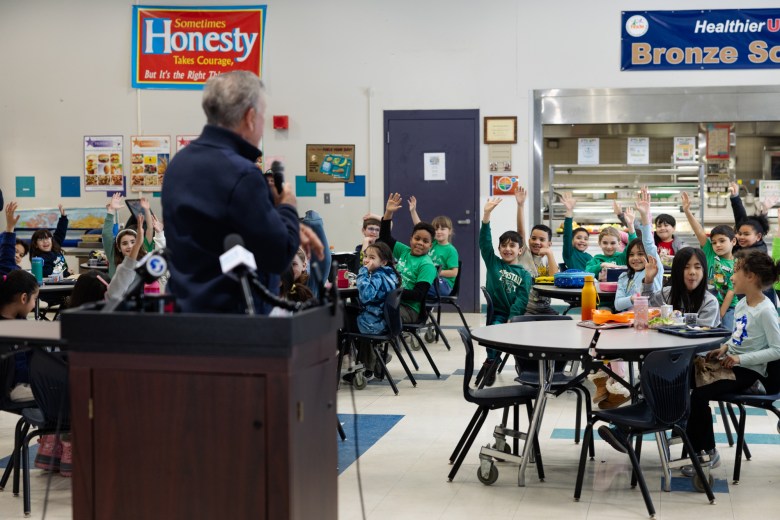
Lt. Gov. Susan Bysiewicz told Connecticut superintendents on Tuesday the Lamont administration wants free breakfasts and lunches for all public school students by next year.
Legislators in the General Assembly called for exactly that during the 2026 legislative session, but the proposal didn’t make it into the final budget. What did was a narrower $12 million proposal from Gov. Ned Lamont: free breakfasts for all, and free lunches for students currently paying a reduced price.
“The governor and I are looking forward next year to add universal lunch, as well,” Bysiewicz told school leaders, drawing applause. “Because our students can’t learn without food in their stomachs.”
Schools have long offered free meals to students who qualify, but proponents of universal programs argue the restrictions on eligibility create problems. Some students from low-income families avoid taking free meals out of shame; if everyone eats for free, proponents say, that stigma goes away. Other students come from families that don’t qualify but are still struggling financially; with universal free meal programs, that’s no longer an issue.
Further complicating matters is the erosion of SNAP benefits since the passage of 2025’s One Big Beautiful Bill Act. Enrollment in SNAP is one way families qualify for free school meals, and losing SNAP eligibility can bump families off the free meal list. A July report found nearly 18,900 Connecticut children have lost SNAP benefits since the bill was signed into law.
Bysiewicz told The Connecticut Mirror that concerns about affordability are a factor in the universal lunch conversation.
“It’s a major priority for the governor and I to lower costs for families, and if families don’t have to worry about providing breakfast and lunch for their kids, that’s a big thing,” Bysiewicz said.
The state’s free breakfast program is now in effect, though just weeks into the school year, it’s too early to say what kind of impact it’s having or how well that $12 million allocation is covering the cost. Bysiewicz said the administration still has to work out what adding universal free lunch would cost the state, too, before announcing a concrete proposal.
The Republican challenger in this year’s gubernatorial election, Sen. Ryan Fazio, expressed surprise that the Lamont administration is signaling a desire to pursue universal free lunches.
“I guess I would ask what his rationale is,” Fazio said.
He expressed a degree of skepticism toward the idea, though he said he’s open to proposals.
“I’m for free and reduced [price] meals for … low and middle-income students. I don’t want middle-class taxpayers paying to subsidize the meals of millionaires’ kids,” Fazio said.
Bysiewicz said she hopes this year’s successful passage of the universal breakfast program will make it easier to get a lunch program over the finish line in 2027.
“Sometimes it takes good ideas a little while to happen, and sometimes good ideas happen in phases,” she said.
