For nearly four decades, Malcolm and Margaret Winkley have run a pair of nonprofits in Connecticut that serve individuals with developmental disabilities.
And over the course of those 40 years, the husband and wife used their authority over the two organizations — and the taxpayer money they received — to amass millions of dollars’ worth of real estate.
As the founders and directors of Brian House Inc. and Adult Vocational Programs Inc., the couple helped decide where to house dozens of people who were in the nonprofits’ care, and they frequently arranged for those individuals to move into group homes they personally owned.
Between 1983 and 1990, the Winkleys licensed eight different houses along the lower Connecticut River Valley, in Haddam, Chester, Lyme, Deep River and East Haddam.
Audits, contracts and other records show the couple held the titles for those group homes, while the nonprofits used state and federal funding to pay the taxes, insurance and mortgages on those properties.
That arrangement was specifically called out in an ethics opinion in 1999. State officials ruled the setup was a “direct conflict of interest” under Connecticut’s laws, and they argued it allowed the couple to use their authority over the nonprofits “for their own financial gain.”
Even so, state officials never required the Winkleys to change the ownership structure for the group homes, and they allowed the couple to retain control of the properties as the state paid off all of their mortgage loans.
Now, as Margaret Winkley prepares for retirement, she is looking to cash in on those taxpayer-funded investments by selling off the homes and other related properites.
We, as a state government, should not be in the business of allowing folks to profit in the millions like this.
State Rep. Michelle Cook, D-TOrrington
Officials with the Connecticut Department of Development Services said Winkley, who took the operations over following her husband’s death in 2017, sought the state’s permission in 2019 to sell the eight group homes back to the nonprofits she runs.
The agency rejected that plan, however, because it would have required the state to pay for those properties for a second time.
“They were expecting to have (the state) pick up the cost,” said Kevin Bronson, the agency’s spokesperson. “DDS has not heard anything since.”
The state’s denial was a setback, but according to communications reviewed by the Connecticut Mirror, it has not stopped Winkley from exploring other avenues to a sale.
An email that was sent to the nonprofits’ employees last October shows Winkley — who also goes by Peggy — announced plans to donate three of the properties back to the organizations.
At the same time, she and the nonprofits’ boards of directors floated a proposal that would free up the five other houses that Winkley still owns by moving roughly 28 residents out of those homes.
“The administrative leadership team is currently assessing the needs of the individuals, planning for potential moves into more supportive or in some cases less restrictive environments,” the email said. “The team is exploring options for opening additional homes to replace the remaining homes owned by Peggy Winkley.”
The three houses Winkley donated to the nonprofits are worth roughly $1.1 million, according to appraisals. Meanwhile, the properties she held onto are estimated to be worth well over $2 million, according to property records reviewed by the CT Mirror.
‘Extremely problematic’
Winkley, who is 73, argued that she and her family should be allowed to profit from the other homes, which have doubled in value in recent decades.
“I kind of look at it as a win-win,” Winkley told the CT Mirror in an interview. “I believe that the state of Connecticut has done very well with Brian House and the Winkley family.”
“I know that we’ve saved Connecticut a ton of money,” she said. “So the citizens of Connecticut can be, you know, kind of grateful that we have been part of helping the disabled.”
Still, Winkley and the staff at the nonprofits insisted that no final decisions have been made regarding the five group homes she owns. And they argued that any decision that is made will be based on what is best for the nonprofits, their employees and the current residents of those homes.
“Although there is not an actual timeline for when we’ll be moving the individuals out (if we decide to) of Mrs. Winkley’s homes, I can assure you that it won’t be any time in the near future,” said Michael Boileau, the nonprofits’ chief financial officer.
“Mrs. Winkley won’t sell any of her properties until the individuals are out of the homes. She has been in this game for almost 40 years and would not pull the rug from under the vulnerable population we serve,” he added. “Serving these individuals has been her passion; she dedicated a lifetime to it.”
If the other properties are sold, it would further reduce the number of group homes available in Connecticut at a time when the state is already struggling to find enough housing and care for people with developmental disabilities.
State lawmakers and disability advocates are confused about why the state allowed the Winkleys to personally own the properties for decades, and they are deeply concerned about how a potential sale could affect the people who are currently living in the group homes.
Rep. Michelle Cook, who has been a member of the Connecticut Legislature's Human Services Committee for 14 years, called the Winkleys' ownership of the homes "extremely problematic," and she said she intends to speak with legislative leaders, Gov. Ned Lamont and Attorney General William Tong about the family's plans to sell the homes.
"We, as a state government, should not be in the business of allowing folks to profit in the millions like this," said Cook, D-Torrington. "That is just unconscionable to me when you recognize that all of the folks in these homes could feasibly be on the street if they are not successful in relocating them."
"This angers me," she said.
Deborah Dorfman, the executive director for Disability Rights Connecticut, said she was surprised that DDS officials allowed the situation to get to this point, in which the state could potentially lose several group homes.
"It's very, very troubling that this has happened and this is ongoing," she said. "It's sounds like they are just allowing it to happen even when there was an ethics finding."
Pioneers
The Winkleys got their start in the group home business around the same time that Connecticut and other states began to move people with developmental disabilities out of centralized institutions and back into their communities.
Financial records show the Winkleys formed both nonprofits in 1983. Brian House was set up to serve as the group home operator, and Adult Vocational Programs, or AVP, was used to coordinate day programs, which allow individuals to gain employment in their communities and learn job skills.
The Winkleys were “pioneers” in creating private group homes in Connecticut, the nonprofits' staff said, and the couple offered some of the first opportunities for people to move out of the large state-run institutions, which were often criticized for their poor living conditions.
But from the start, the nonprofits and the Winkley family operated in tandem. The nonprofits were in charge of caring for the disabled individuals, but the Winkleys made the decision to personally own the properties where those people would be housed and cared for.
One by one, the family purchased the eight colonial, cape and split-level homes and transformed the properties into group home settings.
“The Winkley family moved five times in total, living in four of the homes while they were renovated, furnished and licensed, and moving out as residents and staff moved in,” the nonprofits’ website explains.
That setup allowed the nonprofits to get their start, but it also starved the organizations of any long-term financial resources they could use to help fund their ongoing operations. That was something the state ethics office warned about in 1999.
"Rather than having the private provider buy these homes and build equity by paying the mortgage, the executive director and his wife retained ownership and built equity for themselves," state ethics officials explained.
Up until last year, Brian House and Adult Vocational Programs didn’t have any hard assets of their own, outside of the furniture in the homes and the vans that are used to shuttle residents around.
The two nonprofits received millions of dollars in revenue from the state in past years, but according to the annual audits, they couldn’t even qualify for a line of credit from a bank on their own.
Winkley, who currently collects an executive salary of more than $137,000 per year, said all of the homes were purchased under her and her husband’s name because of the financial realities they faced in the early 1980s. The banks, she claimed, wouldn’t lend to the nonprofits.
The family backed the loans and opened the homes, she added, as a “favor” to the state.
“We were helping out the state of Connecticut. We weren’t having influence over anything. We were just doing what they asked us to do,” Winkley said. “The state wasn’t willing to buy these houses. The state wasn’t willing to put down the deposits.”
Related parties
The group homes aren’t the only examples where the Winkleys intertwined their personal affairs with the nonprofits.
The audits for the two organizations are filled with other mentions of “related party transactions.”
The audit reports highlight, for instance, how the two nonprofits posted the collateral for a private loan that enabled the Winkleys to buy a 2,737-square-foot office building in Haddam.
The couple rented that office space back to the organizations for $43,884 per year, according to the annual audits. The nonprofits also paid the taxes and insurance on the property.
That business deal started in 1987, according to Winkley, and continued until roughly a year ago, when the nonprofits’ employees were moved out of that office and the building was put up for sale for nearly $350,000.
Winkely said she was uncertain whether she would share any of the proceeds from that sale with the nonprofits.
"You know, I don't know," she said. "I hadn't really thought of that."
"The office is empty. There is nobody there," she added. "So what am I going to do with it? It doesn't make sense to keep it empty and vacant. So I'm going to sell it."
The Winkleys also have a long-running arrangement in which the individuals who are served by the nonprofits work at another property the family owns in East Haddam. That work primarily involves the disabled individuals cultivating vegetable gardens, which the nonprofits operate as part of the day programs.
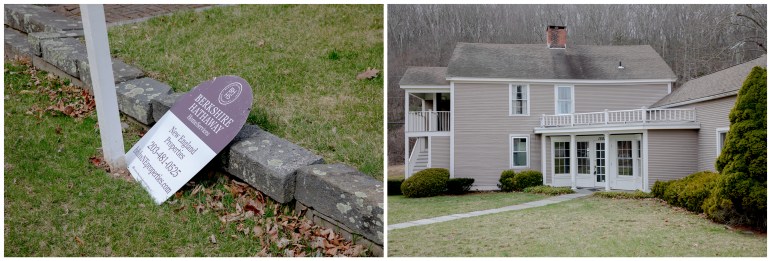
But it also includes those workers landscaping the grounds, shrubbery and flower gardens surrounding the Winkleys’ personal residence, a 4,410 square-foot colonial-style home that was first built in 1786.
That relationship was not disclosed in the annual audits for the nonprofits prior to 2019, and when it was finally recognized, the auditors noted that it was an informal business deal.
“AVP does not pay rent for the use of the property, but in exchange, maintains the property at no charge,” the audit said. “No value has been assigned to this arrangement.”
More recently, that historic home has been transformed into a side business for one of the Winkeys’ sons, who rents out part of the 15-acre estate as a wedding venue and event space for corporate retreats.
Photos on Facebook show the company, Smith Farm Gardens, began hosting weddings and events at the property in 2018. The company's website boasts about the gardens, flowers, orchards and "expansive lawns" the work crews maintained.
But according to the audits, the wedding business didn't start paying the nonprofits for those landscaping services until the 2020 fiscal year.
The staff at Brian House and AVP emphasized that the disabled individuals who maintain property have always been paid for their work.
Winkley argued it has been beneficial for her family's personal property and their finances to be interwoven with the nonprofits.
“Brian House needed the Winkley family to survive,” she said. “They wouldn’t have been in business. It wouldn’t have existed without the Winkley family.”
“We’re a family that has high moral standards. We have high ethics,” she added. “And again, the state of Connecticut is lucky to have us.”
'Grandfathered in'
Connecticut has laws and regulations that are meant to prevent the executives, directors and owners of private group homes from enriching themselves off the public money they receive.
The legislature passed laws, for instance, that limited the amount of taxpayer money that can go toward executive salaries at private group homes. DDS also has a special ethics committee, which is supposed to police business deals for potential conflicts of interest.
But according to state officials, none of those rules prohibited the Winkleys from owning the eight group homes that state taxpayers financed.
In fact, a state contract from 1995 shows Connecticut officials specifically authorized the nonprofits to pay for the eight homes using state funding as long as the family only charged for the taxes, insurance and monthly mortgage costs on those properties.
The Winkleys relied on that contract for decades as they used government funding to pay down their loans and build up millions of dollars in equity in the eight properties.
That contract remained in force even after the Connecticut Office of State Ethics denounced the arrangement in 1999 and encouraged state officials to prevent similar conflicts of interest in the future.
“The state basically gave their blessing. We were grandfathered in,” said Boileau, the nonprofits’ chief financial officer. “The state never had any complaints about anything.”

The 1995 contract spelled out specific rules for the eight group homes and how they would be paid for. The agreement ensured the payments to the Winkleys would shrink once the mortgage loans for those properties were paid off, which happened in 2014.
Yet one question was not addressed in that document: Can the Winkleys sell the homes and profit from the state-funded properties?
Winkley suggested there is nothing prohibiting her from from selling the five homes that she retained control of. And she argued that her family deserves the proceeds from those properties, since the state prevented them from earning any extra profits in the past through rent.
“All they paid for these homes was a pittance,” she said. “I think that, you know, the state has had a pretty good bargain there.”
The issue, according to Winkley, comes down to a question of fairness.
“What is fair? That’s what I wrestle with,” she said. “I want to give back. I want to give back more than I take.”
An ongoing shortage
The potential loss of five group homes could seriously affect dozens of individuals and families who are currently on a waiting list for state support.
That statewide backlog has persisted for years as the demand for state-licensed group homes and other facilities outpaced the available spots in those settings.
At the end of last year, state records show hundreds of developmentally disabled individuals in Connecticut either weren’t receiving any state support or were in need of additional resources.
Of that group, DDS estimated that roughly 290 people would like to find an opening in a group home or another shared-living arrangement.
Christina Hall, who is in line to replace Winkley as next executive director of Brian House and AVP, said the information that was shared with the nonprofits' staff last October gave the false impression that they had already decided to move residents out of the Winkleys' five remaining group homes.
Hall said the nonprofits are exploring “more desirable” living arrangements for the more than two dozen residents in those homes. But she said those considerations are being made based on the needs of those individuals, not Winkley’s retirement plans.
As a result, none of the residents in Winkley's five remaining group homes have been informed that she is considering selling the properties.
“I don’t want to concern people unnecessarily, or let them think it’s going to happen tomorrow,” Winkley said. “We would inform people and give them enough notice.”
In the meantime, many of the homes are undergoing significant renovations and repairs, including the replacement of at least two septic systems.
All of that work, according to an internal email, is being paid for through the nonprofits' new line of credit.