


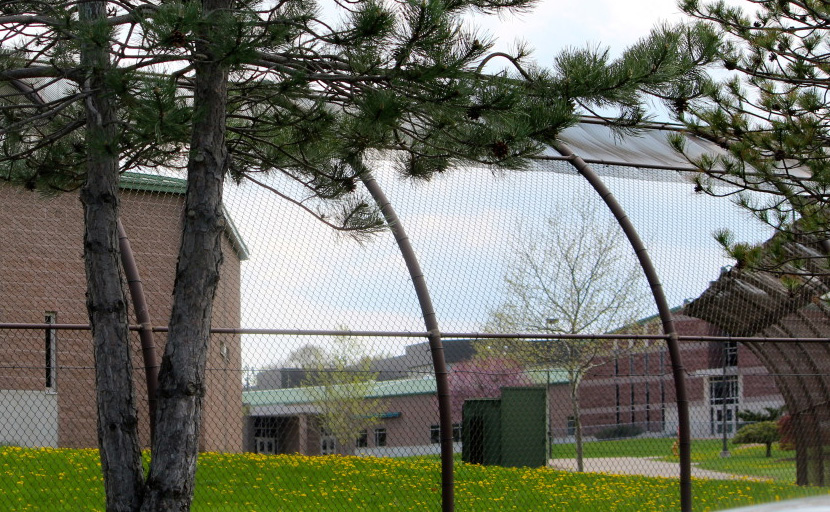
A debate is roiling today over whether to maintain or close the Connecticut Juvenile Training School (CJTS) and its neighboring girls’ Pueblo Unit. In state after state, such discussions focus on momentary events rather than systemic dysfunction. But CJTS and Pueblo should close, and their children should be placed into community programs or small, neighborhood-based facilities precisely because the conditions there are typical, not extraordinary.
Institutions of this sort, by their very nature, inevitably depersonalize children, engender abuse and fail to address public safety. I know because I used to run one.
When I became director of the District of Columbia’s juvenile corrections department, it had been under a consent decree for 19 years. The court’s oversight resulted from inhumane conditions in the Oak Hill Youth Center, the district’s juvenile prison. The nation’s capital’s juvenile facility was a place where children stuffed clothing in cracks around their toilets to keep the rats out of their cells and where beatings by staff were commonplace.
I was the 20th director of the department during that time. No one had been able to reform that prison, and I did not expect to be an exception. I did some immediate harm reduction by getting rid of “bad apples” who beat or sexually abused youth or sold them drugs. But I knew that this behavior could not occur without the complicity of the “whole bunch” who would outlast even the most reform-minded administrator.
Surprisingly, many of my staff struck me as decent human beings, who would never tolerate such abuse in their communities. But it is impossible to lock another human being in a cell and still see him fully as human. A body of research stretching back decades shows that an erosion of compassion is inevitable toward those we label as “inmate” and lock up out of sight.
Ultimately, I closed Oak Hill in 2009. The district created more community-based programs to support and supervise kids, opened a much smaller, non-institutional facility for those who needed secure confinement and retrained the staff to be counselors instead of just “turn-keys.” Although, at the time, many warned that we needed more capacity, that facility has a fair number of empty beds right now, I am happy to say.
The year before Oak Hill closed, 51% of its residents were reconvicted of new offenses within a year of release; the year after Oak Hill closed, only 35% of youth in our replacement facility were reconvicted of new offenses. That is not an anomaly. The Pew Charitable Trusts recently reviewed the research on juvenile prisons and found that they fail to prevent reoffending and, in some cases, increase recidivism.
My experience was similar in New York City as Mayor Michael R. Bloomberg’s Probation Commissioner. State and city officials partnered in an initiative entitled “Close to Home,” nearly eliminating sending city youth to upstate juvenile institutions by expanding community programs, reserving confinement for high risk/severity youth and confining those youth in small homes near their communities. The initiative was partly in response to a Department of Justice investigation finding that New York’s juvenile prisons were brutal environments, where children were seriously injured in restraints used to enforce discipline.
Since 2007, New York State has closed 23 facilities – mostly due to the reduction of youth incarcerated from the city – and the city’s juvenile arrest rate has plummeted by more than half. The decline in arrests accelerated following the bi-partisan passage of Close to Home in 2012.
No one is a fan of youth prisons, yet doomsday predictions inevitably ensue when someone suggests closing one. Typical arguments include that alternatives are too expensive or that they jeopardize public safety. On the contrary, incarceration is the single costliest and least effective response to delinquency and has been proven to do nothing to prevent re-offending while often spiraling into brutal conditions.
Connecticut has rightly been called a leader in juvenile justice for getting 16- and 17-year-olds out of adult courts and prisons. In raising the age, Connecticut designed a safe, cost-effective and more rehabilitative system for thousands of young people. Surely, it can come up with a solution for the few hundred who go through CJTS and Pueblo each year.
Vincent Schiraldi is a senior research fellow directing the Program in Criminal Justice Policy and Management at Harvard Kennedy School.