


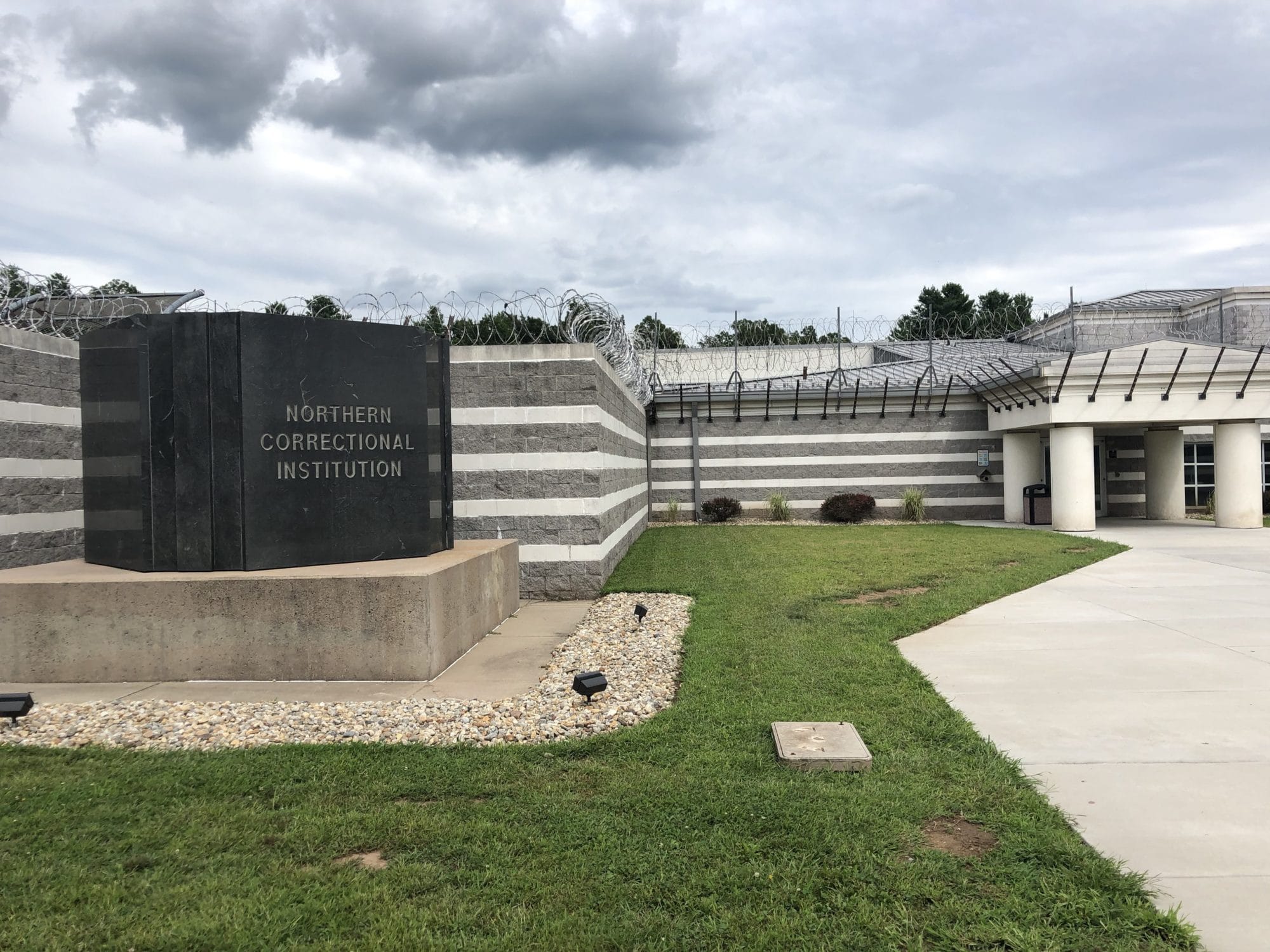
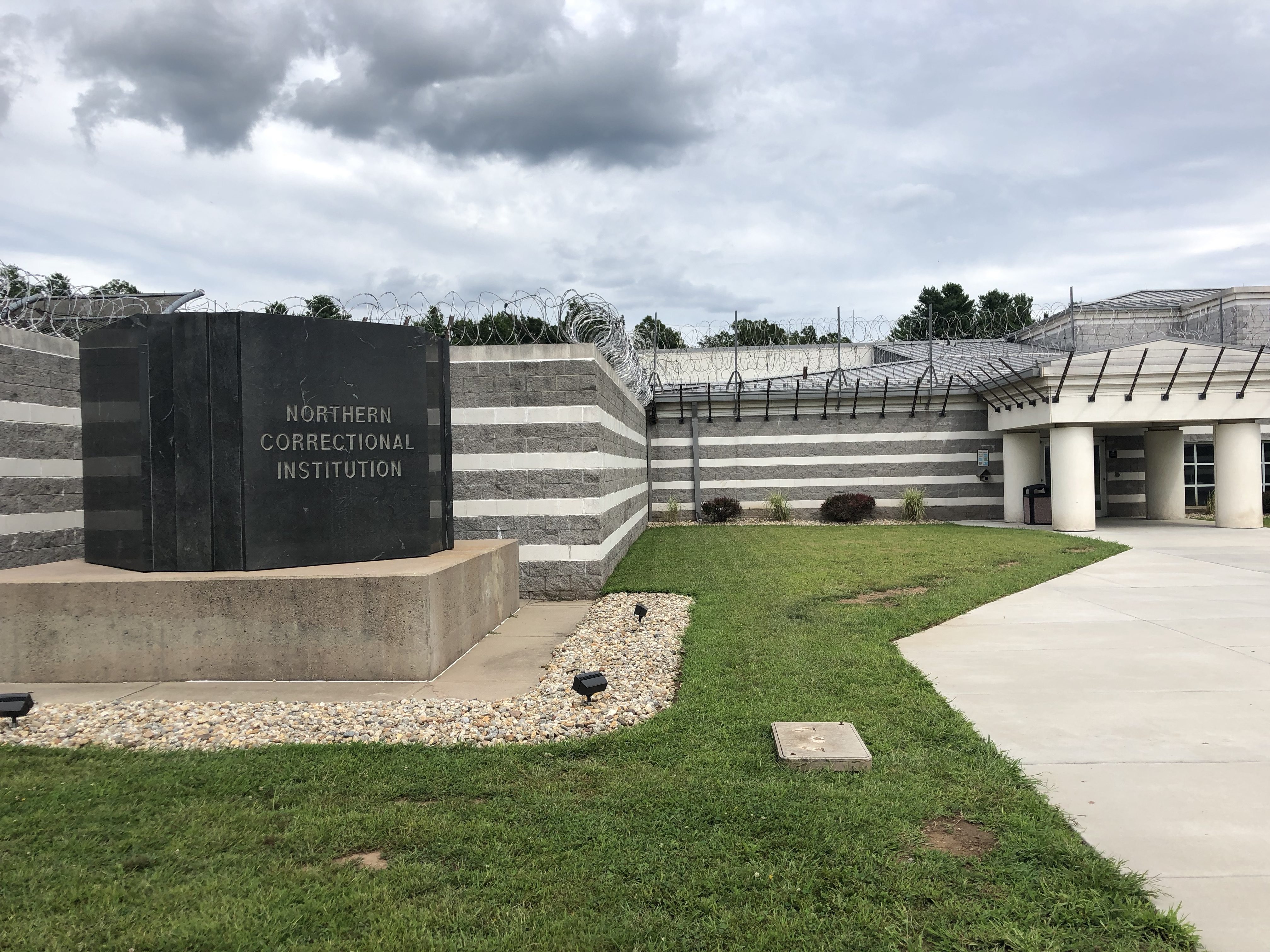
The air trapped in the narrow, windowless hallways of Northern Correctional Institution feels thick and tense. The Somers facility seems like it’s underground, its inmates even further isolated from the outside world than those incarcerated in other prisons around the state.
The gray concrete floors and cinderblock walls give Dan Barrett, the ACLU of Connecticut’s legal director, the impression he’s in a mortuary, not the state’s most secure penitentiary.
“It’s so quiet. It’s so desolate. The footsteps echo,” Barrett said. “The place is like a tomb.”
Another reason the prison feels like a mausoleum: its rapidly declining population.
The number of inmates held at Northern — a level-five maximum security facility that at one point could hold up to 584 sentenced prisoners — has fallen precipitously since January of this year. According to the Department of Correction, there were 270 inmates at Northern on January 1, 2019. By Aug. 23, shortly after two of its housing units were closed, there were just 76, a 71.8% decrease in just seven months.
Northern’s numbers mirror declining prison populations across the state, but the maximum-security correctional institution stands out because its average daily population count is the lowest of Connecticut’s 15 prisons so far in 2019.
“We don’t have any concrete plans to close a facility,” said Karen Martucci, DOC spokeswoman. The department frequently moves inmates around, Martucci explained, attempting to solve a jigsaw puzzle whose pieces are constantly changing shape according to other facilities’ security and capacity. “We’re always looking to utilize our space in a way that makes sense.”
According to figures provided by DOC, there were 139 corrections officers and supervisors for 78 inmates one day last month. That does not include medical or mental health staff assigned to the facility.
Martucci admitted that closing a prison saves money, but most of the cash spent on correctional institutions goes toward staffing. State employees will not be laid off if a facility closes, Martucci said, so the cost-savings would not be as steep as conventional wisdom would suggest.
“You just kind of shuffle the money from one facility to another,” she explained.
But it does cost more to run a higher security facility. When you have more security officers assigned to a housing unit, it’s more expensive to operate. Restrictive status housing units are staffed more heavily, Martucci said.
Northern shuttered two of its six housing units in May and June of this year, slashing its population to 76 inmates as of Aug. 23. Those prisoners were not just released because they left Northern; they were sent to DOC prisons across the state. Those who remain at Northern are people who were sentenced to death before Connecticut abolished the death penalty and then resentenced to life in prison without the possibility of release, some gang members, and individuals who assaulted staff or fellow inmates when they were incarcerated in other DOC prisons.
“It’s so desolate. The footsteps echo. The place is like a tomb.”
Dan Barrett
Legal Director, ACLU of Connecticut
The state spent roughly $17.5 million on Northern during the 2019 fiscal year, but it is still the second least expensive prison in the state, according to data provided by DOC. But declining population numbers are not as much of a financial boon as one would assume, since the daily cost of incarcerating each inmate is increasing.
Correction officers received a 9.3% raise between the state’s 2012 and 2019 fiscal years. Prices associated with sewer, water, food, and facility maintenance and cleaning supplies all rose, too, as did the cost of providing health care to inmates and administering care to aging prisoners, mirroring rising health care costs across the country.
A “monument” to another era
A relic from an era of high crime, long sentences and harsh punishment, Northern has housed inmates since 1995, when the state’s prison population was much greater and officials were having a hard time managing behavioral infractions occurring throughout the prison system.
“We had no control,” Martucci said, noting that DOC put its most problematic inmates there. “Northern came at a time when it was needed.”
The correctional institution was created as a lockbox for people deemed “the worst of the worst,” in Barrett’s words, who needed to be kept separate from general prison populations.
“Northern reflects that philosophy, and really is a monument to the failure of that thinking,” he said.“I see Northern as the apex of a failed model.”
“I see Northern as the apex of a failed model. It’s not a place where people are going to get better.”
Dan Barrett
Northern’s claustrophobic, disorienting, single-color halls contrast with the wide, high-ceilinged, multi-colored passageways illuminated by natural lighting in MacDougall-Walker Correctional Institution, a high security facility that has the largest population of Connecticut’s prisons. MacDougall inmates can take college classes or earn their GED, or complete any of the prison’s seven vocational programs that offer valuable carpentry, barber or electromechanical skills.
The educational section of MacDougall feels more like a school than a prison. Murals line the walls inside and out of classrooms. Students smile and nod at staff they see in the hallway or from inside their classes. Administrators are working to create a “prison to work pipeline,” said Daniel Cambra, the school’s department head, by giving inmates the tools they need to succeed once they’re outside the confines of MacDougall.
Such extensive academic opportunities are not available at Northern. “It’s not conducive to rehabilitation. The programming is very specific to deal with circumstances that led to them getting there in the first place,” Former DOC Commissioner Scott Semple said.
“Northern, it’s real hard to describe, but it’s not a place where people are going to get better,” said Barrett.
Northern’s warden, Giuliana Mudano, took over the prison’s top job in April. She said she hopes to change its culture and provide more meaningful programming for its inmates, to help them get to a space where they can be housed with the majority of DOC’s inmates.
“It’s not conducive to rehabilitation. The programming is very specific to deal with circumstances that led to them getting there in the first place.”
Former DOC Commissioner Scott Semple
Until then, Mudano said, Northern offers its inmates something valuable: “It kind of gives the offender almost like a timeout from the hustle and bustle of the general population.”
Progress is often slow, but Northern’s low population gives staff the time to focus more intensely on those who are still incarcerated there, Mudano said. “It has to be baby steps, with small successes.”
Different, and changing, times
Northern’s population has been in flux before.
Officials removed the Chronic Discipline Program from the prison in March 2012, closing one of the facilities’ housing units. Later that spring, DOC began transferring inmates to MacDougall-Walker, leaving Northern with a projected population of 75 inmates, comprised of people on death row, held in administrative segregation, or in need of special care. On April 1, 2013, there were 88 inmates at Northern. The previous February, there were 226.
Northern’s population swung up in July 2013, when the prison started to house pre-sentenced individuals who had been issued large bonds. “This was part of an extensive restructuring plan of the entire agency, in an effort by the administration to utilize its infrastructure and available bed space to operate on a more efficient basis,” the facility’s website notes.
The population stayed relatively consistent from 2013 until this year, when the number of inmates at Northern decreased by 62% between May 1 and July 1, after the two units were closed.
Northern’s declining population might be partially due to a bill passed in 2017 that scrutinized the use of administrative segregation, a type of restrictive housing that keeps inmates separate from their peers.
“The threshold is fairly high to be placed in administrative segregation,” Martucci said. “We do take a much harder look than maybe we did years ago.”
According to numbers provided by DOC, 28 of its 76 inmates were held on administrative segregation status on Aug. 23.
Transferring those who remain at Northern to other prisons could prove particularly vexing, Semple said, because the facility houses the system’s most challenging and dangerous inmates.
“You have people there that have murdered other incarcerated people. You have people there who have committed very, very heinous acts. You have people that say, ‘When I get out of here I am going to do this again,’” Semple said. “To put these folks in a general population environment probably is not the best thing from a safety perspective.”
Northern also houses a small number of inmates who will never again live outside the confines of a cell: those who were on death row before the state nixed capital punishment.
Connecticut abolished the use of the death penalty as punishment for future crimes in 2012. Three years later, the Connecticut Supreme Court ruled that capital punishment violated the state’s constitution. Death row inmates have been resentenced one at a time, destined to wallow in Connecticut prisons for the rest of their lives, or sent to prisons in other states.
State statute dictates those originally sentenced to die must be incarcerated in very specific ways. They must be kept separate from other inmates, their movements monitored, and relocated to a new cell at least every 90 days. They’re also allowed no more than two hours of recreational activity each day.
Those conditions were recently deemed unconstitutional by a federal judge who ruled that treatment amounts to cruel and unusual punishment. According to figures provided by DOC, there were nine inmates held under such “special circumstances” as of Aug. 23. One inmate still remains listed on death row, Martucci said, because they have not requested to be resentenced after the state got rid of capital punishment.
Moving the former death row inmates to another Connecticut prison would be particularly tricky, Martucci stressed. “You are going to tie up an entire housing unit for eight inmates because they cannot be held with anyone else,” she said. “That’s not a very good use of space.”
Transferring the prisoners out of Connecticut, as the state did with the two men convicted of murdering a mother and her two daughters during a 2007 Cheshire home invasion, is also challenging, as the receiving state has to agree to the swap.
“There’s plenty of requests that have gone denied on the other end,” Martucci said. “It’s not a guarantee that we can move anybody out of state.”
Barrett, who is representing an inmate who is suing the DOC over alleged substandard care of Northern inmates who suffer from mental illness, said the prison can exacerbate mental health problems.
Its disorienting architectural design, the narrow, drab hallways that feel like they’re sloping downward, its subterranean sleight of hand, makes people feel cut off from the rest of the world, and even other incarcerated people, despite that Osborn Correctional Institution is, literally, across the street.
“That has a tremendous effect on people,” Barrett said. “I think in an ideal situation there would be nobody at Northern.”
