


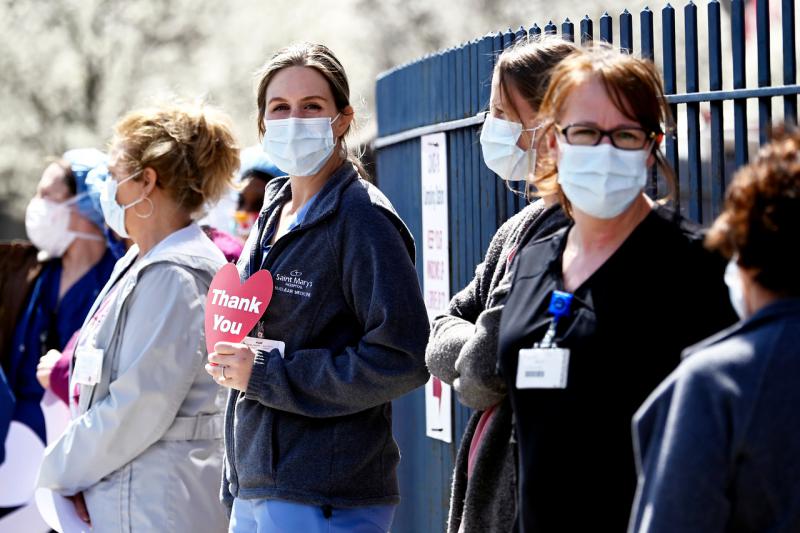
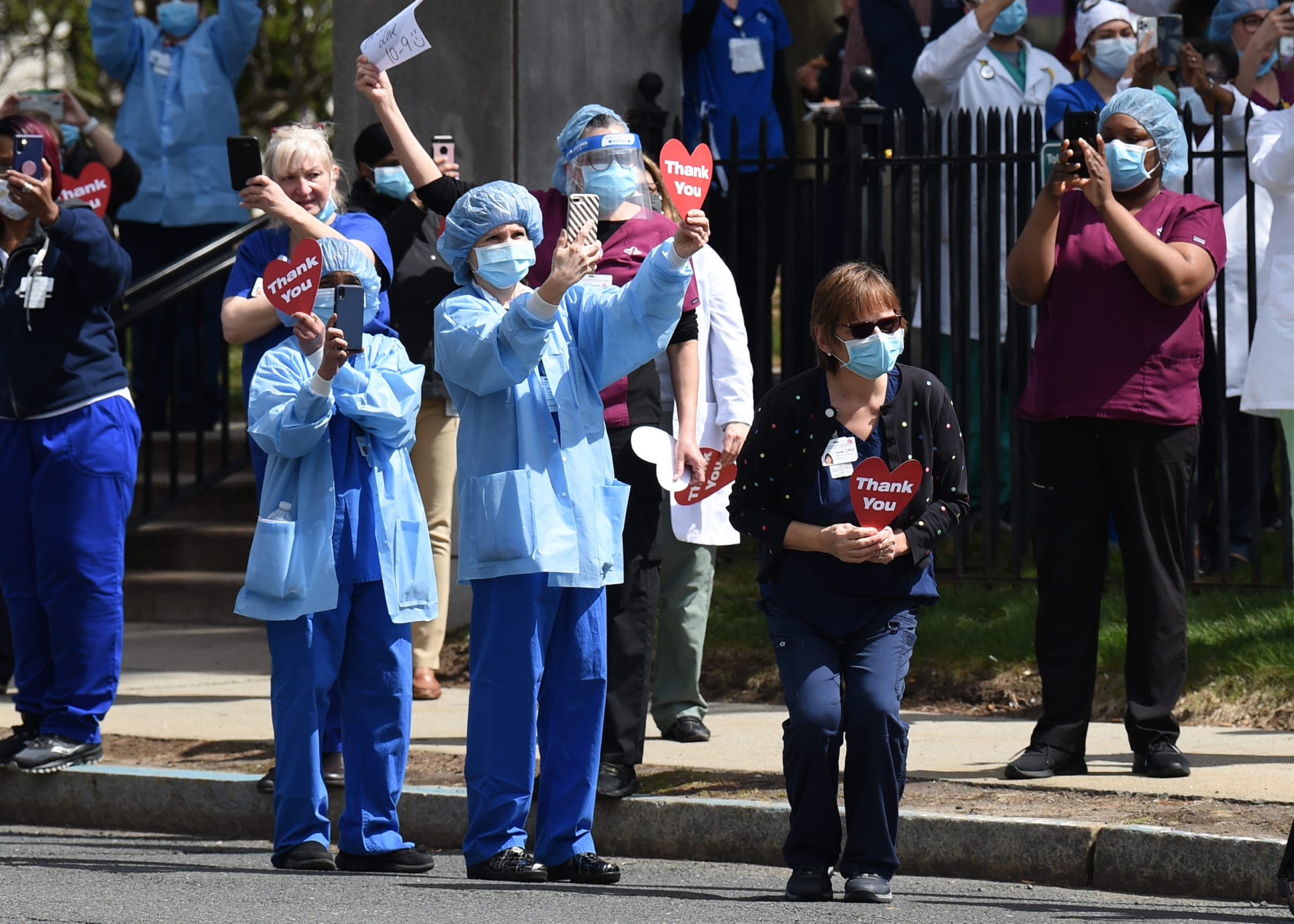
Gov. Ned Lamont signed an executive order Friday creating a presumption that workers who became infected with COVID-19 in the early days of the pandemic contracted it on the job and are eligible for workers’ compensation benefits.
Connecticut joins a growing number of states that are changing their workers’ comp regulations to account for the extraordinary circumstances of the coronavirus pandemic.
“Our state owes a debt to all of the health care professionals, grocery store clerks, and other essential workers who served vital roles during the earliest and darkest stages of this public health crisis,” Lamont said in a statement announcing the executive order. “The executive order is an important step to ensure our essential workers, who went to work while others stayed safe and stayed home, are made whole.”
The presumption applies to people who got sick with coronavirus between early March and late May.
Unions representing essential workers, which have criticized Lamont for dragging his feet on the issue, immediately welcomed the move.
Sal Luciano, President of the Connecticut AFL-CIO, said he was grateful for the order.
“Ever since Gov. Lamont signed the ‘Stay Home, Stay Safe’ executive order, we have been working tirelessly to ensure our state’s essential workers would receive health and wage benefits,” Luciano said in a statement. “It’s great to call them ‘heroes’ but this finally shows some appreciation for the exceptionally challenging jobs they were forced to do while getting exposed and potentially infected with the novel coronavirus.”
But he also signaled that the fight may not be over, saying he’d like to revisit the issue in a future special session of the legislature, “to make sure that every essential worker receives the workers’ compensation benefits they have earned without having to go through a protracted appeals process.”

Some workers have given personal testimonies about their financial hardships after contracting COVID-19 on the job.
During a virtual hearing before a legislative committee last month, Denise Rogers spoke about her experience working as a shuttle bus driver in New Haven, taking health care workers treating COVID-19 patients to and from the hospital during the height of the pandemic in Connecticut.
When she was diagnosed with COVID-19, she was hospitalized and says her medical bills after discharge were over $100,000. Her husband also got sick with coronavirus and died.
But when Rogers filed for workers’ compensation, “my employer denied my claim,” she told lawmakers, ”saying my job transporting health care workers would not cause me to [contract] COVID-19. They are wrong. Because I could not tell them exactly who I caught it from, they denied my case.”
Employers’ organizations have consistently opposed making workers’ comp claims on COVID-19 presumptive.
Joe Brennan from the Connecticut Business and Industry Association told the same hearing, such a provision could punish cash-strapped employers who made the decision to stay open for the public good.
Schools face decision on a return to the classroom
Friday marked the deadline for all school districts in the state to submit their reopening plans for the 2020-21 academic year.
State Education Commissioner Miguel Cardona and Gov. Lamont discussed some of the issues involved in returning to the classroom at an event hosted at West Haven High School.
“Don’t be shy,” Lamont told the assembled students as he solicited their views about distance learning and staying safe during classroom instruction. Some described themselves as “all Zoomed-out,” and eager for in-person instruction.
“We plan the 180 days,” said Superintendent Neil Cavallaro. “I think that’s the easiest way to plan. We can always back off, and do a hybrid model and go to distance learning. I’m more concerned with starting the year with distance learning than I was when we went out in March.”
West Haven High Principal Dana Paredes said she’s glad the state’s return plan, issued last month, has flexibility.
“I think that’s necessary, because out of all of the districts across the state, everyone has a different level of resources, different facilities, different types of students,” she said.
She said ideally she would like to return full time to school, or as close to full time as possible.
“We’re a very high-need district, 100 percent of our kids are receiving free or reduced lunch,” Paredes said. “So in order for me to make sure that all of my kids are ok, they need to be here. I like to make sure everyone’s eating, everyone’s got the services they need, and that’s really hard to do online.”
Cardona said part of the state’s plan is to have a COVID compliance liaison in every school.
“If I’m a teacher or if I’m a parent and I walk to school and I see something that makes me feel uncomfortable like people greeting students with no mask on or people cutting corners on things, the name of that person should be available,” Cardona said. “So anyone — a grandparent — can call and say ‘I’m dropping off my child, I don’t feel comfortable, what’s going to happen here?’”
Cardona told students any future decision to move school back online will most likely have to do with COVID-19 infection rates within the wider community, not necessarily if a student comes down with the virus.
Dr. Ilene Tracey, the superintendent of New Haven Public Schools sounded a note of caution, and said that because of a recent uptick in cases in the city, she’s seeing a higher level of concern about returning to school.
“When my parents or my teachers look me in the face and say, ‘how can you bring us back – what would you say if one of us die on your watch?’ Those are things we need to think about,” she said.
Her district will go with a hybrid model. Pre-K through 3rd grade will attend in-person classes for some days each week. At the middle and high school level, she said, two cohorts of students will alternate days of distance learning with days in the classroom, to allow enough space for social distancing.
“I want my kids back in school, but I want it to be safe for them,” said Tracey.
State releases latest COVID case numbers, updates business regulations
The daily update on coronavirus transmission in Connecticut saw an unusually large bump in the number of positive tests, 544 more since Thursday. But state officials said 440 of those are attributable to a delayed update from an out-of-state lab.
The lab, which state officials did not immediately identify, reported the results of 12,000 tests conducted between May 23 and July 20.
The governor’s office said 104 of the positive tests are newly reported cases, meaning that the state’s positivity rate stands at 0.79 percent for the day.
After three consecutive days of rising hospitalizations, the number of people being treated for coronavirus went down again, dropping by one since Thursday.
Three more people died of complications related to COVID-19.
The governor’s office announced updates to the state’s industry-specific rules during the COVID-19 pandemic. The changes include allowing indoor performances for the first time — except those featuring singers.
Among other updates, a confirmation that nonessential businesses have the right to refuse service to anyone not wearing a mask, and a ruling that restaurant servers are now allowed to work without wearing gloves.
Patrick Skahill and Ali Warshavsky contributed to this story.