



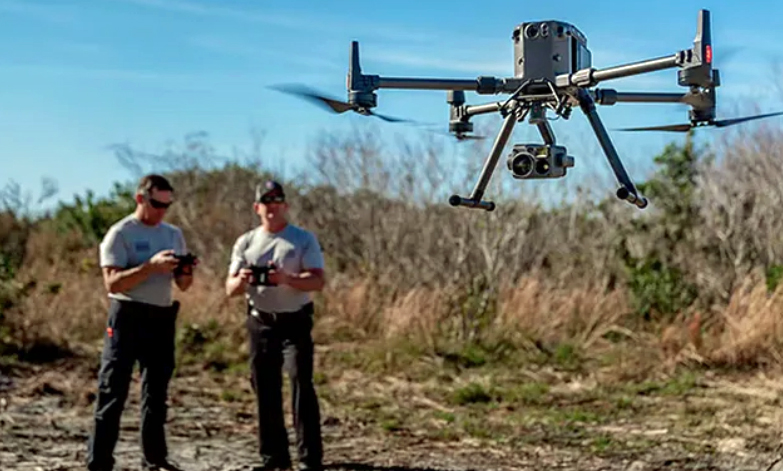
The New Haven Police Department is planning to acquire two drones and a set of GPS equipment that can latch onto cars implicated in crimes.
Police Chief Karl Jacobson and Lt. Sean Maher conveyed that update at Tuesday night’s Board of Alders’ Public Safety Committee meeting.
The department plans to purchase two Axon Air drones for $15,000, a cost that includes training. The drones would have a battery life of an hour and a half. (Axon is the same company that provides the city’s body cameras.)
Jacobson said the drones would help the department investigate crime scenes from an aerial view, search for missing people in hard-to-navigate terrain such as parts of East Rock Park, follow illegal dirt bikes, and assess hostage and active shooter situations, among other possible uses.
The department would also use the drones to monitor large-scale events like the annual Eastcoastin’ biker rally, enabling police to better coordinate resources, Jacobson said. He estimated that drone use will be implemented in mid-to-late spring of 2023.
According to Jacobson, the drone software would prevent police from deleting video footage for at least 90 days — meaning that “there’s no, ‘I went to someone’s house, looked in her house, and then deleted the video.’ ”
“We’re not going to use it to create probable cause,” Jacobson added.
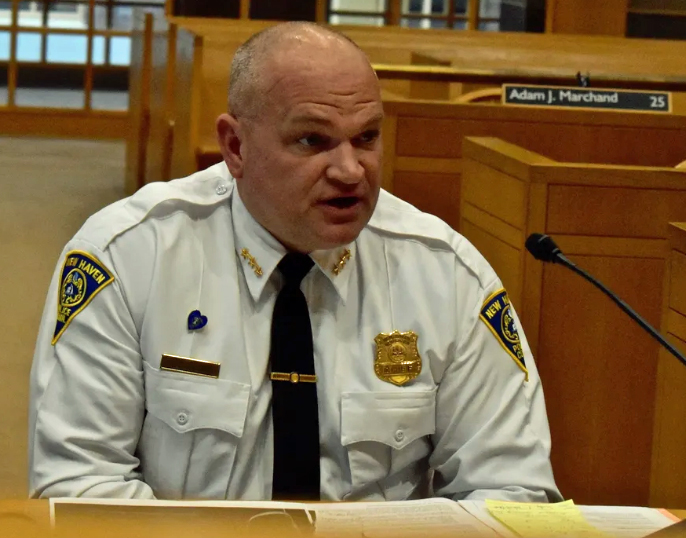
Jacobson told alders that the department will craft policies to restrict the use of the drones — with the goal of protecting civilians’ privacy and preventing people from being targeted based on race or religion — before incorporating the devices in police work. When asked after the meeting to elaborate, Jacobson said he plans to determine the policies during the coming months.
Quinnipiac Meadows Alder Gerald Antunes — a drone owner himself — asked Jacobson about Federal Aviation Administration (FAA) restrictions on the flying cameras. The issue of FAA “no-fly zones” prevented the police department from purchasing drones in 2019, when Jacobson investigated the technology as a possible tool to monitor illegal dirt bikes.
Maher replied that the department is coordinating with an FAA representative through Tweed Airport, and that in some situations, police would have to notify Tweed that a drone would be used.
The police department did not need aldermanic permission in order to move forward with the purchase; the department leaders appeared at Tuesday’s workshop simply to inform the representatives of technological upgrades.
The committee alders responded positively to the proposal.
“I’m certainly in favor of this happening,” said Beaver Hills Alder Tom Ficklin, but he noted that the use of drones could be controversial among community members wary of government surveillance.
“People will use this as a propaganda tool,” Ficklin said.
Jacobson said he plans to set up public events with demonstrations and information about the drones prior to implementing the technology.
StarChase purchase planned
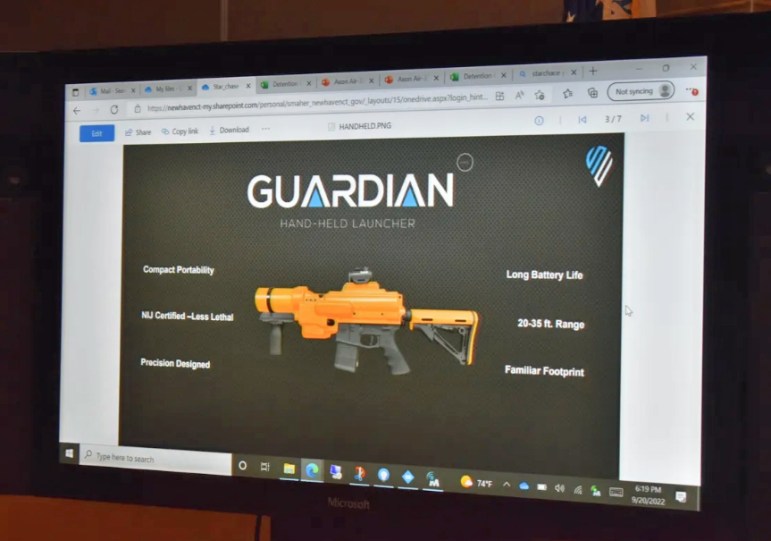
The police department will also soon adopt technology that can shoot GPS tags from cop cars and handheld launchers at moving vehicles, which the devices can latch onto and track for up to eight hours.
Jacobson, Maher, and other city staff argued that the technology, provided by a company called StarChase, will help police officers avoid high-risk, high-speed car chases.
Rather than speeding in pursuit of a wanted car, Jacobson and Maher explained, police officers would be able to simply launch the GPS tag at the vehicle; the projectile would attach to the car by glue and report the car’s location to police apps and computers. The officer who launched the tag could pause and coordinate resources with knowledge of the car’s whereabouts. The driver of the wanted car might even slow down once the police car is no longer close behind.
StarChase “allows the officers to de-escalate the situation … to take their foot off the accelerator,” said Chief of Staff Sean Mattison.
“We can slow down our thinking,” said Jacobson.
New Haven is seeking to acquire 12 StarChase devices that can shoot GPS projectiles directly from police cars, as well as two handheld devices. Every police district will have at least one StarChase car, Jacobson said.
Jacobson and Maher told alders that a forthcoming policy will require the trackers to be used only for active crimes — for instance, when officers are chasing a stolen car or a vehicle potentially implicated in a shooting — and not for surveilling people as part of a long-term investigation.
The department is contracting with StarChase for one year for an initial cost of $85,000, including the hardware, software licensing, and training. In future years, renewing the program could cost $15,000 annually, plus any maintenance-related expenses.
The police leaders said that the technology is not supposed to damage cars.
Could the technology be used to track the location of illicit ATVs and dirt bikes? asked Fair Haven Alder Jose Crespo.
“That’s a little more dangerous,” Jacobson answered. The current technology isn’t designed to safely attach to bikes, and the rider could get hurt if the bike’s motion is impaired.
Hill South Alder Kampton Singh asked about what happens when the driver of the targeted vehicle detaches and discards the GPS device.
According to Maher, StarChase has an 85 percent success rate in enabling police in other cities to apprehend suspects. If the device is detached, police can track and retrieve it until its eight-hour battery life runs out. Under the department’s contract, StarChase will replace projectiles that can’t be retrieved.
The committee alders expressed approval of the police department’s use of StarChase. “I think it’s reasonable for the public’s safety,” said Committee Chair Brian Wingate.
The department heads showed the alders a video of the technology in action.
“That’s like the Batman team!” joked Wingate.
Footage of StarChase. (Not the same video that police played on Tuesday.)