


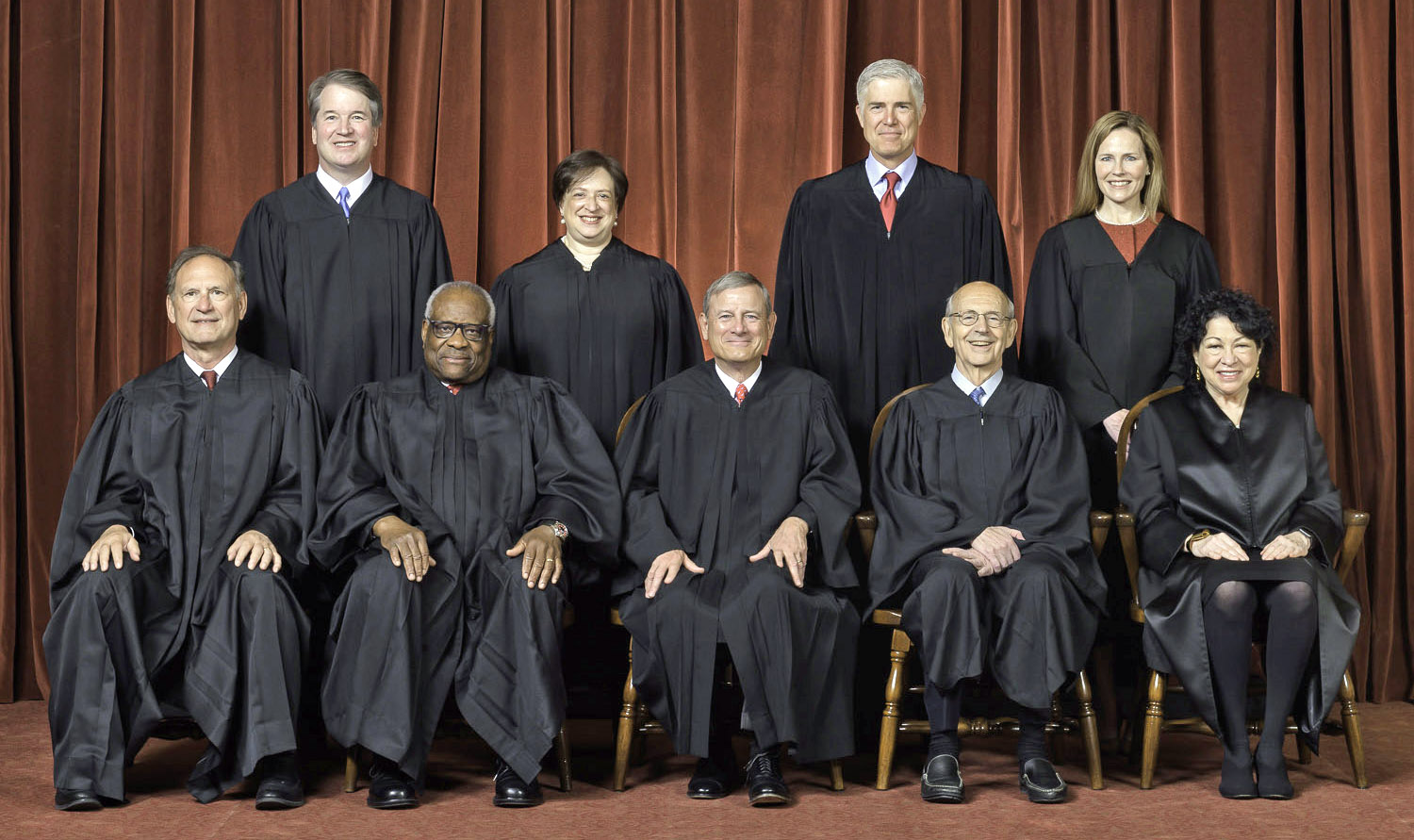
As a new Supreme Court term began last week, many Americans are still feeling the aftershocks of the last one. In its first full term with a conservative supermajority, the high court overruled Roe v. Wade, substantially expanded the scope of the Second Amendment and scaled back the barrier between church and state.
Abortion access, following the court’s ruling in Dobbs v. Jackson Women’s Health Organization, has become a legal, political and medical issue to an extent not known in decades. Lawmakers and law enforcement officials in states with restrictive concealed-carry laws are still working out how to adjust their firearms regulations in light of New York State Rifle & Pistol Association v. Bruen.
So far, the justices have agreed to hear about half the number of cases they ordinarily decide in a term, with more to be added in the coming weeks. But already the court’s docket includes major cases concerning voting rights, election law, environmental protections and the constitutionality of affirmative action. As conservatives look for cases that can continue to shift the law in their direction, liberals look with trepidation to what the court’s right wing may do next.
To get a better sense of the term to come, I spoke with Will Baude and Dan Epps, law professors at the University of Chicago and Washington University, respectively. In addition to their scholarly and teaching duties, Baude and Epps host “Divided Argument,” a podcast about the Supreme Court, which is now in its third season. What makes “Divided Argument” stand out in the crowded field of popular legal commentary is its avoidance of a preaching-to-the-choir sensibility.
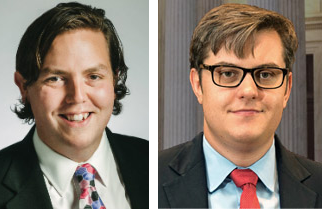
Baude and Epps disagree on much, and often quite vigorously — Baude’s views tend to run conservative with a libertarian bent while Epps’ lean liberal — but they disagree in good faith and for intellectually honest reasons. These exchanges often illuminate the deeper set of beliefs and ideological tensions that shape how we see the law.
Our conversation has been edited for length and clarity.
This term marks the first time in nearly 30 years that the court will be without Justice Stephen Breyer, and it’s Justice Ketanji Brown Jackson’s first term. That doesn’t change the court’s ideological makeup, but are there subtler ways in which this change in personnel might affect the workings of the court?
Dan Epps: Justice Breyer is a justice from the last era, where the court was divided along some lines but reached consensus in other areas and wasn’t ideologically predictable. He was somebody who got along with the rest of the justices. Justice Jackson is joining the court at a very different time, where the court is much more ideologically riven. I don’t know what that’s going to feel like for her. But I could imagine, as you see the justices from the previous era drop off, that you’re going to see a court that’s more sharply divided and less “Oh, let’s all be buddy-buddy and get along” — and not just on the law but also how the justices relate to one another. I have no reason to think that she personally is going to contribute to this. It’s more about the timing and the circumstances.
Will Baude: Even when a justice who’s routinely in dissent leaves the court — so we don’t think of it as changing the balance of power — they still have decades and decades of both institutional memory and personal friendships that affect the way the court talks about the cases, thinks about things, goes about its business. So, I think that will change in lots of little ways how the justices relate to one another. Then you never know whether there’s going to be some set of issues where Justice Jackson has slightly heterodox views that might produce a new majority. You see Justice Gorsuch and Justice Sotomayor sometimes voting together in ways people might not have predicted.
This will be Justice Amy Coney Barrett’s second full term on the Court. How have you seen her jurisprudence or her role on the court evolve since she joined? What implications does that have for this coming term?
Epps: There’s been some weird stuff. Just a few days ago, there was the Alabama death penalty thing where she was actually in dissent with the liberal justices. That was interesting, though it’s an unsigned order without reasoning, so it’s hard to know exactly what to make of it.
Baude: At her confirmation hearing, there was this concern about a law review article she wrote about Catholic judges and the death penalty and whether it implied she was going to be to anti-death penalty. Maybe that’s actually true.
Among the cases the court has taken so far, do you see any themes emerging? How do those build on or depart from the court’s areas of focus in recent terms?
Epps: It’s too early to say. But if you frame it at a high level — the law in flux, the court turning more conservative — it seems like this term is likely to be a continuation of that. Still, every time there’s a change in personnel, it’s basically a new court. The configuration changes. The dynamics change. And we’re still figuring that out.
Baude: The center of the court has changed a little bit. That means there’s a lot of cases that suddenly a lot of people don’t want to take to the court, and there are other issues where other people suddenly do want to go to the court. So, you see action on voting rights and Indian law, and of course the affirmative action cases.
One area of public focus so far is voting and election matters before the court this coming term. In Merrill v. Milligan, critics fear the justices will make it harder for plaintiffs to show that a redistricting plan dilutes the votes of racial minorities, and in Moore v. Harper, they fear the court will limit how much state constitutions and courts can check state legislatures when they enact laws that govern federal elections. Do you have a sense for where the court is heading here?
Epps: With a lot of what the court is doing, there is a pretty wide range of possible outcomes. There are some justices who seem to be interested in doing fairly consequential things in the voting rights — or lack thereof — space. But that’s also not guaranteed, so it’s very unclear.
Baude: I see these cases as a microcosm of the pattern at the court more generally. As for Merrill, we have a well-established doctrine for interpreting the Voting Rights Act, but it’s not particularly consistent with some methodological principles of this court, which is more skeptical of legislative history, more skeptical of race-conscious laws and so on. So, it’s a little unsurprising they’re going to reconsider that, and maybe dramatically. As for Moore, there’s an incredibly long, well-established practice of state legislatures being subject to their state constitutions. But that’s in tension with the constitutional text, which refers specifically to a state’s “legislature” regulating congressional elections. It’s very possible the court is going to upset that practice — either a little bit or a lot. So, we’re seeing the same willingness here as in lots of other areas of law to reconsider long-established doctrines. But the additional problem is that these are going to put the court’s legitimacy and appearance of neutrality to the test, because there’s a good chance these cases will be seen — not necessarily fairly — as part of a right-wing plot to steal America. That’s obviously a tough spot for the court to be in.
Speaking of appearances, the last term was a controversial one to say the least. Decisions like Dobbs and Bruen generated a lot of criticism, and the public approval of the court is lower than it’s been in decades — though, of course, those same rulings were cheered by many conservatives. You both clerked on the court. In your experience, to what extent do public reaction and concerns about appearances affect the justices?
Epps: Some of them definitely don’t care at all. The question is, how many — five or fewer? I don’t hear a lot of stories about, and I didn’t experience, justices saying, “Oh, gosh, this is going to make us look so bad.” But you’ve got to think that they’re all aware of it to some degree. There’s certainly good reason to think that historically the broad parameters of public opinion have imposed some restraints on what the court felt comfortable doing.
Baude: The justices are human beings in the world, so I suspect they can’t help but be influenced by these things. But I tend to think they’re influenced by them gradually and at the macro level. In any event, my prediction is regression to the mean, because not every term can have an above-average number of big, polarizing cases. After every June, it’s tempting to draw big conclusions about the direction of the court on the basis of two or five or 10 big decisions, and, of course, we all do that. But it’s easy to over-predict.
What cases that the court has agreed to hear this term have received less attention than they deserve?
Baude: It’s surprising there hasn’t been more attention to the court’s case about the Indian Child Welfare Act, a federal law on how state family law treats Native American children. The case has three or four major constitutional questions about the fundamental structure of federal Indian law. It raises federalism questions about the source of Congress’ power over Indian tribes and the ability to force states to implement federal policies. It also raises questions that go to the fabric of the whole field, such as whether regulations of Indians or Indian tribes are a form of race discrimination. Those are obviously important in their own right and also important for what they tell us about the court’s approach to big constitutional law cases more generally.
Epps: I’ll rest on Will’s submission.
What cases that the court hasn’t yet agreed to hear are you keeping an eye on?
Baude: I certainly think the court is about to wade into the constitutionality of the Texas and Florida social media laws, which impose limits on content moderation. The Florida law was struck down by the U.S. Court of Appeals for the 11th Circuit, but the Texas law was upheld by another federal appeals court, the 5th Circuit. The court has already shown some interest in these cases.
Epps: I’m sure people are wondering whether there’s going to be something new related to the ongoing investigation of President Donald Trump that will work its way to the court. I’m not sure that the special master issue is going to. It seems like the 11th Circuit smacked that down, but potentially other things like that could pop up.
Baude: If the case proceeds to the point of criminal charges against a former president, it’s easy to imagine the court feeling it has to be the one to settle it, even if the issues aren’t that thorny. It’s an unusual enough thing, and the court is still one of our more legitimate institutions.
Much remains unknown about the leak of the draft majority opinion in Dobbs. But how do you foresee it affecting the workings of the court?
Epps: You’ve got to think there are going to be some changes to internal procedures. I don’t know what those are going to look like — whether they’re going to involve physical searches when people leave the building or they’re just going to involve individual justices telling their clerks to be more secretive. Related to that, you’ve got to think there’s going to be a little bit more of a culture of distrust and anxiety in the building. I’ve got to think that’s going to change the atmosphere and the day-to-day of what it’s like to work there.
Baude: It’s also possible that this will pass. After Bush v. Gore, quite a few law clerks breached confidences and talked to the press. A few years later, everybody recognized that was a once-in-a-generation case, and what happened there wasn’t going to become the new normal for everything. It could be that Dobbs was a once-in-a-generation case.
You were both involved in President Joe Biden’s commission on Supreme Court reform, which was prompted by calls from the political left to expand the number of justices. Professor Baude, you were a commissioner; Professor Epps, you testified before the commission. The commission issued a nearly 300-page report late last year, and you all dedicated a fascinating episode of “Divided Argument” to broader reflections on the commission. Looking forward, where do you see the debate over court reform going?
Epps: It’s not going away, and I think decisions like Dobbs are going to ensure that it doesn’t go away. There was a poll that came out about five days ago — and it’s just one poll — but it said 51% of respondents favored increasing the size of the court, which is a lot more than in prior polls. That’s coupled with significantly reduced public approval for the court. In that environment — if you get to a point where a majority of Americans favor court expansion, court packing — the conversation changes dramatically. We are far from the fringes at that point, and it’s something that you’re going to see even more politicians thinking about.
Baude: One funny thing is that you don’t see a huge amount more confidence in Congress and the presidency than you do in the court. When court reform is most likely is when you have an incredibly popular Congress with a huge mandate and a court with much less of a mandate getting in Congress’ way. We’re closer to a point where none of our institutions are popular or have a mandate, which doesn’t mean court reform is not possible or maybe even good. But it’s a very different environment.
This story was originally published Oct. 5, 2022, by ProPublica.