


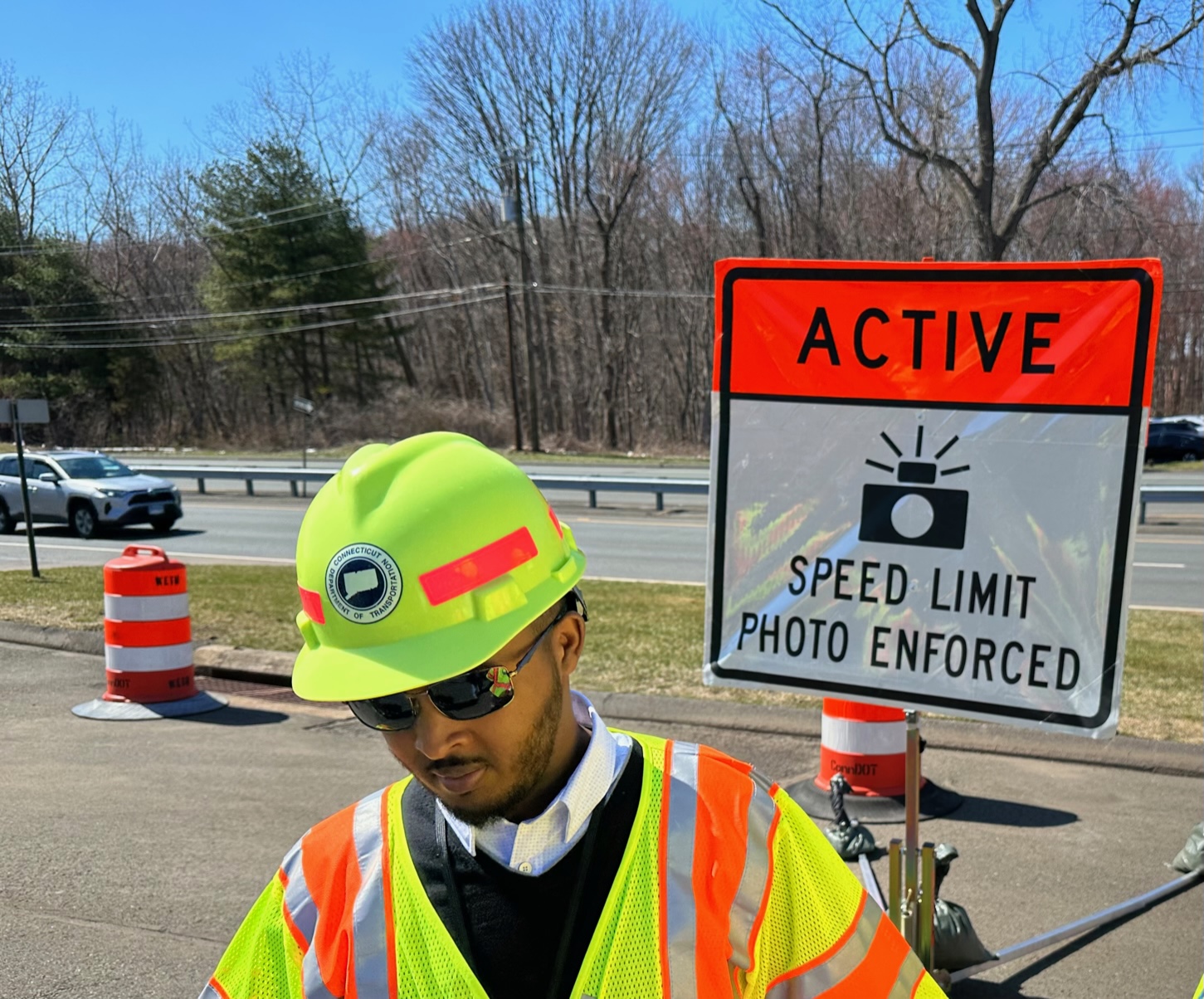
Connecticut is on pace to eclipse 300 traffic-related deaths for the third year in a row. To stem that tide, one Connecticut town is taking an action that others seem certain to soon follow.
Last week, West Hartford received funds for speed cameras to be placed at intersections notorious for traffic mishaps. This initiative comes on the heels of House Bill 5917, signed into law by Gov. Ned Lamont earlier this year, allowing cities and towns across the state to install speed cameras and so called “red-light” cameras.
[RELATED: Red light cameras in CT get Senate OK; bill goes to Lamont]
The nearly $700,000 West Hartford received was the largest share of a nearly $1.8 million dollar federal grant earmarked for six traffic safety projects statewide. West Hartford officials say they are working to choose the 15 intersections that will be fitted with red light cameras at some point in 2024.
Connecticut Transportation Institute Executive Director Eric Jackson says his group is trying to help any Connecticut town looking to install red light cameras to make the right choices.
“We’ve been working with the Connecticut DOT on projects to assist them in making determinations,” Jackson said. “We’re in the process of finalizing a tool that will allow for that type of analysis to be conducted and uniform throughout the entire state of Connecticut.”
Earlier this year, Jackson quoted a study by the Insurance Institute of Highway Safety that found red light cameras reduced crashes caused by motorists running red lights by 14% in in large cities. But, does that level of effectiveness outweigh documented incidences of red-light camera inaccuracy? For example, The Chicago Tribune found in a study that between 2013 and 2015, Chicago speed cameras issued 110,000 bogus tickets.
“I’m familiar with the Chicago Tribune piece,” Jackson said. “It seems as though a lot of the tickets that were found to be not valid were simply due to the fact that there were either signs that were confusing or the sign was obscured. I think we’re at a spot where the technology works. It just has to be deployed equitably.”
The president of the Connecticut state NAACP has recently called the equity of red light cameras into question as other, lower income Connecticut cities and towns consider this technology. Scott X. Esdaile recently wrote an op-ed about how traffic cameras have historically been put primarily in low income and minority communities.
“We’re trying to overlay a lot of these different factors that help a municipality select the best location for these types of cameras,” Jackson said, “with a focus on making sure we’re not adversely impacting underserved populations or areas.”
This story was first published Dec. 6, 2023 by Connecticut Public.