Just over 1,000 people are living outside in Connecticut, and thousands more are homeless and staying indoors, including a baby who was born to a mother living in a homeless shelter in the northwest part of the state last week, providers said Wednesday.
The latest data from the state’s By Name List, a count providers keep of people who have completed intake in the homelessness system, showed 4,224 people experiencing homelessness statewide. Just over 400 of those are children.
Providers said they’re seeing more senior citizens who have dementia or other medical needs coming into shelters, and staff need more support to help them.
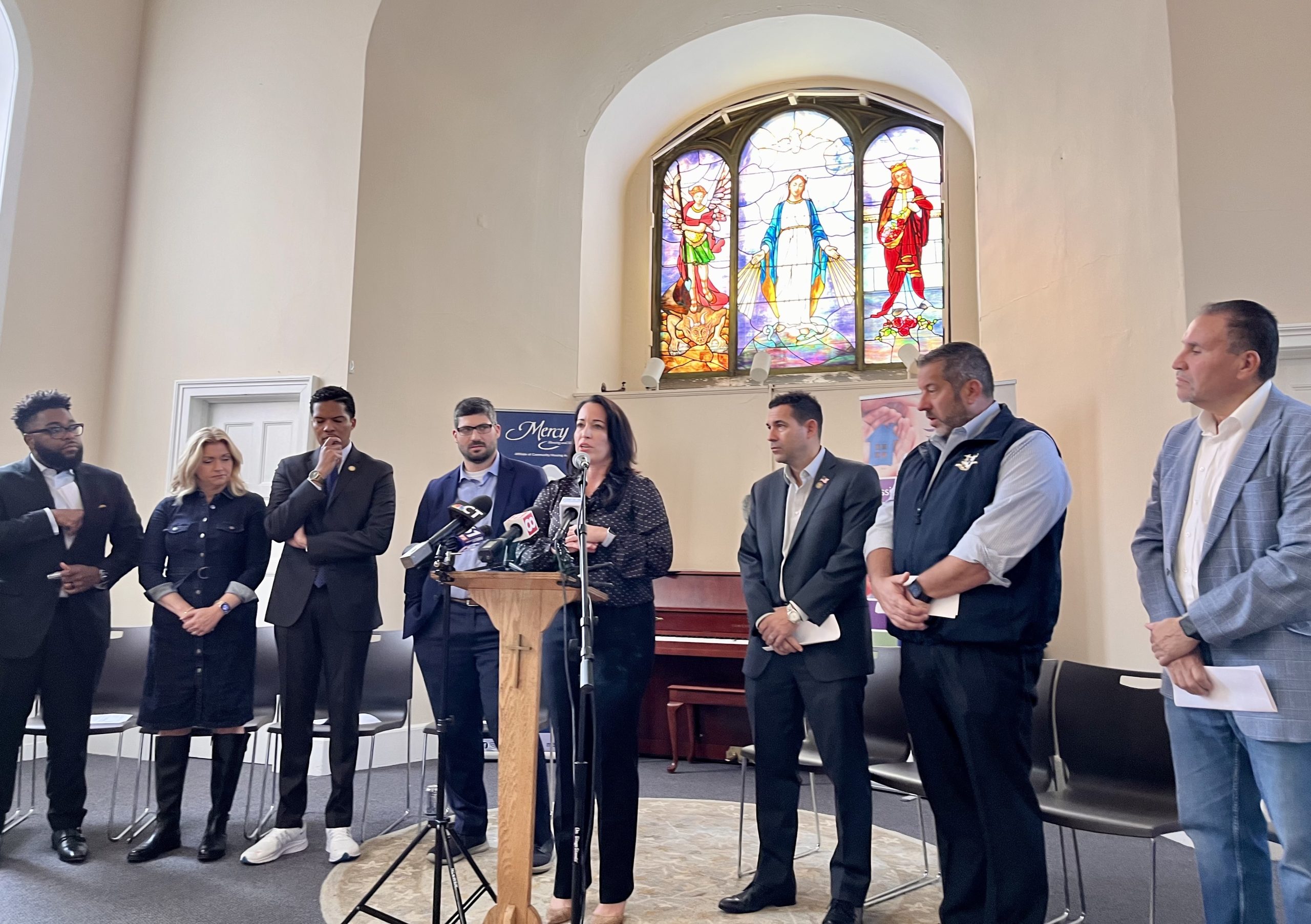
Amid these heightened numbers of people experiencing homelessness, providers and lawmakers held a press conference Wednesday calling for the legislature to allocate more money to the homeless response system. The Department of Housing announced the release of $45.8 million to various programs to alleviate homelessness on Tuesday, but providers say it’s not enough.
“In our streets, we’re seeing a rising tide of homelessness caused by an affordable housing crisis that we’re working to obviously manage as best we can,” said Sarah Fox, chief executive officer of the Connecticut Coalition to End Homelessness. “With families facing skyrocketing rents and our seniors being forced out of their housing, we have 1,000 people who today are outside. They’re cold. They’re scared. Lives are at risk.”
She added that while they’re grateful for the money DOH is releasing, they need recurring funding to address the need each winter and asked lawmakers to allocate $20 million more.
Wednesday was another in a series of conversations and press conferences providers have held over recent months to call attention to what they’ve said is a homelessness crisis. The move signals that lawmakers and advocates will likely push to address homelessness in the upcoming legislative session.
“It is unacceptable that we have encampments full of people and the only way that we can find them is by using drones,” said Rep. Corey Paris, D-Stamford.
Shelters are strained as more people fall into homelessness because of rising housing costs, they said. People are also staying in shelters longer because of the lack of housing they can afford, which keeps shelter beds full.
The entire country is dealing with higher numbers of people experiencing homelessness. The total number has increased in the United States since 2021, and was up by 12% in January compared to January 2022, federal data show.
A January count showed that there were 653,100 people experiencing homelessness on a single night in the United States, the highest number since 2007. Advocates and experts have said this is likely an undercount because the U.S. Department of Housing and Urban Development excludes people living in hotels or sleeping at friends’ or family members’ houses.
The same count found 3,015 people experiencing homelessness in Connecticut in January. The state has seen increases for the past two years after nearly a decade of declines.
“We need to do better to make sure that people have a temporary roof over their head,” said Amanda Gordon of Mercy Housing and Shelter in Hartford. “We need to make sure that there is affordable housing for everyone, not just the working poor but for everyone. And we know that that’s not the case here in Connecticut right now.”
Connecticut service providers and housing experts have said that increases in homelessness and strains on the shelter system are tied to the lack of affordable housing in Connecticut. A recent report from the Connecticut Housing Finance Authority found that the state lacks about 92,500 units of housing that are affordable and available to the lowest income renters.
Housing is typically considered affordable if people are spending about a third of their income on housing costs.
Research has tied regional differences in rates of homelessness to housing market factors such as affordability and availability of housing.
Connecticut lawmakers passed a bonding package during the last legislative session that allocated more money to building housing. State agencies are working on securing some of that money to aid projects.
DOH Commissioner Seila Mosquera-Bruno said in a press release that the department is committed to building 6,400 new units of affordable housing in the next three years.
Department of Housing
The recently announced $45.8 million from the state is in addition to the $5 million DOH had already released for cold weather services.
The largest chunk of the money — about 70% — is made up of federal funds from COVID-19 relief money and other grants. Just over 30% is state money, DOH spokeswoman Meghan Bard said in an email.
About $6.4 million of the additional money from the Department of Housing will go to the state’s regional hubs that provide intake and diversion services for people at risk of or newly homeless. The state has 12 regional hubs, including two new hubs — in Manchester and Middletown.
The hubs were established to accept walk-in appointments and referrals from the state’s 211 system.
“We know that access to resources is necessary to move people from homelessness to housing,” Mosquera-Bruno said in the press release.
DOH will work with the Department of Mental Health and Addiction Services to offer resources to people experiencing homelessness, Mosquera-Bruno said.
“Many times, individuals are experiencing mental health or addiction crises at the same time,” DMHAS Commissioner Nancy Navarretta said in the press release. “By ensuring access to same day Coordinated Access Network appointments and assessments, we can help provide people with a chance to find a safe place to stay and can prevent their situation from escalating further.”
DOH has also allocated $3.2 million to help keep people at risk of becoming homeless in their housing, $3 million to support regional Coordinated Access Networks that work together to address homelessness, $16.9 million for emergency shelters and $5 million for security deposits for people moving into housing.
Another $10.3 million is going to rapid rehousing, a program that aims to move people back into housing quickly before addressing other needs. Just under $1 million is going to permanent supportive housing programs, which provide housing for people who need ongoing services such as people with disabilities.
Legislative session
Service providers said they’re particularly concerned about the immediate safety of people who are living outside. Thursday is the longest night of the year, also known as National Homeless Persons Memorial Day.
Providers and advocates across the country hold vigils to remember the lives of people who died while experiencing homelessness over the past year. Housing instability and homelessness have been tied to worse health outcomes and lower life expectancies.
Lawmakers from both parties emphasized the urgency of the problem during Wednesday’s press conference.
“The fact that we have to have these conferences every year is a failure,” said Sen. Saud Anwar, D-South Windsor. “It’s a moral failure because none of us should be surprised that there’s a winter. None of us should be surprised that people are going to have frostbite, and they’re going to be in the hospital, in the emergency room, in the intensive care units. This is a failure of design and a failure of priorities.”
During the last legislative session advocates called for an additional $50 million for the homelessness response system, in part to annualize the cold weather funding. They received the $5 million that’s already been allocated.
Rep. Jay Case, R-Torrington, said the state should have sent out the $5 million more quickly. The state notified service providers about what portion of the $5 million they’d receive in September. Cold weather shelters typically open in November.
“They’re out in the woods or in tents,” Case said. “To me, that’s not humane. We needed to have that money earlier. Because now we are searching for shelter space to put people.”