


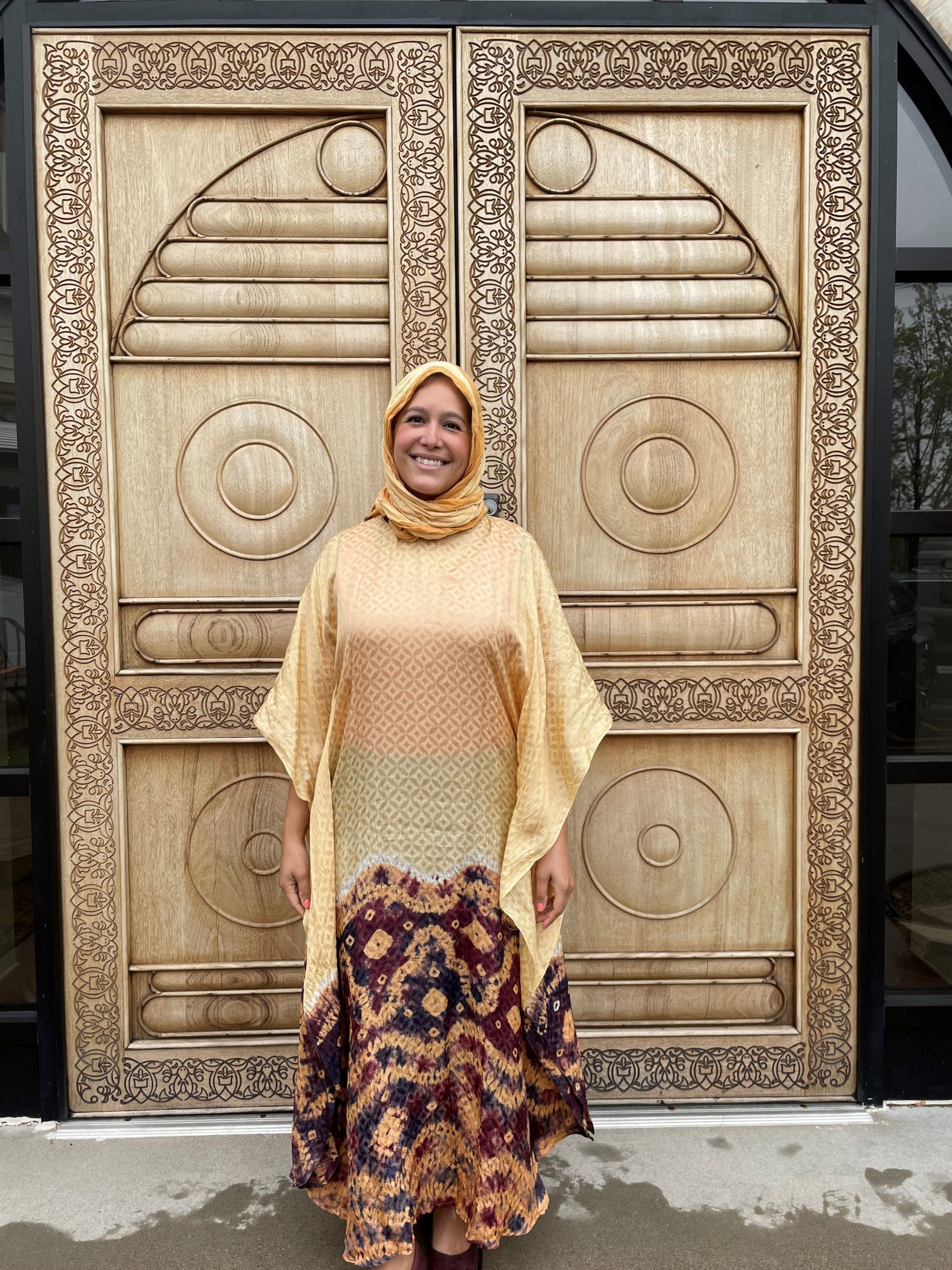
Peace, compassion, community and kindness are words I would use to express what Islam means to me.
Being raised Muslim in the United States comes with many challenges. We often strive for acceptance among peers and to be seen as loving human beings. Even though the population of Muslim-Americans has grown and mosques are more prevalent, there are underlying traumas of being Muslim in America, which have only intensified and reignited since the start of the Israel-Hamas war.
For the longest time, I saw my life in two parts: pre and post-September 11, 2001. Even before 9/11, I had the impression few people really understood what Islam and being a Muslim was. After those tragic events, terrorism, and violence became inextricably tied to being Muslim in the eyes of the public.
I was in my first few weeks of attending Berlin High School when the attack on 9/11 occurred. My family moved to a neighboring town, and I was already feeling like an alien dropped onto a foreign land. A couple hours after the attack, one of my teachers – without hesitation or even considering there may be Muslims in her class – theorized that the attack had to be perpetrated by Muslims.
I didn’t know a soul at the school and had no one to turn to. I didn’t feel safe speaking up. The only solace I found was at my mosque. We prayed and cried together. Cried for our fellow Americans who died that day, but also for our Muslim community who were targeted as scapegoats.
I am saddened to witness history repeated in how Muslims, especially young Muslims, are viewed, as the Israel-Hamas war rages on and the devastating loss of unarmed Palestinian civilians rises.

This year, we’ve seen State Rep. Maryam Khan, the only Muslim woman state-elected official in Connecticut, physically attacked and sexually harassed by a stranger on the holy day of Eid Al Fitr.
We’ve seen a 6-year-old boy stabbed to death in Chicago for being a Palestinian Muslim.
We’ve seen college students doxxed, their right to privacy completely revoked, for simply questioning U.S. military support of Israel and calling for a two-state solution.
And a few weeks ago three Palestinian college students, including one attending Trinity College, were critically injured after being shot in Vermont. One of the victims is permanently paralyzed from the chest down.
Recently, in the very town where I live, a teacher taught Farmington High School students flawed and inaccurate Palestinian history, insinuating Palestinian land was mostly in Jordan and not Israel, a notion with harmful ramifications for all young students, not merely Muslims.
This kind of hate, intolerance, and ignorance is not new for Muslim Americans to experience. In many ways, it is deja vu, the kind that makes you torn between hesitating to speak up for fear of retaliation and needing to defend your own community against biased and hateful rhetoric. Not only have I been marginalized as a Muslim, but I also have witnessed teachers creating environments that sow division and fear – not unity – as we saw in Farmington.
It should be no surprise to anyone that hate is on the rise in Connecticut. We have seen white supremacist groups, such as Patriot Front and the Nationalist Social Club, spread their propaganda through signs and mailers. In June, swastikas were scrawled over a Black Lives Matter mural in Hartford. The Council on American-Islamic Relations CT Chapter (CAIR-CT) has already documented an increase in reports of bullying and harassment in Connecticut since the Israel-Hamas war started.
According to Pew Research Center, though many Americans have a negative view of Muslims, more than 50% say they don’t know anyone who is Muslim and say they know little or nothing at all about Islam. This phenomenon leaves the necessity of defending attacks against Muslims largely on the victims and their communities.
What it meant to be a Muslim for me personally changed practically overnight on 9/11. I had to navigate between being proud of my religion and culture with learning how to fit in at a new school while also protecting my safety. Coincidentally, the mosque where I went every Sunday was in the same town where I went to school.
These two worlds couldn’t have felt more separate and closed off from each other. Little has changed. That’s neither right nor acceptable.
In order for kids to not grow up with only one side of the story, we need more educational awareness that accurately depicts the true history and context of religions and their beliefs. We also need positive Muslim characters in the media that aren’t portrayed as terrorists or animals to benefit mitigating harmful stereotypes.
Moreover, when Muslims speak out about discrimination, they need to be heard, affirmed, and supported by the greater community. Every one of us has a responsibility to fight against hatred and ignorance in all forms. Closing divisive gaps is the only way towards peace. We all have the right to be able to live, not merely survive, free of violence and harassment.
Renee Hamel is a member of the CTMirror Community Editorial Board.