



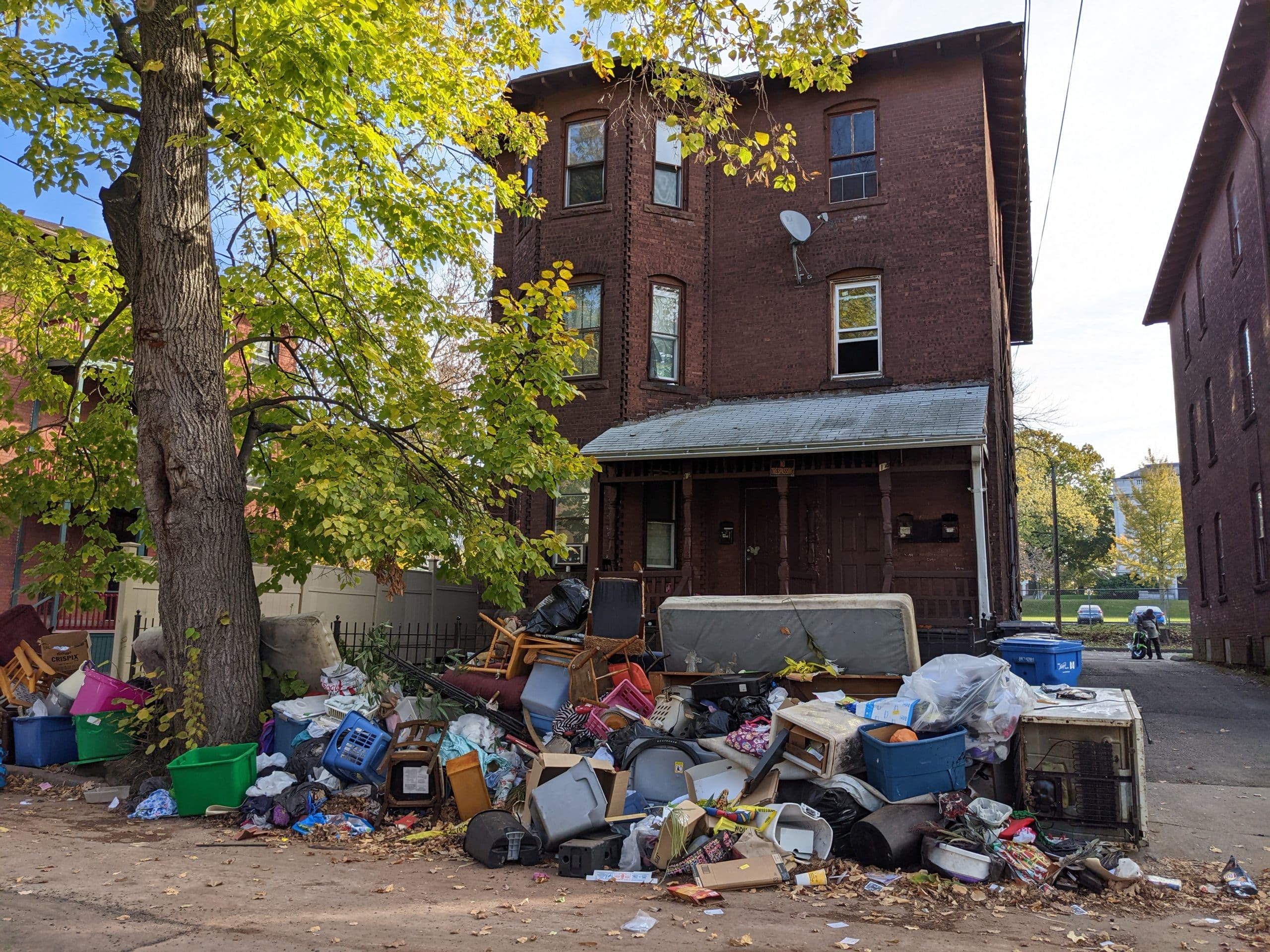
“Home is where the heart is.”
It’s where we ideally relax, and release from the outside pressures of day-to-day living. Home is supposed to be where we reflect, enjoy our family, plan our future, and maintain our prized interactions with our loved ones. In so many ways, it’s our safe haven from society.
However, in the real world, there’s no guarantee of anything. Just like there’s no guarantee you’ll get a job, or be successful in a romantic relationship, there’s no guarantee you’ll receive and maintain affordable housing.

With an already unpredictable job market, and increasing inflation, one of the biggest fears for tenants is an eviction. According to a recent report from USA Today, the hardest-hit cities in the country are seeing eviction filings increase by more than 60 percent. Data from the National Low Income Housing Coalition shows that in every state, workers must earn more than double the federal minimum wage to afford a two-bedroom rental.
Here in Connecticut, numbers from CTData.org show that from January 2021 through February 2022, there were a total of 11,781 evictions in the state. And more than 40 percent of those evictions happened in just five towns, including Hartford. In fact, Hartford had the highest eviction filing rate anywhere in the state. The poverty rate in Hartford is 28.4%, compared with a statewide poverty rate of 10%. Hartford has an estimated population of around 115,000 people. With such a small, dense population, you can see how evictions can have a huge impact on affected families and whole neighborhoods.
Evictions are increasingly becoming a normal state of affairs in the rental market.

Before we make ourselves at home, let’s ask ourselves, what exactly is an eviction? According to the Oxford dictionary, the definition of Evict is to “expel from a property, especially with the support of the law.” What that doesn’t tell you is that a prototypical eviction process usually includes a “notice to quit,” a court hearing, eviction enforcement or a “writ of execution,” and last but not least, removal by a sheriff.
We all know essentially that the biggest cause of evictions is non-payment of rent. As responsible adults, can we all state the obvious: Of course we can say, ‘budget your bills, pay your bills on time, get another job, or just live within your means.’ However, with the housing market always changing, increased rent rates, national inflation, and the always-rising cost of living, even the most well-off of people find themselves in a check-to-check mindset.
If we were to peel back the layers of financial responsibilities and priorities that are so complicated, tight, and expensive for many families, we might find that adding even a donut to our budget would make it difficult to make ends meet. In turn, this makes budgeting, and maintaining stability, an overwhelming challenge for those with the lack of sufficient resources or networks to mediate this unwanted situation.
In addition, with landlords having varying motives, many people affected by high rent increases personally feel as if landlords are intentionally aiming to gain bigger profits in the competitive housing market. Some residents will go as far as stating that landlords are using weaponizing tactics to funnel out unwanted tenants for personal reasons.
In so many ways, this speaks to our society at large creating misleading narratives surrounding hardworking individuals just trying to get by. Many landlords are out for profits and business expansion. However, to those struggling tenants, it sounds more like a process of elimination, neglect, and force. We have a pool of families feeling victimized for adapting to an ever-changing American economy.
Now that our shoes are off, let’s enter the threshold of those most affected by evictions. Evictions affect a wide range of people. It may be a single unmarried college student, or the married couple of four. I personally faced an eviction in my early twenties. Even though I was lucky enough to mediate my circumstances, I couldn’t help but to consider how much worse it would be for those single working parents with children, with no sustainable income. When the abrupt threat of eviction sets in, it can cause many mental health and wellness effects.
Some populations are perpetually affected more than others. Robert Desir, staff attorney with New York’s Legal Aid Society, tells us that rent hikes across the country are most painful for working single mothers, retirees, and people receiving disability payments from the government.
If we were to dig deeper, we’ll see that by race, we can get a better view of those dealing with these challenges. Data from Princeton University’s Eviction Lab shows that Black renters experienced the highest average rates of eviction filing at 6.2%, and eviction judgment at 3.4%. By contrast, the average eviction filing rate among white renters was 3.4% and the average eviction rate was 2.0%.
With the demographics demonstrating people of color renting more, and being evicted more, people of color are the most affected. The sleeping giants who are more affected regardless of race are the single mothers and children.
Ideally, if a person were to experience an eviction, they would search, apply, and move into a new place of residence with a fresh start. However, realistically, eviction is not only a long and unwanted process, it can actually become depressing, discouraging, stressful, and can inflict long-lasting damage on individuals and families that have to adapt to such an unfortunate situation. It may be having to find another job closer to the new location of residence, changing schools for children, or just the burden of being denied housing for a laundry list of reasons. Unless you are prepared to deal with spontaneous adversities, an eviction can be the straw that broke the camel’s back.
Home is where we leave our dreams, hopes, and aspirations. It’s our sanctuary and safe space. However, when challenged with evictions, not only does this ring an alarm in the moment, dealing with stress and the pressures of the eviction, it may also cause long-term effects in functionality for individuals placed in such a predicament. As we know, stress can cause many malfunctions with our day-to-day performances and emotional well-being. Prolonged stress can have many negative health implications and overall wellness obstacles. It can cause more damage when a person internalizes the shortcoming as something personal.
As a nation, not only should we establish more sustainable programs and services for struggling families, we should also challenge the moral integrity, and empathy of the realtors/landlords licking their fingers at immediate steady income, not knowing that in the same buildings they are renting out, children are struggling to eat, and parents are working hard just for basic necessities.
We all deserve a fair chance to live and elevate our livelihood. Our first lessons of life start in the home. We must create and maintain opportunities for families to experience such a necessity which has slowly but surely turned into a luxury.
Tyrone Bynum is a member of the Connecticut Mirror’s Community Editorial Board.