



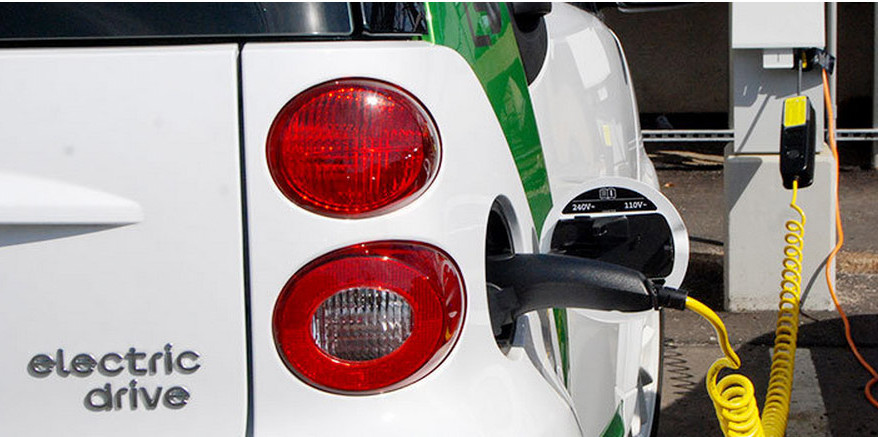
In his recent column, Jim Cameron presents a mixed, even problematic picture for electric vehicle adoption and points to several things, including high prices to purchase and charge EVs, upgrading the electrical grid to meet demand, and the uncertainty of a pending regulatory regime.
EVs will soon become cheaper than gasoline cars
EV prices have been declining, and according to data from Cox Automotive, cited by the National Resources Defense Council, the difference in the average transaction price between an EV and a gasoline car in the latter part of 2023 was just $2,800. This is before taking into account federal and state incentives, and lower operating and maintenance costs. There are already a number of EVs available for under $40,000 from companies such as Chevrolet, Hyundai, Kia, Nissan, even Tesla. And the federal tax credit is now more consumer-friendly as it has become a point of sale discount.

The main cost driver in an EV is the battery, and battery costs were 14% lower (per kilowatt hour) in 2023 than 2022, according to Bloomberg New Energy Finance. By the end of the decade, the cost is projected to be 42% lower than in 2023, putting it at a level that means EVs will be less expensive to manufacture than gasoline vehicles.
Charging costs and infrastructure
In the Cameron column, a cost of charging at a public charger was cited as 59 cents/kWh. EVAdept pegs Tesla supercharger fees at an average of 34 cents/kWh.
It will always cost more to use a public charger because the fee must support the cost of the equipment, networking, and maintenance. More to the point, however, is that as much as 90% of EV charging occurs at home according to the Department of Energy.
The way to compare fueling costs is on a cost per mile basis since battery packs and gas tanks vary in size. If one pays 20 cents per kWh for a Tesla Model 3 long range with an 82 kWh battery pack and 341 miles of range, it works out to a cost per mile of 4.76 cents. If this is compared to a vehicle getting 25 MPG and gasoline at a cost of $3.50 per gallon, it works out to 14 cents per mile.
Charging costs aside, we do need to build out public charging to provide the certainty that drivers can charge when they need to. And this is happening. The Infrastructure and Jobs Act is investing $7.5 billion nationally to build out charging infrastructure. There are incentives offered by the Connecticut utilities that offset the cost of charging hardware and installation for both residential and commercial customers. Also, with the industry coalescing around the North American Charging Standard, we will have a less Balkanized environment and everyone will have access to every charger.
Grid reliability
EVs and the grid are complementary. While of course EVs use electricity, they mostly charge during off-peak hours. Furthermore, Eversource and United Illuminating offer cash incentives to EV owners to charge when power demand is low. Utility jargon for this is “managed charging with optimization.” While it is true that the grid will need to evolve, and there are plans for that to happen, the inherent flexibility in EV charging will avoid over-burdening the grid.
Several studies conducted about the impact of EVs on the grid show that EVs will lower the cost of electricity for consumers. This quote is from a study of five northeastern states, including Connecticut, conducted by M.J. Bradley and Associates, published by the Urban Sustainability Directors Network. “EV owners increase sales of electricity without overburdening the grid if they charge during off peak hours. This leads to increased electricity sales, which will, in turn, drive down electricity rates for all ratepayers.”
The reason for this is that utilities are regulated entities with a capped rate of return, and the excess income must be returned to ratepayers.
Gasoline taxes
Battery electric vehicles use no gasoline. While not having to buy gasoline is a benefit for consumers, EVs don’t pay gas taxes that support road repair. Obviously, there will have to be a change in how we fund road maintenance. It is a solvable problem, but it bears keeping in mind that there is no carbon tax on all those cars and trucks that are spewing pollutants and greenhouse gasses.
Advanced Clean Cars II
This is the name of the program Cameron mentioned the governor pulling in his piece, and it is the second phase of the California standards we already follow. The legislature authorized adopting the California standards in a bipartisan vote nearly 20 years ago, supplemented by Public Act 22-25 in 2022, but these must be specifically implemented. This process has been ongoing for a long time, including opportunities for public comment.
[RELATED: Will CT ban new gas car sales? Here’s what’s going on]
There are two important differences between the first set of California regulations and the new ones. In addition to cars, the new standards include medium and heavy-duty vehicles and the phase-out of sales of new internal combustion light-duty vehicles by 2035. Sales of EVs (battery electric and plug-in hybrid) would be permitted for new light duty vehicles. Ongoing ownership of existing gas vehicles and the sale of used gasoline vehicles are not affected.
It is important to note that there is flexibility in the regulations. Quoting from the Department of Energy and Environmental Protection, “If we get to a point where it appears that the technology or the infrastructure deployment is such that we would not be able to meet the standards, the standards will change to help suit our needs. This has happened on several occasions in the past with the California standards.”
Last year was a good year for electric vehicle sales with a 29.5% increase (nationally) over the prior year. Many legacy carmakers have announced plans to transition to electric, but the regulations would help accelerate this by providing greater marketplace certainty and boost domestic auto and battery assembly that can benefit from the IRA manufacturing tax credits.
Public benefits
More EVs will be sent to states that have these new Clean Cars rules, giving consumers more choice, dealers access to inventory, and sparking private investment and local jobs.
Connecticut air quality is not in compliance with federal standards and the American Lung Association gives Connecticut counties failing grades for smog. The impacts of this pollution are greatest in disadvantaged communities. The expected reductions in nitrogen oxides and particulate matter are estimated by DEEP to yield $270 million in avoided healthcare costs by 2040 (from a 2020 baseline).
Transportation accounts for 38% of greenhouse gas emission in the state, the largest of any sector. Battery electric vehicles have zero tailpipe emissions, and their overall emission profile will improve as the grid gets greener.
In the northeast, New York, Massachusetts, Rhode Island, New Jersey and Vermont have already adopted ACC II with New Jersey and Rhode Island in the process. Connecticut should join them.
Barry Kresch of Westport is President of the EVClubCT.com.