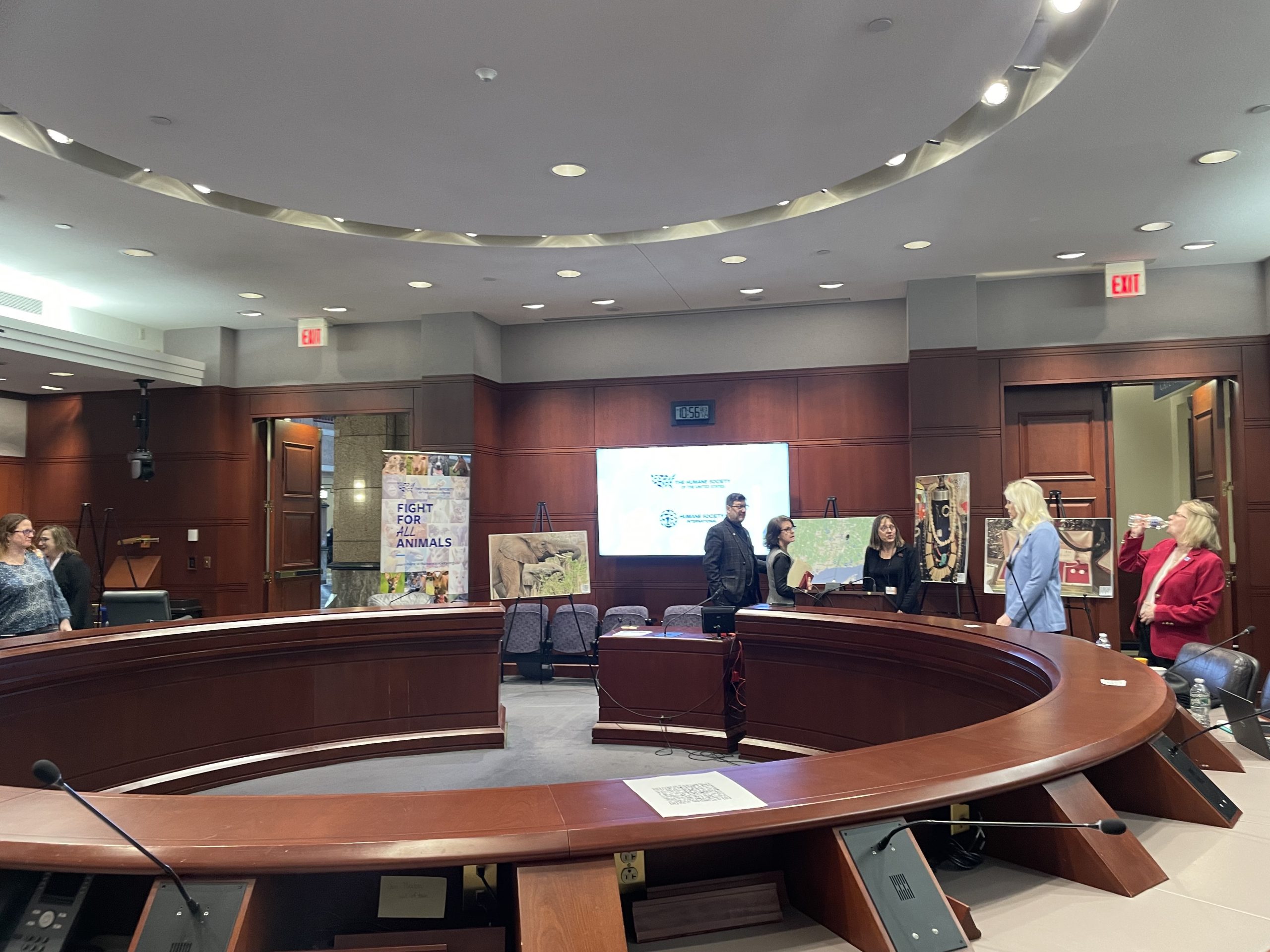
The Humane Society and Animal Advocacy Caucus on Wednesday called for new legislation in Connecticut banning the trade and sale of ivory after what they described as an “undercover investigation” found 169 pieces of suspected ivory for sale in 29 stores in Connecticut.
There is no Connecticut law currently prohibiting such sales. The federal government requires ivory to have been imported before certain dates to be eligible for intrastate sales.
“This investigation brought to light Connecticut’s ivory market and the need to pass legislation banning it,” said Whitney Teamus, the senior director of investigations at the Humane Society of the United States.
“Each year, 10,000 to 15,000 African elephants are killed for their ivory,” said Annie Hornish, Connecticut state director of the Humane Society. The organization’s goal, she said, was to “ensure Connecticut does not continue to play a role in the global poaching crisis.”
The village of Ivoryton, in present-day Essex, and Deep River were hubs for ivory trade during the 19th and 20th centuries. At one point, these two villages were responsible for processing 90% of the ivory imported into the United States.
In 2016, President Barack Obama imposed a near total ban on the trade of commercial ivory, outlawing the import and export of ivory as well as restricting the interstate sale of ivory to only items that are over 100 years old.
The Humane Society called for Connecticut law to mirror federal law.
“Ivory certified as antique under the Endangered Species Act, which is ivory that is more than 100 years old, can be sold [across state lines] if it is accompanied by proper documentation to verify its age or origin,” said Kathryn Kullberg, the director of marine and wildlife protection at the Humane Society. “Without proper documentation, it is impossible to know whether the items were imported in violation of federal law and came from recently poached elephants.”
The intrastate sale of ivory is allowed if the ivory was lawfully imported before certain dates.
“Of the 169 individual pieces of ivory identified in Connecticut, none of them had the proper antique identification,” Teamus said.
In 2015, Connecticut legislators proposed bills banning the intrastate sale of ivory, but they failed to make it out of the environmental committee.
Thirteen other states and Washington D.C. have passed legislation restricting or banning the sale of ivory.
“Our state’s participation in this pipeline is unforgivable,” said David Michel, co-chair of the Animal Advocacy Caucus. “When you lose keystone species, it impacts the entire ecosystem.”
Michel said the Caucus plans on introducing legislation to ban ivory trading statewide this legislative session. The legislation would punish vendors who are caught selling ivory, not consumers who bought ivory.
“We are going to collaborate with the chair of the environment committee and get this done,” Michel said.