



Congress let the refundable child tax credit expire at the end of 2021, among the most damaging policy mistakes in this nation’s history. That’s not hyperbole.
The tax credit brought child poverty to a record low, lifting 3 million children out of its depths. The child poverty rate more than doubled after the expanded program was allowed to sunset. Now Congress has a second chance to revive the refundable child tax credit. We hope they do not blow it, again. We hope they do not chip away at a program that was an unqualified success in one of the biggest and most publicly quantified economic experiments of all time.
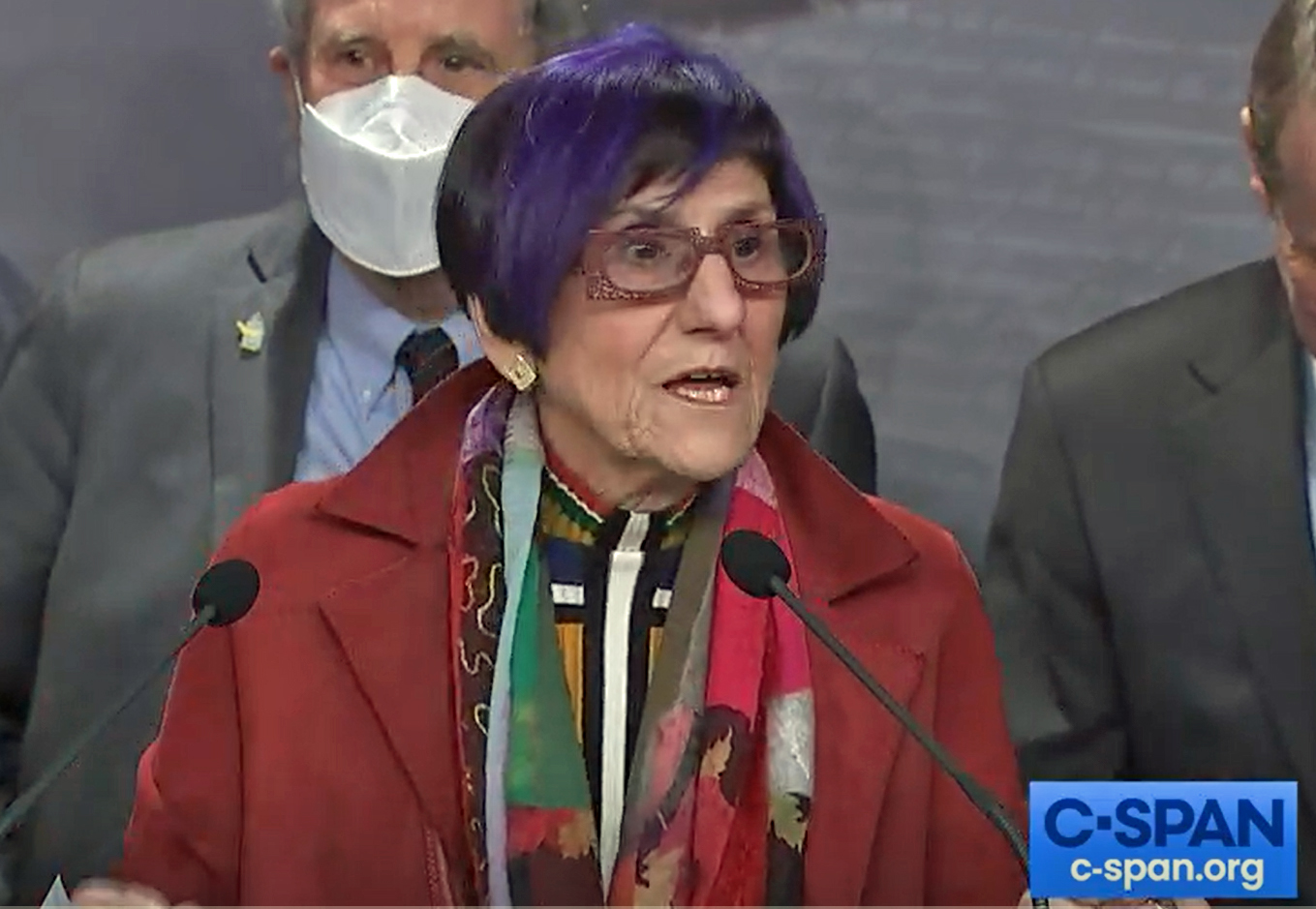
Connecticut’s Rep. Rosa DeLauro, longtime champion of the child tax credit, has vowed to fight any agreement that leaves behind the lowest income families or fails to provide support throughout the year. She’s right. Helping only some kids only some of the time is not good enough.
Obviously, it is not good enough because every child has a right to health, safety and joy. But since that argument tends not to move people to action, let’s shift the conversation to money because, as we know, money talks.
Our experiences in childhood have permanent implications: in health, learning, relationships, work and even lifespan. Living with material deprivation in the early years increases the chances that a person will need expensive public services throughout their life. Child poverty cost the U.S. $1.03 trillion in 2015, according to researchers who looked at decreased economic productivity and increased costs in the health care and criminal legal systems.
Columbia University researchers calculated the cost of extending the child tax credit as it existed in 2021 as well as the benefits. The cost would be $97 billion annually and the social benefits gained would amount to $929 billion yearly. About half the world’s countries, and almost all the wealthy ones, provide some kind of children’s allowance to help families with expenses. It is obvious why: The return on investment is tremendous.
If you are not into abstract statistics, let’s talk a bit about what living in poverty does to a child. Poverty is traumatic, by any definition, and far too common. Nationally, almost half of families cannot afford an adequate supply of diapers to keep their children clean, dry and healthy, according to a survey done by the National Diaper Bank Network.
Imagine not being able to change your crying, soiled baby? Joanne was part of a team of researchers who established a strong association between diaper need and maternal depression, which is a leading contributor to maternal mortality. Untreated perinatal mood and anxiety disorders cost society $14 billion annually, according to research conducted by the National Institutes of Health. And it hurts mothers and babies alike.
There is a national initiative to address the shockingly bad state of maternal health in this rich country. This should be a priority for health systems at every level. We can start by listening to what moms tell us. They feel like bad parents when they cannot diaper their children, they report. That’s a problem that money can solve.
As birth rates decline across the nation, we are seeing a growing senior population that will need the skills of younger workers in health care and other key industries to support them – not to mention the tax and charitable contributions of these workers to keep government programs and cultural institutions going. We know that children from higher income homes on average achieve more educationally and earn more over their lifetimes than children who grow up in lower income homes. When we adults are content to let children grow up in poverty, we damage our own futures.
Poverty persists in the United States because we wrongly attribute it to personal failings. It’s a resource problem. Since 2020, two-thirds of all new wealth, aka money, went to the richest 1%. Feeding this disparity in the U.S. is an unjust income tax structure in which the rich pay less than someone working a low-wage job. That represents resources. When resources are directed toward families with children, adults and children alike do better. Children do better for a lifetime, which means that this country prospers.
A strong child tax credit, like the policy that lifted so many families in 2021, would relieve suffering for many today and create a better tomorrow for every U.S. American. Imagine getting a second chance to do something that significant.
Oh, Congress, please seize this moment and follow the lead of Rep. DeLauro, a life-long champion of children and families. Pass a comprehensive child tax credit and make it permanent.
Joanne Samuel Goldblum is CEO of the National Diaper Bank Network and co-author with Colleen Shaddox of Broke in America: Seeing, Understanding, and Ending U.S. Poverty.