



February marks the start of the 2024 legislative session and the countdown to elections in November. One thing I have learned in my four decades in state policy advocacy, coalition building, and organizing is that there will be no durable, justice-centered change without power.
Power is a tool that most of our elected officials feel comfortable utilizing, but their comfort does not extend to sharing that power — particularly when the people organizing to take power over their own lives are Black, brown, immigrant, LGBTQIA+, indigenous, low-income, emerging from the carceral system, struggling with mental health, or living with a disability.

Our government continues to prove time and time again that the people who have emerged from generations of systematic racism, structural economic injustices, and the ongoing barriers to health and well-being will continue to be disregarded and shoved to the back of the line when it comes to taking action that delivers justice.
As a society, we must resist pursuing policies that nibble at the edges of change. The change we are looking for cannot be defined by advocates like me or elected officials fighting the headwinds of an acceptable status quo. It must be defined by the people who live with the effects of a rigged system every day.
What people who are ignored and forgotten by racism and corporate-driven capitalism need is not an ally or an advocate. What they need is so much more. Those of us with white privilege should step aside and allow those who have been harmed by injustices to tell us the change they need. We should then use our power and resources to be accomplices for justice, and co-conspirators for change.
We need a change in who speaks up, who defines solutions, and who directs the action.
Twenty years of health care policy advocacy has taught us at Universal Health Care Foundation of Connecticut that to foster change among the people who need it the most, we must make a shift. Beginning in 2021, we shifted to become an anti-racist organization focused on building power for health justice. We recognized that health justice is not defined by access to health care alone but also through racial, social, and economic justice.
We do not define the fight nor are we leading the path to the solutions. We trust our community-based organizing partners to lead the charge in paving the way for change.
Last spring, in the waning days of the legislative session, health care workers were fighting for justice, asking for good wages and benefits. They told their heartbreaking stories — filled with indignities such as working several jobs and living out of a car, or being unable to afford health care coverage for their family.
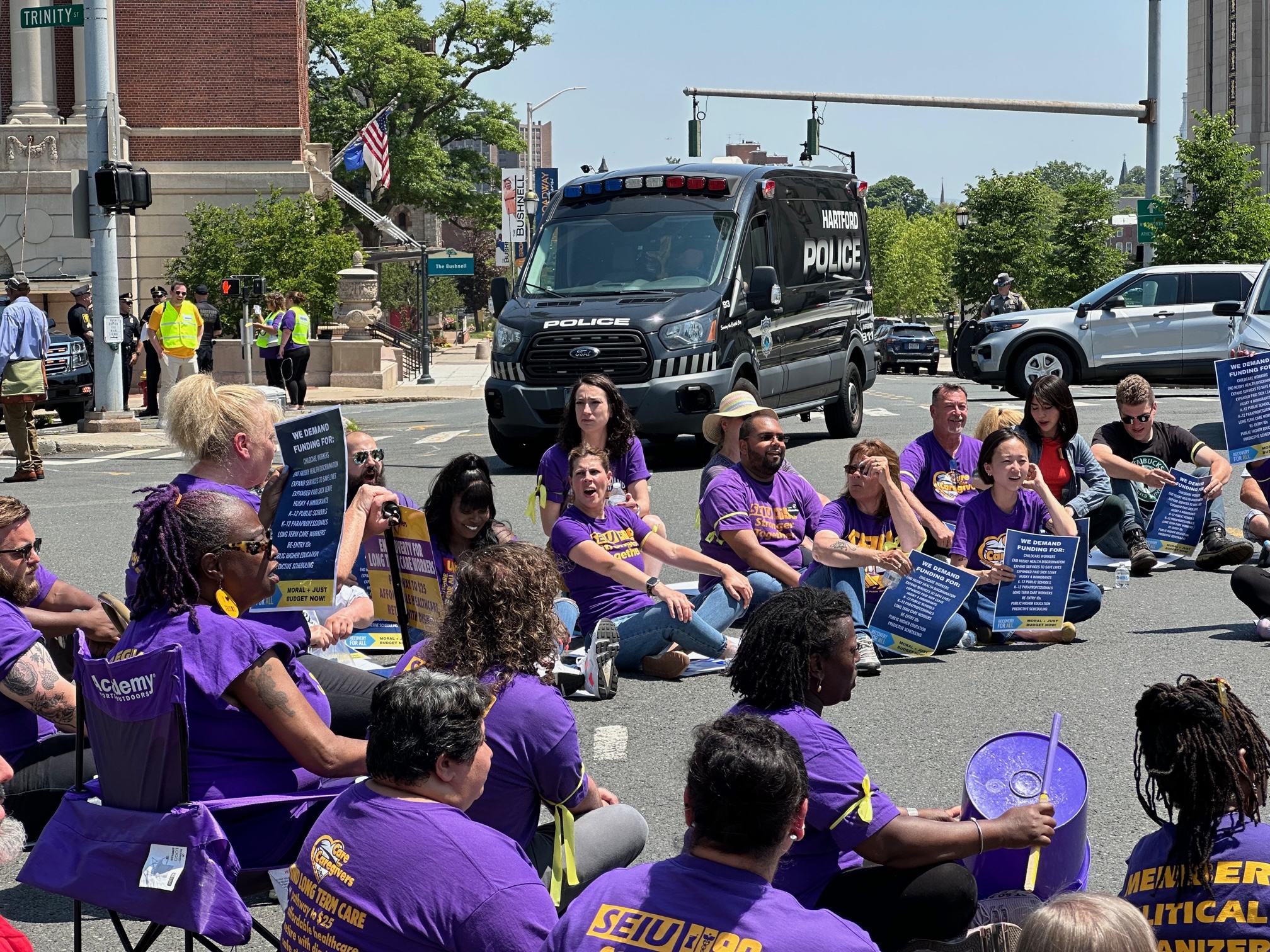
The workers, mostly Black and brown women, decided to illuminate their struggle through civil disobedience. They called upon people like me — a white woman with a good job and good benefits — to use my privilege to help amplify their story. They called for allies to become co-conspirators.
On a hot day, dozens of the workers and accomplices, not simply allies, sat down on the street in front of the Capitol and the workers held their power for all to see. We all got arrested and with that, the workers knew they were not alone. They were part of a large movement for justice, seeking to dismantle the systematic barriers to health and well-being.
[RELATED: Protesters arrested as Lamont, lawmakers strike CT budget deal]
That experience, and even the community service required afterward, was more empowering for me as a co-conspirator than countless long days standing in the halls of the Capitol counting votes for a bill. But it’s never been about me. It’s about people most impacted by systemic racism and injustice defining the agenda and asking for accomplices for justice.
So, as we start 2024, I challenge all of us to believe in justice and to figure out how we can be the most effective co-conspirators in building power for real change.
Lynne Ide is Program Lead for Communications, Outreach & Engagement at the Universal Health Care Foundation.