



United States Secretary of Education Miguel Cardona recently called for “a culture change in higher education.”
Cardona urged us to pay less attention to so-called “elite” institutions and focus, instead, on strengthening “institutions that serve the most students with the most to gain from a college degree” — but “have the fewest resources to invest in student success.”
These institutions include community colleges, HBCUs, Minority Serving Institutions (MSIs), tribal colleges, and Hispanic-serving institutions.
Unfortunately, it appears that the Connecticut state management team, the Board of Regents, and Gov. Ned Lamont are moving in the opposite direction.
The community college system in Connecticut is in the process of being dismantled, with many of the resources that directly help students being reduced or eliminated in order to fund the construction of a large, unnecessary, very well paid bureaucracy to run the system.
The system leadership is making it more difficult for students to attend community college in almost every way possible.
[Is CT community college free for everyone? What to know about the PACT program]
The facts are troubling:
- Elimination of 777 course sections
- Reduced essential services to students
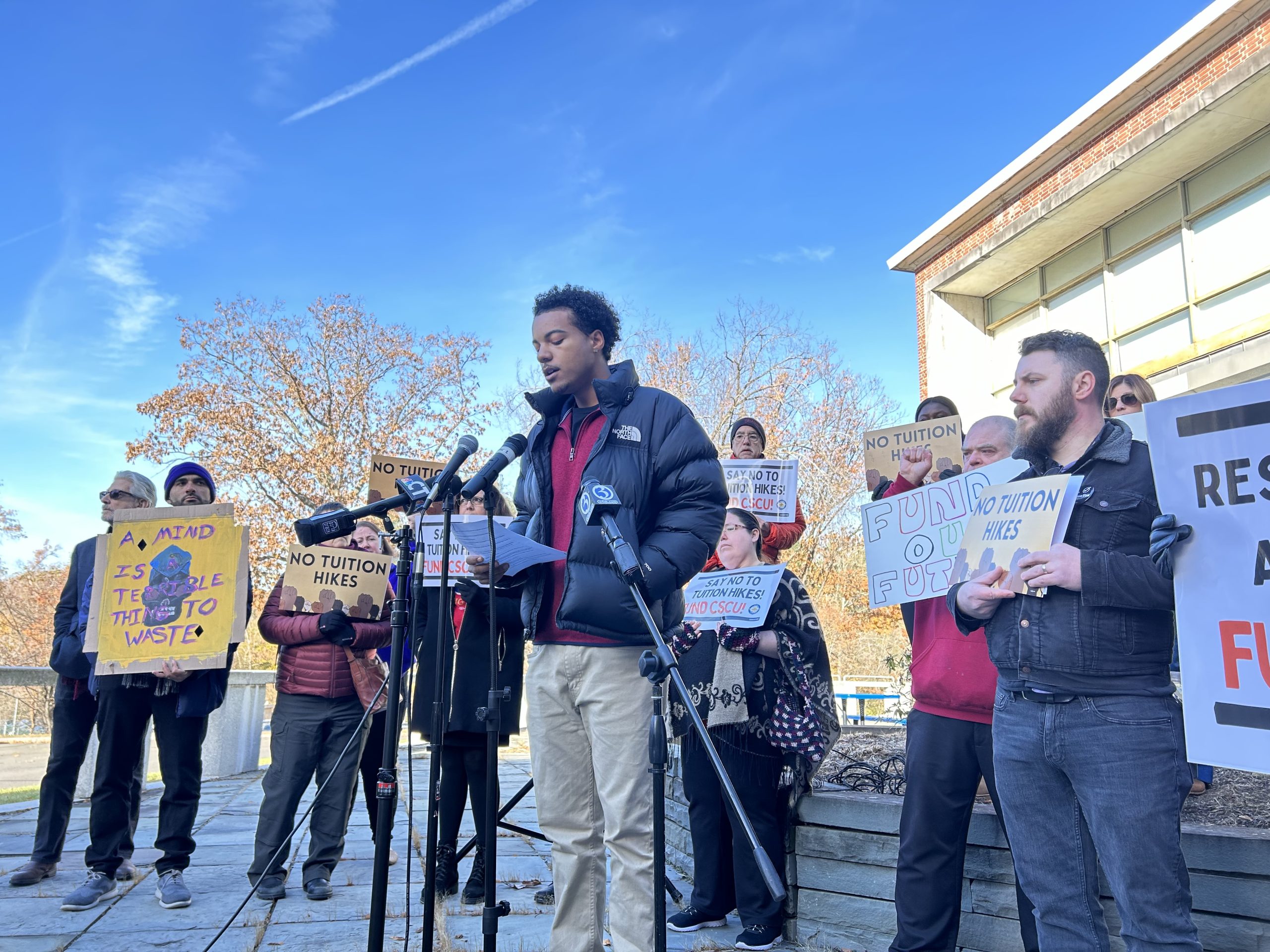
- A 3% fee and tuition increase for community college students in 2023-2024
- An additional 5% fee and tuition increase for 2024-2025
- Library services are no longer available on evenings and weekends on many campuses
- There is no in-person IT support for students on many campuses on evenings and weekends
- There have been reductions in staff in ESOL and tutoring
- There have been reductions in office administration support
- There are unfilled vacancies in advising and enrollment services on many campuses
- There is reduced availability of academic skills tutoring for students with disabilities
- There are many unfilled faculty and staff vacancies
- Full-time faculty ranks are being depleted and replaced with part-timers. Full-time faculty are individuals who, in addition to teaching classes, advise student clubs, guide students through their majors, develop curriculum and pedagogy, and manage the business of the college by serving on committees, volunteering at campus events, and providing leadership on campus on a daily basis. Full-time faculty provide continuity over the years and a dependable support system for students over the long term.
These cuts and reductions in services affect the most vulnerable, lowest-resourced college students in the state and in higher education.
As Victoria Yuen, from the Center for American Progress, notes,
“Community colleges play a crucial role in American higher education. As affordable alternatives to four-year universities, they offer a vital pathway to a four-year degree, as well as career and vocational training. Because these colleges also disproportionately serve low-income students and students of color, they are engines of opportunity supporting social mobility and the health of the U.S. economy.”
[How CT’s regional colleges want to mitigate $140M budget shortfall]
The cuts being made by the system office have very serious equity and social justice implications.
We can certainly do a much better job supporting students “with the most to gain from a college degree.”
Two central offices
The system office, the BOR, and Gov. Ned Lamont have told us that consolidation has required them to build a second system office in New Britain, even though we already have a system office in Hartford. Unfortunately, the money being used to build this second, redundant administrative office has been funneled away from individual colleges and services that benefit the students who need them the most.
What does this funneling look like? In FY 2019, the budget for Manchester Community College was $53 million. This year (FY 24) the budget for CT State Manchester is $33 million. Some of this reduction is because campus functions and services have been moved to the CSCU Shared Services area. But not to the tune of $20 million dollars.
The effect of this decimation of campus budgets — while system office budgets have ballooned — is removing campus resources and services that directly serve community college students. This is what it looks like to draw millions of dollars of resources from the college campuses where students are, to fund managers at central offices in Hartford and New Britain (and pay them very, very well) — where students are not.
Although the system office claims they have “greatly reduced administrative positions,” they have simply replaced these positions with others — just with different titles.
Votes of no confidence
What the governor, the system office, and the Board of Regents appear to be best at is raising tuition, talking about how hard “change” is, asking for more money to fund more highly paid administrators, and generating votes of “no confidence” from faculty and staff groups across the system. Two of these resolutions—from ECSU and CT State Senate— are very recent.
This is a pattern that goes back five years.
Lean administrative structures
In building a large, confusing, expensive, and unnecessary second bureaucracy, the system office is working against a key modern leadership principle about building lean administrative structures that can be creative, innovative, and responsive to external communities. For community colleges, these include workforce partners in the state and local communities where college campuses are located.
The new system office appears to have been built not so much as a traditional college administrative system — like the one we already have — but as an elaborate political patronage program where the governor and his allies can give friends, loyalists, and political supporters incredibly good jobs with great status and excellent benefits without a traditional search process or outside vetting — or checks and balances of any kind.
As Kevin Rennie noted recently in the Hartford Courant:
“Chancellor Terrence Cheng is in a fix. The leader of the Connecticut State Universities and Colleges, or CSCU, system faces the challenge of convincing members of the legislature that $401.7 million simply is not enough to fund the 85,000 student system.
At the same time Cheng will need to explain some astonishing raises he has given to two favorite vice chancellors,” who are now both making $200,000 a year.
These two cases, unfortunately, are only the tip of the iceberg.
Its own sovereign nation
The state legislature has allowed the system office to function as its own sovereign nation—which answers to no one. The BOR is theoretically supposed to provide guidance and oversight, but these individuals are appointed by the governor, so this body is staffed by friends, allies, and loyalists who have rubber stamped everything the system office has asked for.
Were the system office and the Board of Regents elected officials —and therefore held accountable by the voting public— they would have been voted out of office long ago based on the steady steam of no confidence votes that continues today.
We have had five years of very comforting and aspirational promises. None of them have been met.
Listening
The current system office management team is also working against another key modern leadership principle: the vital importance of shared governance and listening. The Harvard Business Review has devoted a whole book to this subject, Mindful Listening.
The current system office appears to listen only if it is compelled to by lawsuit or intense outside pressure.
The system office likes to appear that it listens, but as the many votes of no confidence make clear, listening is not one of its strengths. Here is some evidence of that from the recent CT State Senate resolution in February (see below for the full text of this document):
Whereas the Board of Regents and Chancellor Cheng failed to exercise the fiduciary responsibilities of their positions, overseeing and ensuring the institutional budgets were balanced, and the promises of Consolidation were sound; and,
Whereas, efforts to remediate budget issues by placing the burden and responsibility on students and their families, requiring them to pay more for reduced services perpetuates the aforementioned shortcomings of the Board of Regents and Chancellor Cheng; and,
Whereas, no accountability has been imposed on the Board of Regents, Chancellor Cheng, or any government agency for these failures, while tuition increases negatively impact institutions, students, staff, and faculty; and,
Whereas, the current crisis was initiated when former Governor Dannel Malloy dismantled the Board of Trustees, and politicized CSCU by appointing the Board of Regents without clear terms, areas or representation, or definitions for service; and,
Whereas, the Board of Regents have steered this consolidation into crisis despite frequent and repeated warnings about dramatic increases in administrative personnel costs that could not be accomplished with lower costs and reduced financial expenditures; and,
Whereas, calls for transparency in funding, budget allocations, and the risks of using temporary funding (COVID and other grants) to bring their Consolidation-related bottom line into the black, has now resulted in Connecticut State Community College being constrained from its launch; and,
Whereas, the disproportionate impact on community college students and the dedicated staff and faculty, reflects a significant failure of the Board of Regents in its responsibilities to public higher education and the state; and,
Whereas, the failures of “Students First” and Consolidation have negative impacts, aligning with institutionalized racism and structural injustice.
Therefore, be it resolved that the Senate of Connecticut State Community College:
Holds the Board of Regents and Chancellor Cheng accountable for the failed initiatives of “Students First” and Consolidation, as well as the promised financial savings associated with these initiatives.
The “no confidence” vote at ECSU made similar claims.
It is very dangerous to support a system run by individuals who think they have all the answers, do not believe in the power of listening or collaborative problem solving, and actively resist feedback from individuals who know the system and its students best.
The system office’s response to all feedback, constructive criticism, and ideas that don’t align exactly with theirs is this: “We understand change is hard. Employees are just feeling worried about how underfunded we are.”
This management team has made it very clear that if you don’t agree with them or if you have a different opinion about what would be best for community colleges, you are simply wrong and “afraid of change.”
This is a textbook example of gaslighting, deflecting concerns and ideas from people coming forward in an effort not to address them. This is very clear evidence we have out-of-touch leadership who do not actively listen and are unwilling to address the real concerns being raised by individuals who know our students and the system best.
Recommendations for legislators
Overall, this is exactly what institutionalized racism and structural injustice looks like.
Given all this, here are some recommendations for moving forward.
- The legislature should require that any additional funds provided to CT State System this year and in the future be used only for services and personnel who work directly with students on individual campuses. You will need to be rigorous about accountability on this.
In many ways, it appears that the system office created this budget crisis as a strategy for securing more funding to build their bureaucratic patronage system.
In chess, this strategy is called “a fork.” The system office has appeared surprised and alarmed about this budget shortfall, but they have been in charge of the money for over five years. Now they have put community college students in such peril that the legislature has no choice but to save them.
We have a word for this: politics.
But it’s not social justice, it’s not taking care of the college students in our state who need the support most, and it’s not strengthening our state or our workforce.
- The legislature needs to take supervisory control over this increasingly expensive and dysfunctional enterprise. The Governor and the system office have been allowed to build an autocratic, anti-democratic, completely independent sovereign system that is beyond the reach of voters and the legislature. This is not good.
If you don’t like the phrase “providing legislative oversight” or “providing checks and balances,” how about just saying that you are making this a “partnership” between the system office and the state?
The BOR and system office can no longer be allowed to operate independently of legislative oversight.
- Finally, it might be time for the legislature to simply say: “Thank you to everyone who tried to make this consolidation work, but after five years, hundreds of millions of dollars of tax revenue wasted, a steady stream of no confidence votes, chaos and discord everywhere, and now a giant budget crisis due to mismanagement, we have decided to pull the plug on this experiment and go back to what we had before consolidation —a world class system of 12 independent community colleges, each with local leadership, each doing great work for their students and their communities, and each strengthening our state and our workforce. In the long run, we believe in them more than you. But we thank you for trying. Our students deserve better.”
*****
For readers interested, here is the vote of no confidence that was passed by the Senate of Connecticut State Community College on Feb. 15, 2024:
CT State Senate Resolution on Board of Regents and CSCU Budget Remediation, Tuition and Fee Increases for FY25
Whereas, in 2017, the Board of Regents authorized implementation of the “Students First” initiative by CSCU to decrease costs and enhance student services; and,
Whereas the Board of Regents and Chancellor Cheng failed to exercise the fiduciary responsibilities of their positions, overseeing and ensuring the institutional budgets were balanced, and the promises of Consolidation were sound; and,
Whereas, the Board of Regents and Chancellor Cheng repeatedly failed to address staff and faculty concerns and proposed changes to the plethora of initiatives nested under “Students First” during years of plan presentations to the state legislature and the colleges;
Whereas, in 2023 a reported deficit of over $30 million for FY24 and $125 million for FY25 for CT State Community College was reported, after consolidating 12 independently accredited community colleges into a single institution is evidence that the Board of Regents and Chancellor Cheng neglected their fiduciary responsibilities; and,
Whereas, the deficit from years of failed fiscal responsibility is constraining CT State Community College in its inaugural years and has already resulted in the elimination of 777 course sections, reduced essential services to students, and had an adverse effect on enrollment; and,
Whereas, the Board of Regents and Chancellor Cheng have failed to secure sufficient state funding for FY25, with an inflated and underwhelming CSCU 2030 plan which was uninspiring but consistent with their tenure of unsubstantiated claims and unrealized promises; and,
Whereas, a 3% fee and tuition increase for community college students was implemented in 2023-2024 academic year; and, another 5% increase was approved in December 2023 for the 2024-2025 academic year, despite the known potential adverse effects on enrollment and retention rates; and,
Whereas, the tuition increase applies to both community college and university students to address the system-wide debt incurred by the “Students First” policy; and,
Whereas, efforts to remediate budget issues by placing the burden and responsibility on students and their families, requiring them to pay more for reduced services perpetuates the aforementioned shortcomings of the Board of Regents and Chancellor Cheng; and,
Whereas, no accountability has been imposed on the Board of Regents, Chancellor Cheng, or any government agency for these failures, while tuition increases negatively impact institutions, students, staff, and faculty; and,
Whereas, the current crisis was initiated when former Governor Dannel Malloy dismantled the Board of Trustees, and politicized CSCU by appointing the Board of Regents without clear terms, areas or representation, or definitions for service; and,
Whereas, the Board of Regents have steered this consolidation into crisis despite frequent and repeated warnings about dramatic increases in administrative personnel costs that could not be accomplished with lower costs and reduced financial expenditures; and,
Whereas, calls for transparency in funding, budget allocations, and the risks of using temporary funding (COVID and other grants) to bring their Consolidation-related bottom line into the black, has now resulted in Connecticut State Community College being constrained from its launch; and,
Whereas, the disproportionate impact on community college students and the dedicated staff and faculty, reflects a significant failure of the Board of Regents in its responsibilities to public higher education and the state; and,
Whereas, the failures of “Students First” and Consolidation have negative impacts, aligning with institutionalized racism and structural injustice.
Therefore, be it resolved that the Senate of Connecticut State Community College:
Holds the Board of Regents and Chancellor Cheng accountable for the failed initiatives of “Students First” and Consolidation, as well as the promised financial savings associated with these initiatives.
Refuses to support the approved tuition increase.
Affirms support for investing in the new institution of the Connecticut State Community College that promised to put Students First, deliver exceptional educational opportunities to the students of Connecticut, and explicitly targeted the black, brown, and immigrant students in Connecticut promising student success through investment in the single college and 12 teaching campuses.
Patrick Sullivan teaches English at CT State Community College Manchester.