



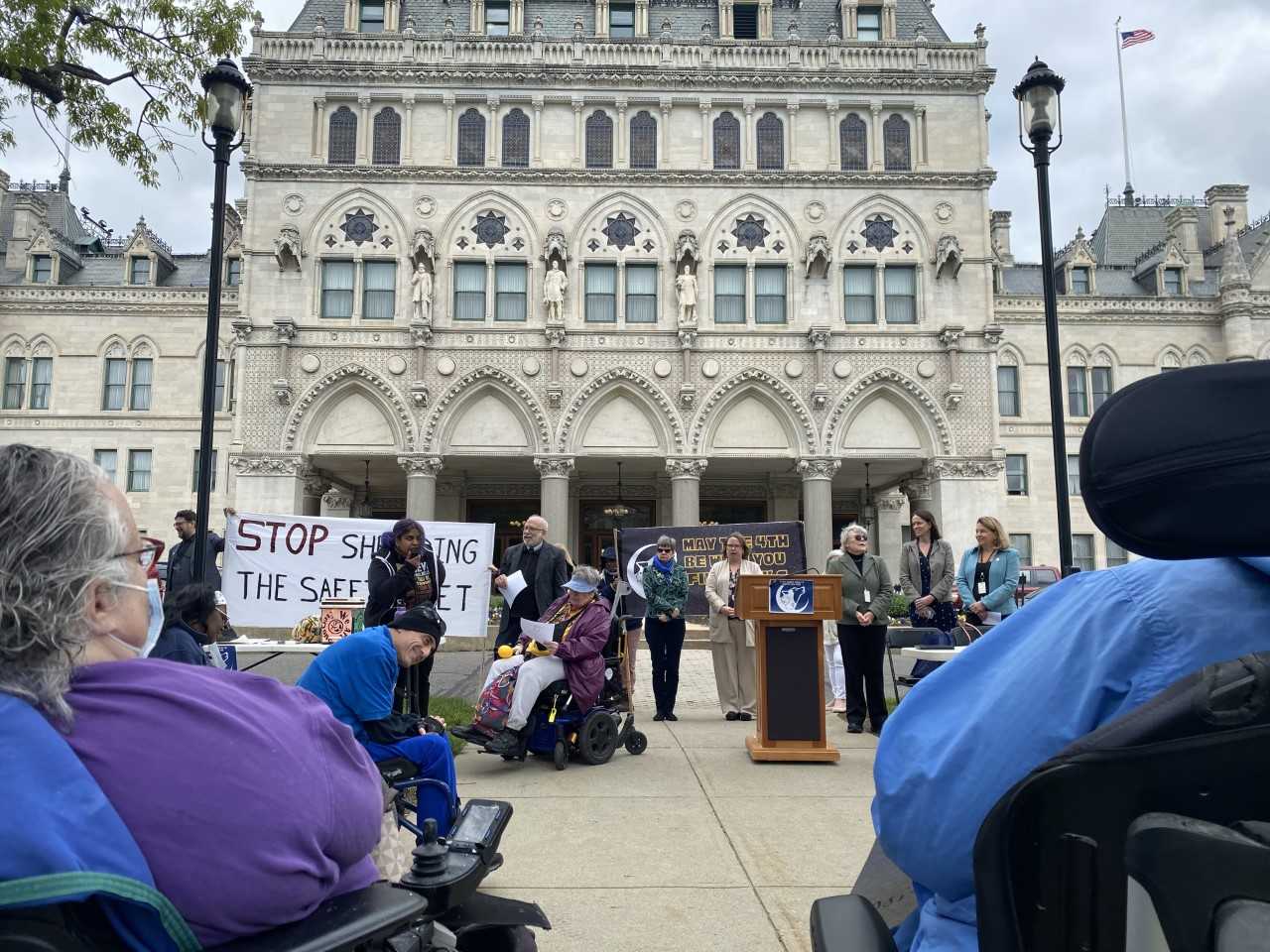
After years of advocating for mental health and disability services for our children, we feel compelled to express our growing frustration with the way the State of Connecticut has consistently failed to adequately fund the nonprofits that it relies upon to provide these services. It is time to confront the unfair and unsustainable way in which the state funds the agencies it asks to meet the needs of some of our most vulnerable citizens.
Connecticut has a legal and moral obligation to support the needs of individuals struggling with mental illness, substance abuse and intellectual disabilities. The state attempts to fulfill this obligation in part by providing some direct services itself. However, most of the services are contracted out to nonprofit organizations with expertise to help these populations. These organizations opt to forego a profit in order to serve a broader mission.
Unfortunately, Connecticut has a long standing practice of underfunding these nonprofits by failing to offer cost-of-living increases. As a result, nonprofits are so chronically underfunded that their buying power is 32% behind where it was in 2007. This has resulted in closed programs, endless wait lists for services, loss of staff, and reduced support for existing clients. We have seen these impacts from the perspective of the nonprofit agencies, their employees, and most importantly, from the individuals they are charged with supporting, including our children.
Tragically, many individuals who have been unable to secure services find themselves homeless, in emergency rooms, in trouble with the law or, all too frequently, in prison. The cost to the state of providing these more intensive services far exceeds what it would cost to provide the preventative support. This is not only fiscally irresponsible, but it comes at a high personal cost to the unserved individuals. The solution to the crisis in mental health and addiction treatment is straightforward and well-documented: fully fund community-based programs.
In contrast to the salaries that nonprofits are able to pay their employees, state workers offering identical services are often compensated at significantly higher rates. This places the state in direct competition with the agencies it is funding. Nonprofits consequently lose experienced employees to state programs which offer handsome salaries and benefits along with regular cost-of-living adjustments.
After decades of inequity, the true costs of this funding practice are vividly apparent. Thousands of individuals remain on waiting lists for services. Parents desperately seeking residential care for children with disabilities are told they will receive a placement when they turn 70, or die first. Meanwhile, as the need continues to grow, a decade of underfunding nonprofits has brought many to the brink of collapse.
We believe we can do better. We strongly encourage the state to consider the following steps to address this funding crisis:
- Begin to restore financial health to nonprofits by adopting the FY2025 budget recommendations of the nonprofit Alliance.
- Improve parity in salaries and benefits among State and nonprofit employees performing the same job.
- Build cost-of-living guarantees into every state contract with a nonprofit agency.
- Raise Medicaid reimbursement rates, recognizing that the federal government will cover 50% of the cost. Connecticut’s rates are half of what our peer states pay mental health providers.
- Conduct a broad review of how Connecticut provides services to the populations served by DDS (Department of Disability Services) and DMHAS.
Employees of nonprofits deserve a fair living wage, and individuals facing mental health and disability challenges have a right to live with dignity.
Mahatma Gandhi said, “The true measure of any society can be found in how it treats its most vulnerable members.” We believe that it’s time to take our measure.
Fran Ludwig and David Porteus are parents of adult children with mental illness and developmental disabilities. They also serve on the board of directors for nonprofits who serve those populations.