




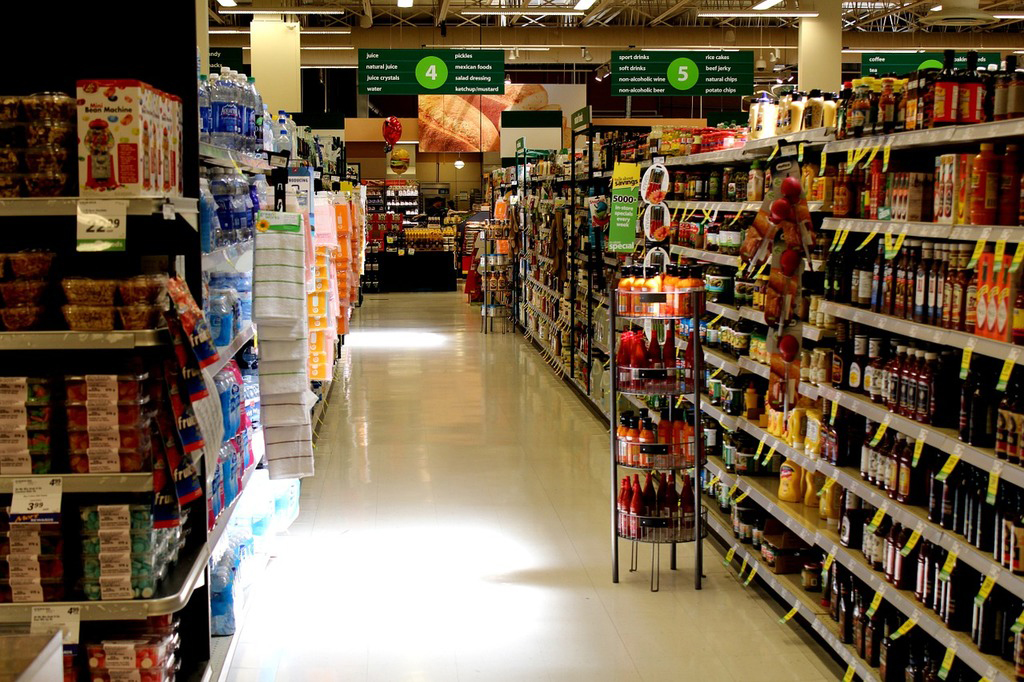
The prices everyone pays at the grocery store are determined by many factors.
Transporting by truck or rail from major growing markets like Arizona, California, Iowa, Florida and elsewhere is reflected in higher fresh produce prices. The Arizona lettuce growers have to discard crops that are trampled by illegal trespassers. Imported or domestic commodities fluctuate for a variety of reasons: weather, war, labor, production costs, trade agreements. Storage facilities across the country have high energy and labor costs. Diesel fuel and business insurance are both expensive. ALL of these costs are incurred before anything comes through the back door of any grocery store.
At any given time, the prices at grocery stores, be they big box or independent, is very rarely the same. The factors are as varied as the selection on the shelves. Supplier promotions, buying agreements, advertising costs, product specifications and selection, payment terms, energy usages, store maintenance, labor and insurance costs all go into the final price per item formula.
[RELATED: Are CT grocery stores ‘price gouging’? AG Tong launches inquiry]
Most consumers have choices as to where to grocery shop. Exercising on the spot selection of products is up to each shopper. Ground vs. whole muscle meat, whole head vs. shredded lettuce, sliced vs. whole vegetables …and the list goes on. If you are able to shop at more than one store in a month then you will begin to be price wise. But if your shopping is based solely on convenience, good luck.
You must be flexible and exercise on-the-spot restraint. A $5 bag of chips, $20 fresh halibut, $18 tomahawk ribeye are not on the affordability list.
I believe it’s a waste of time for an Attorney General of Connecticut to attempt to rifle though the maze of costs from one store to the next in an effort to determine if there is price fixing. The marketplace will handle whether something is over the affordable limits.
Tim Skidgell lives in Shelton.