



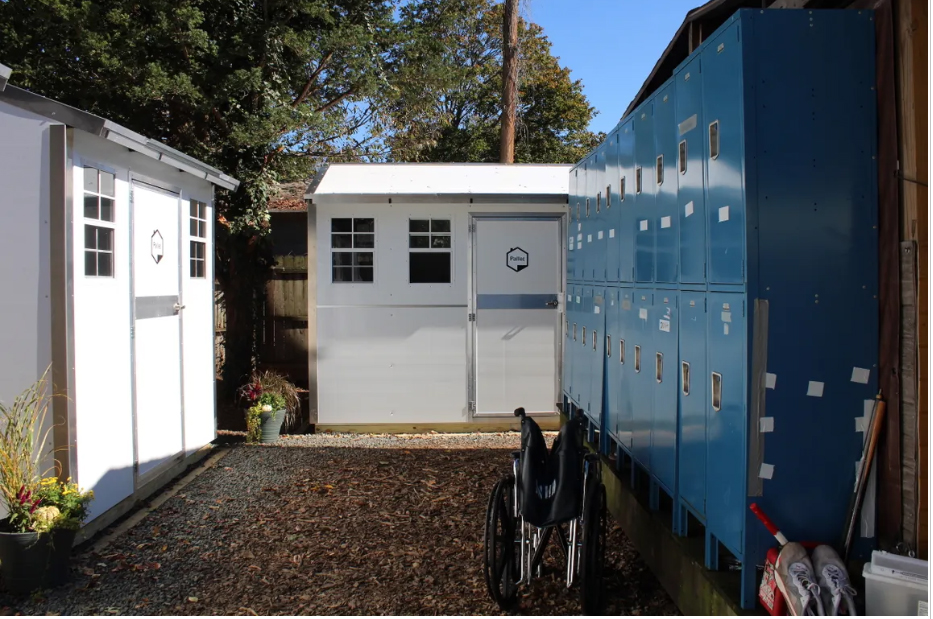
The City of New Haven’s recent plan to shut off electricity to tiny homes that serve formerly homeless individuals is symptomatic of Connecticut’s mixed messaging regarding affordable and emergency housing.
The purported reason was that these homes do not meet the state building code. Rather than eliminating a much needed and humane resource, a simple solution would be to change the building code for temporary shelters.
An estimated 17 million people visited Connecticut State Parks last year, utilizing campgrounds on a regular basis for recreation and vacation and yet there are no claims that the campgrounds endanger the public health with their central bath facilities. Common kitchens are often used in hostels and other short-term stay venues, and they also are not considered unhealthy or unsafe or unsanitary.
We need to recognize the magnitude of Connecticut’s homelessness problem and realize that it is in everyone’s best interest to solve it and solve it quickly. Temporary housing with wrap-around social services is a much better alternative for homeless people and the communities in which they live than tent encampments in parks, forested lands and under bridge abutments.
Building four-bedroom colonials on large lots will never be the solution to homelessness. Even if the state could afford the $750,000 per unit for the 2,500 units needed to provide for the individuals who are currently homeless, such an approach would create obstacles to accessing the essential social services that many of those folks need. Many of those social services are in our urban centers and consequently, that is where many of our homeless individuals reside.
It would be far more cost-effective and would ensure better outcomes if we built temporary housing with supportive services for homeless individuals and families. The tiny houses are prefabricated dwellings with a lifespan of ten years, and they can be built and installed much faster than a traditional home or apartment.
They can be scattered across our state to meet the demand where it is, rather than administrators defining where they prefer the people to be — or as in our current situation, where homeless individuals and families migrate from their home communities to locations where these critical support services are available, often in our urban areas.
Homelessness is not a laziness issue, nor is it very often a choice. Homelessness is caused by mental health issues, by long-term unemployment, substance abuse and sometimes simple bad luck or misfortune.
According to the National Alliance to End Homelessness, there is a lack of housing that low-income people can afford in every state in America. Low-income households often do not earn enough to pay for food, clothing, transportation and a place they can call home.
Health problems can cause an individual’s homelessness and can be worsened by the experience of being homeless. Many survivors of domestic violence become homeless when leaving an abusive relationship. Domestic violence experiences are common among youths, single adults, and families who become homeless and for many, it is the immediate cause of their homelessness.
In addition, most minority groups in the United States experience homelessness at higher rates than Whites, and therefore make up a disproportionate share of the homeless population. The solution is not rooted in exclusion or eliminating options, as is the case with the tiny houses in New Haven, but instead by providing safe places and ladders to success for homeless individuals and families.
Social services, including health and addiction services, are essential to solving the problems associated with homelessness. These programs and services foster positive outcomes for those being treated and enable them to remain in or eventually join, the productive population.
In addition, the children who are in homeless situations can enroll in stable educational programs, allowing them to advance in life despite the circumstances of their parents. Those are the models we should pursue.
Codes and standards are supposed to help people navigate complicated things like home or apartment construction with an assurance of at least a minimal standard of quality. The codes and standards should not be designed as a vehicle to deny people shelter and expose them to the elements, risking their safety and in many cases, their lives.
Connecticut should set a new standard for temporary shelters with social services. They would be different from forever homes, but they would provide shelter, a leg-up and a worthwhile investment in each homeless person’s future.
Chip Beckett, Independent Candidate for Lt. Governor of Connecticut in 2022, is the Executive Director of the Independent Party of CT. He is a Glastonbury Veterinarian and the Former Chair of the Glastonbury Town Council.