


The Connecticut Department of Education will begin looking into whether state leaders are following the correct legal process for funding charter schools.
The decision comes after leaders with Capital Preparatory Schools, a charter school organization with campuses in New York and Connecticut, filed a petition asking the department to clarify several aspects of the approval and funding process. Capital Prep, which received initial approval in 2023 to open a new campus in Middletown, has yet to receive state funding to begin operating at that location.
In their petition, school leaders alleged that “the failure to fund Capital Preparatory Middletown Charter School was the result of violation of state laws (and a breach of the duties of the State Board of Education and/or State Department of Education under such laws),” and they asked the state Board of Education to “remedy the situation.”
On Wednesday, the board gave the green light to the state Department of Education to rule on Capital Prep’s petition — determining whether charter schools in Connecticut are being properly funded according to state law or whether the state legislature is overstepping its role.
Charter school advocates have questioned whether the state Board of Education is required to rank approved charter school applicants to determine which will be funded first — and whether that ranking is binding to both the board and state Department of Education when approving and funding schools.
“This is an important issue that’s capable of repetition,” said Mike McKeon, the education department’s legal director, told members of the board Wednesday.
McKeon said a declaratory ruling on the issue would clarify the funding process and define “the proper funding mechanism” for charter schools under state statute.
Capital Prep Middletown received initial approval in 2023 from the state Board of Education and scored the highest out of seven charter school applications that were being considered that year, but was ultimately left out of the state budget and has not been able to open since.
Prior to 2015, a charter school could begin recruiting students and building its campus as soon as it received approval from the state Board of Education. That year, however, a bill changed the process into a two-tier approval system, where the state Board of Education grants “initial” approval and a charter school can only open in Connecticut after receiving funding approved by lawmakers.
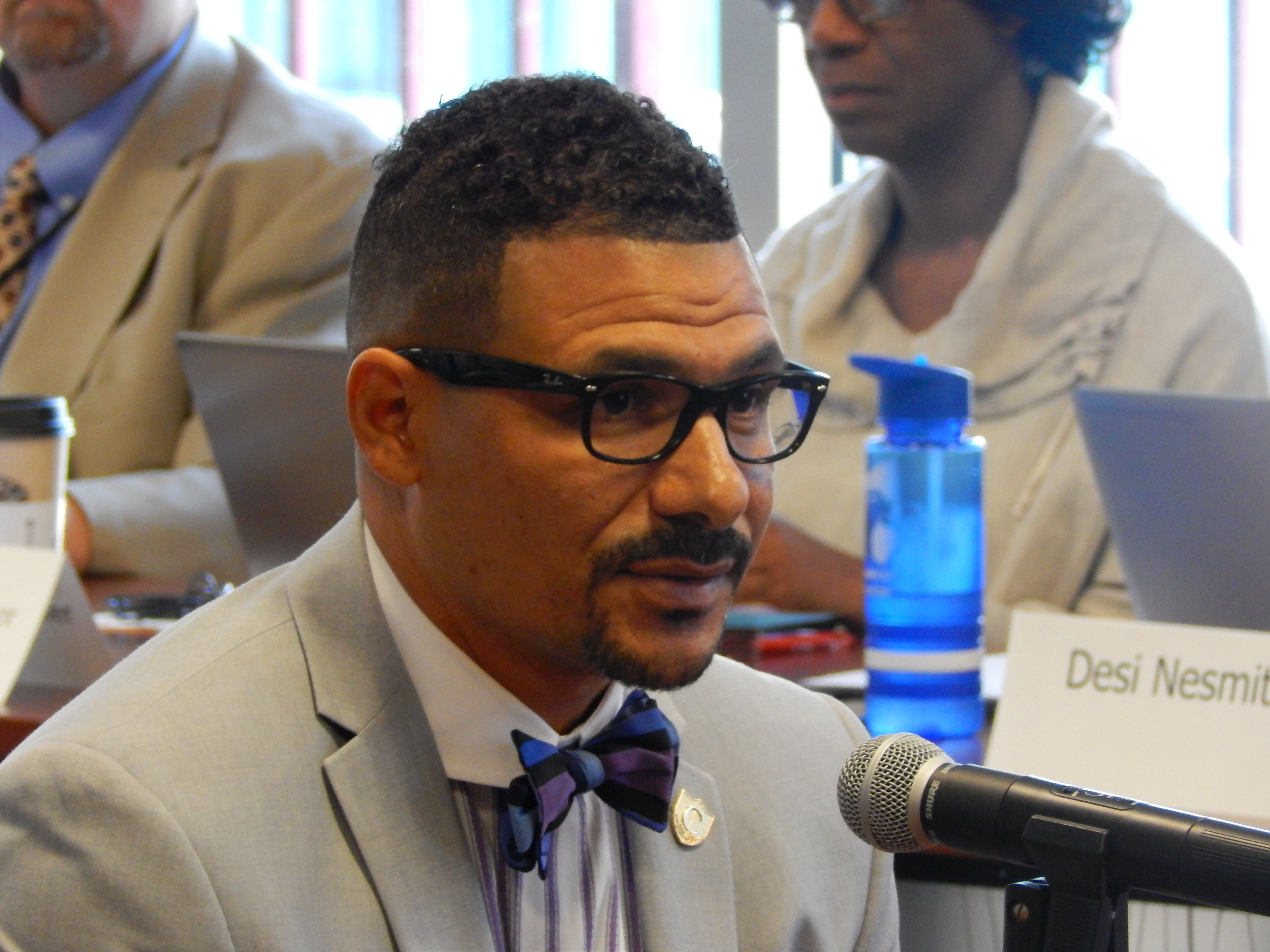
Capital Prep Founder and CEO Steve Perry, along with other charter school advocates, argued that the state legislature is only responsible for allocating funds to charter schools in general. The state Board of Education, they say, is the institution that should be distributing the monies depending on the score its application receives from the department, which includes an analysis of the school’s curriculum, model and community need.
“[State] statute … says the board of education shall select the schools who will be funded, Perry told state Board of Education members at a meeting Wednesday. “It says that the General Assembly provides the money, and then, just like every other [request] you fund based upon the score.
“That hasn’t happened, that continues not to happen,” Perry said.
Anita Ford Saunders, the president of the Middlesex County NAACP, added during a public comment period at the board meeting Wednesday that state agencies were “weaponizing” the law to “keep marginalized communities and children from thriving.”
“The law says the [state Department of Education] is supposed to choose what charter school is to receive funding based on its scores. You skipped over the school that received the highest scores to grant the money to the school who came in second and subsequently never opened,” Saunders said.
Both Perry and Saunders were referring to language in Connecticut law which says “if in any fiscal year, more than one new state or local charter school is approved … and is awaiting funding … the State Board of Education shall determine which school is funded first based on a consideration of the following factors in order of importance as follows: (1) The quality of the proposed program as measured against the criteria required in the charter school application process … (2) whether the applicant has a demonstrated record of academic success by students, (3) whether the school is located in a school district with a demonstrated need for student improvement, and (4) whether the applicant has plans concerning the preparedness of facilities, staffing and outreach to students.”
However, in a letter to Capital Prep leaders in late January, Natalie Braswell, an attorney for Gov. Ned Lamont’s Office, said the interpretation was wrong. She said allegations that the state was acting unlawfully were “baseless and concerning as it misrepresents the [state Department of Education’s] legal authority and the legislative process that governs charter school funding.”
Braswell added that the legislation Perry and other advocates were referring to was missing previous language that clarified each governing body’s responsibilities.
“Capital Preparatory Charter School Middletown is now claiming that the legislature only has the right to allocate funds, not to determine to which charter schools those funds will be allocated and that the State Board of Education can do so, even if the legislature has said otherwise,” Braswell wrote. “This is not supported by law or fact. … The legislature has clearly spoken as the where funds were to be allocated.”
The opening of Capital Prep in Middletown has been controversial since its first approval in March 2023 when the Department of Education had recommended the state board defer its decision after receiving an influx of letters the night before the meeting where a decision was expected.
It was unclear at the meeting whether the majority of the letters supported or opposed the charter school, and the board ended up overruling the department’s recommendation and granted the school its initial approval.
Months later, the charter school was removed from the final state budget, despite receiving approval in an earlier version of the budget signed off by the Appropriations Committee during the 2023 legislative session.
Capital Prep’s petition has garnered interest from other charter school advocates across the state, including leaders in Danbury whose charter school was approved by the state Board of Education in 2018 but has yet to be funded.
Stephen Tracy, the chair of the Danbury Charter School Planning Team said he believed both the Middletown and Danbury charter schools should be funded this year.
“We believe that the Middletown petition has merit, that the state’s failure to fund that school is inconsistent with the provisions of Connecticut general statutes,” he said.
