Late last month — with considerable fanfare — nine northeastern states, including Connecticut, announced they were embarking on a groundbreaking interregional electric grid transmission effort.
It came just a few weeks after an announcement by the New England grid operator that it was soliciting proposals for new transmission to bring power — most likely land-based wind — from northern Maine into southern New England.
And that followed an announcement by the Biden administration’s energy department last August that the region would receive $389 million for a project called Power Up New England, which is primarily intended to provide the onshore connections and transmission for offshore wind power.
Here’s the problem, though. Even if all these transmission projects get built, the new power they’re supposed to connect to, such as offshore wind, faces headwinds from the Trump administration that could be strong enough to derail them entirely.
That potential became even more likely early Thursday with passage by the U.S. House of Representatives of a budget that could make any renewable power not already under construction financially implausible.
While concerning, the reality of a transmission and power mismatch is garnering less hand-wringing than you might expect. But one word you do hear over and over and over is uncertainty.
“The future is inherently uncertain,” said Katie Dykes, commissioner of Connecticut’s Department of Energy and Environmental Protection, DEEP. “And uncertainty as well as rapid changes in development and the developments in the energy world are nothing new. Think about the fracking boom, or the Great Recession, or the COVID pandemic or Russia’s invasion of Ukraine. These all upended prior assumptions and created short-term and sometimes long, long-term disruption.”
And then she made another point: “Energy infrastructure takes a really long time to build.”
That last point is also made repeatedly for why this seeming mismatch of problematic additional power and more transmission is less concerning to some.
“The worst time to be building transmission is when you have the generation all constructed, ready to go,” Dykes said.
The overwhelming sentiment – get going on that transmission and other infrastructure.
“Yes, we should move ahead. This is an important step forward. We need more transmission, full stop,” said Kat Burnham, the state lead for Connecticut, Massachusetts, and Rhode Island for Advanced Energy United, AEU, an advocacy group for all aspects of advanced energy.
Francis Pullaro, president of RENEW Northeast, which works towards renewable energy in New England and New York, said the fact that New England hasn’t built out its electric grid is one of the biggest challenges to developing renewable energy here.
“But this isn’t a chicken and egg problem. The transmission has to be built first. You can’t connect the generator to nothing,” he said.
Even in the most stable of times it is tricky to predict what needs and conditions on the ground might be years in advance. What if that demand growth ends up being higher than expected or lower than expected, and what about different rates of technological development and availability and different cost trajectories? How do you ensure transmission additions or upgrades are flexible to accommodate a range of scenarios or changes?
Circumstances right now are anything but stable.
Trump, wind and powering up
Wind power has long been viewed as key to the region’s power needs and goals. It can provide large amounts of power while also meeting individual state renewable energy goals and helping to forestall the use of more fossil fuel power whose emissions are the primary culprits in climate change.
But President Donald Trump notoriously dislikes wind power. His Day 1 executive order halted all leasing, approvals and permitting for offshore wind, effectively shelving any offshore wind development in the pre-construction pipeline. And then in April the administration ordered construction stopped on the partially-built Empire Wind — destined to provide offshore wind power to New York.
One month later, as project developer Equinor was poised to pull the plug for good, more than three months of lobbying by New York Gov. Kathy Hochul paid off with a reversal of the stop-work order.
But the incident still leaves the remaining handful of offshore wind projects permitted and under construction, including Connecticut and Rhode Island’s Revolution Wind, fearing for their own survival.
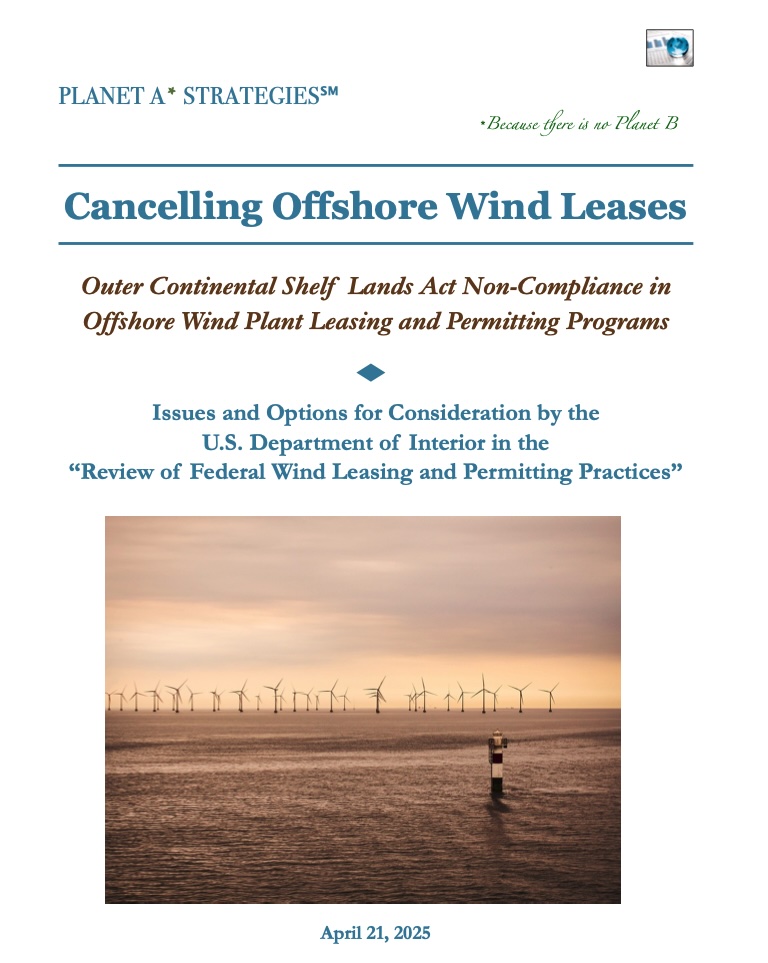
The Interior Department, which houses the Bureau of Ocean Energy Management, BOEM, has been reviewing existing projects as part of the original executive order and in late April the wind opposition group Green Oceans released a report prepared for them by Planet A* Strategies that alleges fraud, among other problems, with the projects. Green Oceans subsequently used those findings as the basis for its request that the Environmental Protection Agency rescind permits for Revolution and Sunrise Wind, another New York project also under construction.
BOEM did not respond to questions about the status of the Revolution and Sunrise projects.
A spokesperson for Orsted, the Danish company developing Revolution Wind, said in an email that the project is about 75% done, remains on track for completion next year and that they “have an ongoing and constructive dialogue with our regulators.” But Orsted did not respond to whether the project was under review by BOEM and if so, what information was in question.
Orsted also did not respond directly to questions about the Green Oceans report and permit revocation requests. The company provided a statement that reads in part: “Revolution Wind received its federal construction approvals following years of reviews and scientific studies as well as public comment and other stakeholder engagement.”
Maine’s first-in-the-nation floating offshore wind research installation is also among projects on hold after the Trump administration halted a $12.6 million grant while it reviewed the project. The move comes as Trump is in an open political feud with that state’s governor, Janet Mills, over transgender students and sports. It has spilled over into attempted financial retribution against the state in unrelated areas.
The state’s land-based wind potential may get caught in the crossfire. Trump’s order also targeted land-based wind projects for review. While mainly aimed at projects on federal land, it left the door open to going after other projects.
In early May, Connecticut, along with Massachusetts, Rhode Island, Maine and New York were among 18 states filing a lawsuit that argues the original wind executive order violates federal law.
But now any new renewable power could face stiff restrictions to qualify for the federal tax credits that for years have helped make them affordable. Under the House budget approved this week, a project needs to begin construction within 60 days of the bill’s passage to get the credits — an impossibility for any new wind project. It must also be operational by the end of 2028.
If the Senate does not force changes, Burnham said it “would make it effectively impossible for any onshore or offshore project not already under construction to qualify for these long-standing, bipartisan tax credits.”
That could mean serious trouble for a Massachusetts and Rhode Island project called SouthCoast Wind, which doesn’t have contracts in place yet. The Massachusetts Department of Energy and Environmental Affairs declined to comment on the project’s future. SouthCoast did not respond to an email.
Now even Power Up New England, the transmission/interconnection component for future offshore wind may be in trouble. In March that project appeared as the biggest single item on a “hit list” seen by some news publications of proposed project cuts to the Department of Energy’s Grid Deployment Office.
On May 15, Energy Secretary Chris Wright announced the department was requesting additional information from 179 Biden administration awards it had been reviewing. It’s not clear which awards were targeted.
The Department of Energy did not respond to specific questions to clarify the status of Power Up New England. It provided an email statement that said in part: “The Department is conducting a department-wide review to ensure all activities follow the law, comply with applicable court orders and align with the Trump administration’s priorities.”
A spokesperson for the Department of Energy and Environmental Affairs in Massachusetts, the lead state on Power Up, declined to comment on the recent development specifically, referring to an earlier emailed statement.
“The federal grant for Power Up New England has been conditionally awarded to the New England states, obligating the $389 million. We secured these funds through an agreement with the U.S. Department of Energy (DOE). We will continue to coordinate with our fellow New England states as we work through the final phases of the award with DOE.”
The spokesperson declined to elaborate further on the project status — specifically what “conditionally awarded” means, but there is no evidence that any money has been accessed by the participating parties. Those parties include two utilities that are slated to build interconnection points, substations and battery storage to distribute power – especially new power anticipated from offshore wind projects.
One project, known as the Huntsbrook Offshore Wind Hub is to be built by Eversource in Montville, Connecticut. The other by National Grid is slated for Brayton Point in Somerset, Massachusetts.
Assuming Power Up moves ahead as a transmission project, it is designed to be flexible enough to enhance power distribution even if the offshore wind it was conceived for does not exist.
Predicting future power needs
What may complicate this uncertain dynamic even further is that, after years of flat energy usage on the New England grid, demand is poised to increase. The latest long-term forecast released on May 1 by grid operator ISO-New England projects regional energy demand will increase 11% in the next decade.
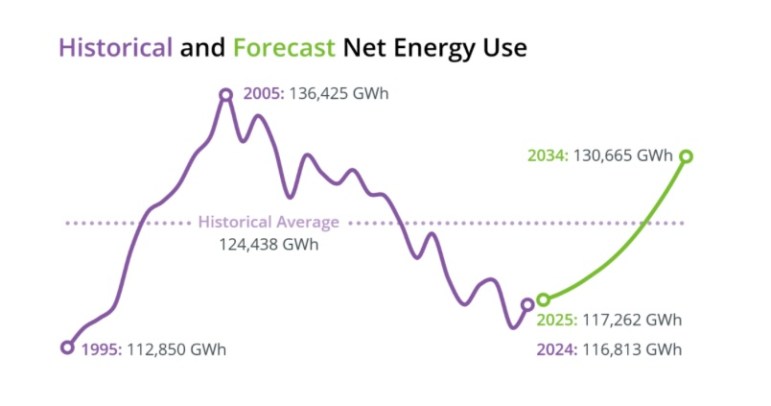
Up until now, demand had been held in check through energy efficiency measures and by residential rooftop solar that has been shown to take the edge off power demand during certain times of day — even through the winter when demands on gas for both heat and power generation can strain supplies. The ISO also predicts that the longstanding summertime peak demand season, due to air conditioning use, will switch to equal peak demands between summer and winter as more electric-powered heat pumps supplant gas and oil heating systems.
While New England has also seen robust adoption of electric vehicles, it has not experienced the massive surge in power needs other parts of the country are seeing from the growth of data and AI centers.
The prediction mirrors changes the Energy Information Administration is anticipating nationally over the next couple of years — with the bulk of the increased demand coming in the commercial and industrial sectors.
But predicting future EV and heat pump adoption, the cost of components from solar panels to steel and what generation will be available is difficult, said Matt Kakley, spokesman for the ISO.
“There’s a lot of uncertainty involved in pretty much everything,” he said pointing to the balance of three key factors — growth on the demand side, additions of generation and retirements of older power plants. “I think if those three work in lockstep, things are fine. If they get out of whack and the demand increases, but the generation doesn’t show up, or the retirements go quicker than you would like, then that’s where you start to run into problems. So what makes it difficult is that there is uncertainty on all three fronts.”
In other words – navigating what could shape up to be a mismatch between transmission and power.
“The bigger fundamental challenge for Connecticut and New England at large is offshore wind, where the states have made really big bets on offshore wind as the scalable large capacity factor, clean energy source that is more directly interconnected into New England than just about any other similar technology,” said Dan Dolan, president of the New England Power Generators Association. “With that being so pulled back and at best, a long pause being put on that industry, we are now having to do a fundamental reassessment on where else is large scale electricity supply growth going to come from.
“We are in massively uncharted territory with respect to energy policy.”
North to south transmission
The broad plan to provide New England with more wind power from its windiest on-shore area of sparsely-populated northern Maine has run into difficulty in the past because there’s no transmission to get it to southern New England where it’s most needed.
The formal step toward finally doing that came in April when the ISO issued its request for transmission proposals. Those proposals are due in September, with project selections a year after that.
“There is no doubt in my mind that we need greater connections between northern New England and southern New England, and that has been well known for years,” said Melissa Birchard with the Georgetown Climate Center. She also served in the Grid Deployment Office during the Biden administration and is a former New England climate activist. “The ISO-New England’s own studies show that there needs to be much greater connection, and this is just one of them. So is that a smart plan to move forward with? Absolutely.”
Whatever projects are chosen might also be useful to transmit grid-scale solar, or power from Canada, where plans to expand hydropower from Newfoundland and Labrador are in the works. Whether the current political situation between the U.S. and Canada might jeopardize the potential for the use of that power in the Northeast is anyone’s guess, as is whether the Trump anti-wind mindset will stall or derail northern Maine wind projects.
The FERC, tariffs and other factors
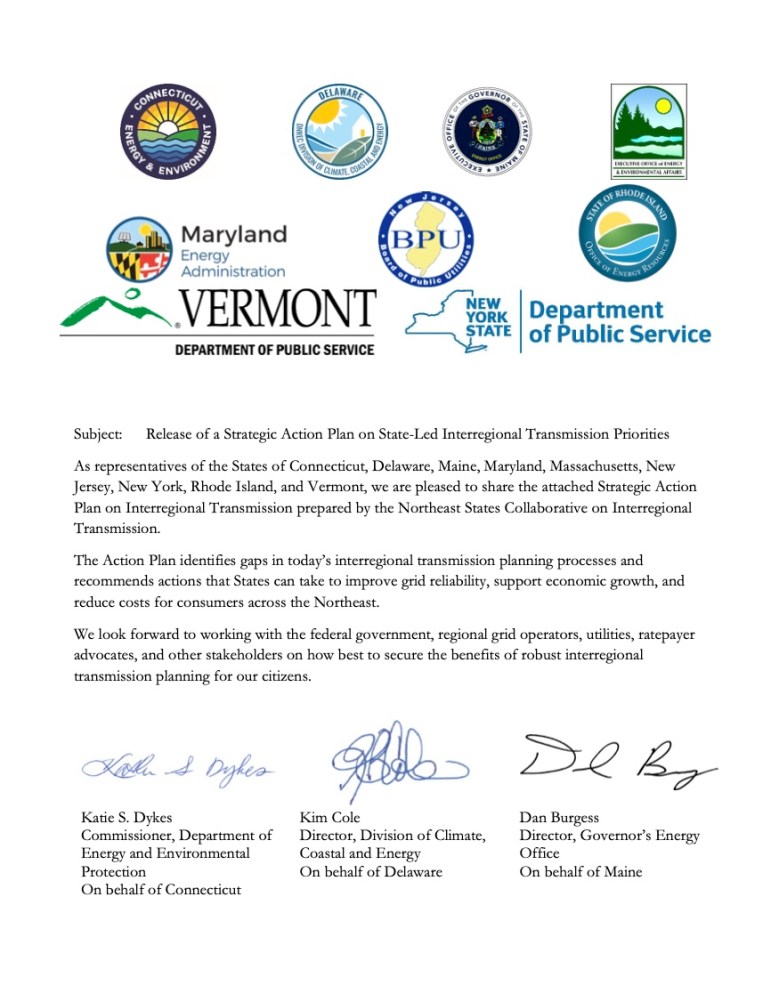
Many kinds of major grid activity such as transmission, especially something brand new like the interregional strategic action plan unveiled in April, face approval processes from what will likely be a Trump-majority regulatory body — the Federal Energy Regulatory Commission, FERC. It has five members with fixed terms. It allows no more than three members from one party and had been 3-2 Democrat when Trump came into office in January. But one of the Democrats resigned recently, with more than a year left in his term. That leaves the commission potentially deadlocked until another commissioner is appointed — more than likely a Republican.
The ISO’s Kakley said not all these projects will need to travel back through FERC for approval. “I wouldn’t say we’re concerned about it,” he said.
The next big thing is ISO’s revamp of what’s known as the capacity market. The plan is to switch from a so-called dynamic model, in which the ISO has to predict three years in advance what generation will be available for the grid, to a “prompt market” system that allows the ISO to wait until power is built and ready to go before incorporating it into grid planning.
“It won’t go [to FERC] till probably the end of the year … in the fall or early winter,” Kakley said.
For the interregional effort – any FERC signoffs are likely much further off.
“These are long-term plans, and we’re not going to build these things overnight,” said RENEW’s Pullaro. “When the current president is long gone is when we’re going to be building these projects. And we really need to think long term.”
Not that he doesn’t have concerns. “It’s a hyper challenging environment right now,” he said. “This president, despite what he says, he only has a four-year term, and there are midterms that are going to happen next year.”
A lot could happen – or perhaps more to the point, not happen – between now and then to upend the dynamic the way COVID and the Russian invasion of Ukraine did to the energy world not all that long ago.
The Trump administration could slash multiple in-progress projects as they attempted to do with Empire Wind. Their desire to expand fossil fuel use could succeed despite state renewable energy policies such as the kind Connecticut has. Supply chain issues, high prices and fraught international relations resulting from tariffs and other international policies and alliances could have an impact on every aspect of life, not just energy.
Ken Gillingham, an economist at Yale specializing in energy systems and a former senior economist for energy and the environment with the Obama administration White House Council of Economic Advisers, is not convinced rushing ahead with some energy projects is advisable.
“Right now my main thought is that you don’t plan or start anything until the uncertainty is at least somewhat resolved. Especially with tariffs potentially raising costs of a lot of materials, including those used in transmission lines and the fact that at the moment, we are heading towards a recession, which would reduce electricity/energy demand,” Gillingham said. “We are in a chaotic period right now, so it seems to me that the prudent course of action is to sit tight and wait. That seems to be what most firms are doing. It would mean slow walking or not moving forward with “Powering Up New England.”
He said the only reason to move forward right now would be if permitting could be expedited. “But I think the overall business uncertainty is a much stronger force influencing decisions,” he said.
The interregional plan also concerns Gillingham because it was researched and pulled together under more favorable pre-Trump economic and regulatory conditions.
“I wonder how they are thinking about all of this planning now that so many of the assumptions their analysis was built upon are thrown out the window,” he said in an email.
Should states step up?
AEU’s Burnham agreed there’s a lot of uncertainty now at the federal level, with tariffs and with changes in FERC leadership.
“This is not our first time facing uncertainty, but the pressure is absolutely there,” she said. “That’s why I think we are looking to state collaboration and regional coordination, because we are not getting the regulatory certainty or the market certainty that we rely on from the federal level.”
The mantra that states need to step up has become widespread among advocates, but the unanswered question is where will the money come from if federal funds dry up, or worse, if existing funds are rescinded? And how can projects even attract investors in an economic climate that could be headed for recession?
DEEP Commissioner Dykes skirts the question, pointing to the roughly $1 billion in federal infrastructure and IRA funds the agency competed successfully for during the Biden administration. It’s not clear how much of that may be in jeopardy as the Trump administration ends programs and seeks to halt distribution of funds.
“We’re continuing to move forward with the implementation of those funds and to assert our legal rights,” she said.
Georgetown’s Birchard points out that the infrastructure and IRA funds were designed as a jumpstart, not to be permanent. “Those pots of funds were always time limited. They were never perpetual,” she said.
To her, it shows why the nine-state interregional effort is so important, and not unrealistic even in the current environment.
“It has states working together in ways that they’ve never worked together before. But the reason they’re doing that is not because of the federal government, is because that’s what the moment demands,” Birchard said.
She said multi-state coordination and planning is needed to get offshore wind built off the northeast coast. It’s needed to have an electric system that is more resilient to extreme weather. And she said it’s needed to attain what she sees as four key goals: keep the lights on and people safe; bring costs down; ensure the transition to clean energy continues; and keep the country open for business.
“What the federal government does may change on a day-to-day, year-to-year, administration-to-administration basis, but those four things aren’t changing. They’re not changing right now, and they’re not going to change next year,” Birchard said. “But we are dealing with a situation where there is a great deal of uncertainty at the federal level, and so I think the easiest way to deal with uncertainty is to create certainty, and the states are taking that opportunity.”