



Across Connecticut, parents, teachers, and school leaders are sounding the alarm: the way we deliver special education is failing too many students.
Parents are exhausted from fighting for services their children are legally entitled to. Teachers are burnt out from trying to meet overwhelming needs with limited support. School leaders are stuck between budget pressures and growing demand. And taxpayers are paying more each year for a system that still leaves too many children behind.

For far too long, we’ve patched holes instead of building a system that works. It’s time for real, structural change — because our kids deserve better.
This week, the Connecticut House of Representatives will address comprehensive special education legislation toward these issues. For too long, Connecticut’s special education system has lacked the structure and consistency that students, families, and educators deserve. House bill 5001 is about fixing that by making much-needed investments in special education resources and improving access for students in every community.
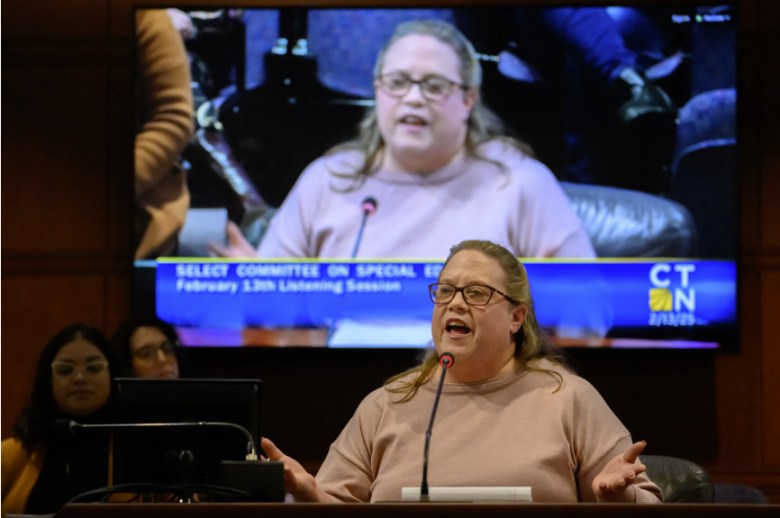
This legislative session, I had the honor of chairing the new select committee on Special Education that was tasked with addressing special education needs in our state. The committee held four public listening sessions across the state where we heard directly from parents, educators, school administrators, advocates, and community members. We also convened three informational committee meetings featuring insights from experts including the co-chairs of the Connecticut Special Education Task Force; the Executive Director of the Connecticut Association of Public School Superintendents; the Legislative Chair of Special Education Equity for Kids in Connecticut (SEEK) and the attorney for the Connecticut Council of Administrators of Special Education.
In addition, we consulted directly with Bryan Klimkiewicz, Connecticut’s State Director of Special Education. As chair, I also met individually with superintendents from across the state, parents who fought tooth and nail to get services for their children, and CAPSEF—the association representing Connecticut’s private special education providers. This bill reflects their collective experiences, expertise, and the urgent needs they shared.
One of the key features of this bill is investing in special education and interventions that help students struggling with academic or social emotional needs. Connecticut currently ranks 43rd in the nation for fourth-grade reading proficiency, and the gaps are even more pronounced for students with disabilities. This bill directly addresses this challenge by providing the resources needed for schools to implement proven interventions to help all students succeed. The bill expands access to opportunities so students get the support at the right time to gain critical academic skills they need and parents do not have to fight tooth and nail to get that support.
Additionally, the bill invests in the recruitment and retention of special education staff, tackling the critical workforce shortage that has hindered districts in providing the high-quality services that students with disabilities need. It also increases access to behavioral and mental health services, ensuring that students with more complex needs can receive the support they deserve to thrive in their education.
Another essential provision of the bill is the investment in in-district programs and facilities. Grants will help districts create or improve local placements, allowing more students to be served in their communities whenever possible. New construction and renovation funding will enable schools to build and redesign spaces that meet the needs of students with disabilities, reducing the reliance on costly out-of-district placements and creating better opportunities for students to learn in inclusive environments.
At the same time, the bill addresses a long-standing issue that’s been holding our special education system back —unpredictable costs and a lack of clarity around rate-setting for private providers. By establishing a transparent pricing structure for services, we ensure that districts have clear expectations and the financial certainty needed to make timely and informed placement decisions for students.
This will also address the disparities in service pricing, which currently prevent many districts from providing consistent, timely services for our students who need them. When costs are unclear or unpredictable, districts may hesitate to place students in certain programs. This bill establishes clear, fair, and consistent standards, ensuring that resources are used effectively and equitably, so that more students can access the support they need, when they need it.
The bill provides clarity, equity, and transparency in a system that’s been unpredictable for too long, and confusing for families to navigate. It’s about ensuring that the supports students need are not contingent on budget limitations but are instead available across the state, regardless of placement, equitably and efficiently. This legislation strengthens our special education system. It supports what’s working and provides tools to address what isn’t. It ensures that every student gets the right support, in the right setting, at the right time, because that’s what Connecticut’s students deserve.
As a mother first and a special education teacher second, this work is deeply personal to me. I’m proud to have authored this legislation, and I look forward to its passage —so that every child in Connecticut can learn, grow, and thrive in a system that truly invests and supports their growth
State Rep. Maryam Khan is a parent, teacher and Chair of the Connecticut General Assembly’s Special Education Committee.