


A comprehensive consumer protection bill addressing annoyances such as hidden fees, price gouging and hard-to-cancel subscriptions won final passage Thursday as the General Assembly’s 2025 session edged closer to its adjournment deadline of midnight Wednesday.
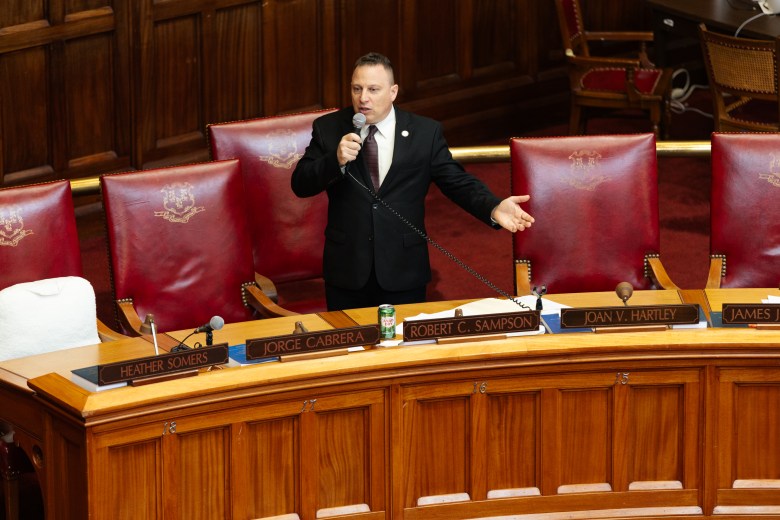
The pace of business on the House and Senate floors noticeably slowed, a consequence of the tradition of unlimited debate that enhances the influence of the Republican minority in the waning days of every session. Simply by talking, the GOP can limit how many — or which — bills are debated.
“Now that time has become a critical element of negotiations, it allows Republicans to leverage influence over the policies that we’re passing,” said House Minority Leader Vincent J. Candelora, R-North Branford. “It’s important for us to try to be able to get reasonable changes to legislation that we might not like or that we want to see proactively going in a different direction.”
Both chambers have scheduled votes for every day through adjournment, except Sunday. House Speaker Matt Ritter, D-Hartford, and Senate President Pro Tem Martin M. Looney, D-New Haven, who largely have settled their differences with Gov. Ned Lamont on a two-year spending plan, said no budget vote will occur before Monday.
Sixty-four House bills awaited final action in the Senate when lawmakers returned Thursday for their daily session. Seventy-eight Senate bills awaited final action in the House.
One of them was Senate Bill 3, the comprehensive consumer protection bill. Among other things, the measure includes a “right-to-repair” provision that would require manufacturers to make available the tools and information needed to repair appliances and electronics that are now tossed, not fixed.
The requirement would ease the impact of throw-away electronics on the waste stream and save consumers money, said Rep. Gary Turco, D-Newington, who presented and defended the bill as the vice chair of the General Law Committee.
“Right-to-repair” is a national movement that has led to similar legislation, including a bill that became law in Washington state this week. The Pentagon under the Trump administration is trying to make right-to-repair an element of defense contracts.
The bill also would require disclosure of the ability of televisions, smartphones and appliances to eavesdrop on their owners with audio and video links.
Turco said the legislation “comes directly from complaints we’ve heard from consumers or constituents.”
Some Republicans complained that certain elements could place a burden on businesses and drive up costs.
The bill passed on a vote of 112 to 34, with 13 Republicans joining 99 Democrats in support. The Senate voted 25 to 10 to pass it two weeks ago.
The Senate quickly bogged down Thursday over the first bill called for debate: House Bill 7042, a measure that could expose the firearms industry to civil damages for the misuse of firearms in limited circumstances. Republicans spoke for more than nine hours as their leadership attempted to negotiate with Democrats over the day’s agenda.
Passage was expected Thursday night.
Republicans decried the bill as unfairly holding gun makers and sellers responsible for the actions of purchasers, while the Democratic backers described it as a reasonable effort to make an industry be more attentive to public safety.
The legislation follows a narrow path left open by a federal law that generally protects the gun industry from damages resulting from the criminal or unlawful misuse of firearms or ammunition.
Exceptions to the federal Protection of Lawful Commerce in Arms Act include cases where harms occurred after a manufacturer or seller knowingly violated a law applicable to the sale or marketing of guns.
“There were exemptions placed in it,” said Sen. Gary Winfield, D-New Haven, responding to Republican suggestions the law would conflict with federal law.
In fact, the exception regarding the marketing of firearms was used by nine Sandy Hook Elementary School families to sue Remington over its marketing of the AR-15 style rifle used to kill 20 students and six educators in 2012. They agreed to a $73 million settlement in 2022.
The U.S. Supreme Court had refused to hear an appeal of a Connecticut’s court decision that allowed the families to pursue the case.
“This bill is openly hostile to this industry,” said Sen. Rob Sampson, R-Wolcott.
Sen. John Kissel, R-Enfield, said the legislation was intended to drive what’s left of the firearms industry out of Connecticut by lawsuits.
“That’s why I think this is a really pernicious bill,” Kissel said. “That’s why I think this is really scary. That’s why I think this is really big government. That’s why I think our legislature, with this legislation, is going way too far.”
Nine states have passed similar laws.