



Waste crisis, climate emergency, fast-fashion, PFAS, electric vehicles, wildlife collapse, increasing pollution—keeping up with the pressing environmental issues we face today can be overwhelming.
It’s a moral dilemma to care about the environment when it seems like everything in our society is designed to be harmful. How can we make effective change without burning out over every small decision’s impact? We need to be able to zoom out, understand the impact of each action, and focus our energy where it counts.
My colleague Christine O’Neill’s recent op-ed on CT’s plastic bag ban raised some important concerns on the increasing burden of plastic waste on public health, wildlife, and the mounting trash crisis.
The uncertainty of where our trash goes is compounded by a growing suspicion of recycling —the idea that items placed in the blue bin may be incinerated or landfilled anyway feels like a betrayal. Many hard-to-recycle items —like food waste, soft plastics, and electronics, which aren’t accepted in curbside recycling— often end up in blue bins. This leads to recycling contamination, fines for municipalities, and missed opportunities to properly recycle those materials.
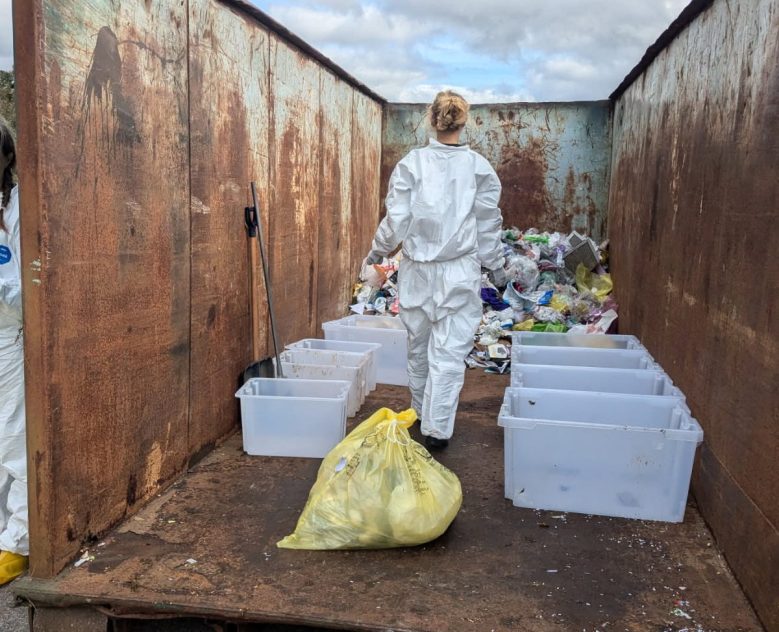
Understanding what our trash and recycling is really made of can help contextualize these issues and take the mystery out of it. Did you know the types of trash we produce is actually quite predictable? Waste characterization studies —conducted regularly by state and municipal governments— tell us that most people throw out the same types of things in similar proportions.
On average:
- 41% of residential trash is recyclable materials like paper, cardboard, glass, and containers (CT DEEP, 2022)
- 22% is food waste
- 7% is textiles that could be donated or recycled.
- 1% by weight (4% by volume) is plastic film and bags
Recyclables are only valuable if they’re clean and separated. Once mixed with non-recyclables in a trash bag, they can’t be recovered. You can’t unscramble an egg.
Food waste is also a huge opportunity. If composted or anaerobically digested, it can become a valuable soil amendment. But if sent to a landfill or incinerator, those nutrients are lost —and the wet, heavy food drives up disposal costs.
Our economic system is designed to encourage waste. Throwing everything in the trash is free and easy —it’s covered by property taxes. In contrast, recycling soft plastics, composting food scraps, or using specialty recycling programs takes extra time, money, or effort. The system makes waste the path of least resistance.
This means the true cost of trash is hidden. Municipalities pay per ton to incinerate or landfill trash, yet residents rarely see any financial incentive to reduce waste.
So how can we fix this? In her op-ed, O’Neill notes: “Connecticut desperately needs to cut its waste generation, either through source reduction (make less trash in the first place) or diversion (send it to be used for something other than burying or burning).” As tipping fees continue to rise, towns are looking for effective solutions to reduce waste and increase recycling without adding additional burdens to budgets or residents.
Unit Based Pricing paired with food scrap diversion is widely considered the gold standard for municipal waste reduction, with the potential to reduce trash by up to 70%. This is seen in Stonington, the only town in the state to exceed CT DEEP’s 2024 goal of 60% waste diversion.
This approach prices trash according to volume instead of flat fees that are buried in property tax bills, giving people the power to save money by reducing the amount of trash they produce. Unit Based Pricing works, in every one of the 300+ communities in New England that use it, trash is reduced by an average of 44%. Why it works is a lesson from behavioral economics —when people see that their trash has a cost and a value, they think about it differently, and they behave differently.
Pair this with removing food scraps from the regular waste stream, and we’re on our way to significant progress.
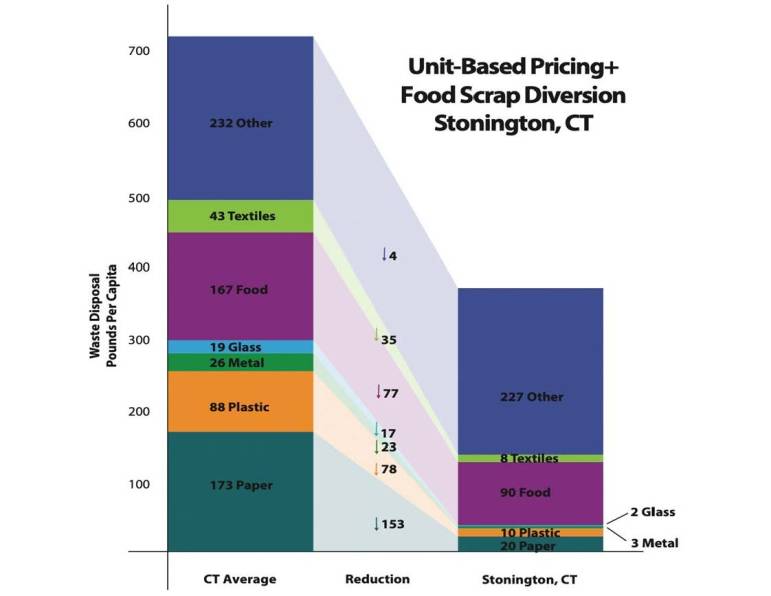
The above chart shows the impact of Unit Based Pricing on the annual generation of waste by material category. WasteZero, Sustainable CT Coffee Hour, April 19, 2025.
These are real, achievable solutions, but municipalities are strapped for cash and resources, making development and implementation of these programs even more challenging. However, Sustainable Materials Management and Materials Management and Infrastructure grants from the CT Department of Energy and Environmental Protection have made funding and implementing these programs a reality for municipalities across the state.
Using the 2023 SMM grants, 15 towns launched exploratory projects, and seven of those projects were adopted permanently. These efforts reduced municipal solid waste by over 6 million pounds across Connecticut.
I, like many others, want to be a good citizen— health-conscious, anti-racist, feminist, good daughter/friend/granddaughter, mindful co-worker—and also save the planet. But when everything feels urgent, I focus on what I can control: reducing food waste, shopping secondhand, remembering my reusable bag, and I’m lucky to work on systemic change professionally.
But effective change cannot rely on individuals to make the perfect choice every time. We need systems that make good-enough choices easier and more rewarding. We need collective accountability, not individual perfectionism.
Remember: 41% of what’s in the trash could go in the recycling bin. Another 22% could be composted, and 8% could be recycled in other ways. That’s 71% of trash we could divert with existing systems—if people had a reason to use them.
We need to stop hiding the true cost of waste. Let’s evolve our systems to ones that support and reward smarter choices —Unit-Based Pricing for trash, composting, bottle and can redemption, Extended Producer Responsibility —ones that help us all do better, together. That’s how we build communities that are not just less wasteful, but more resilient, more just, and more hopeful.
Tory McBrien Vranken and Megan Macomber are lifelong Connecticut residents. They have worked in sustainability at the state and local level for eight years.