


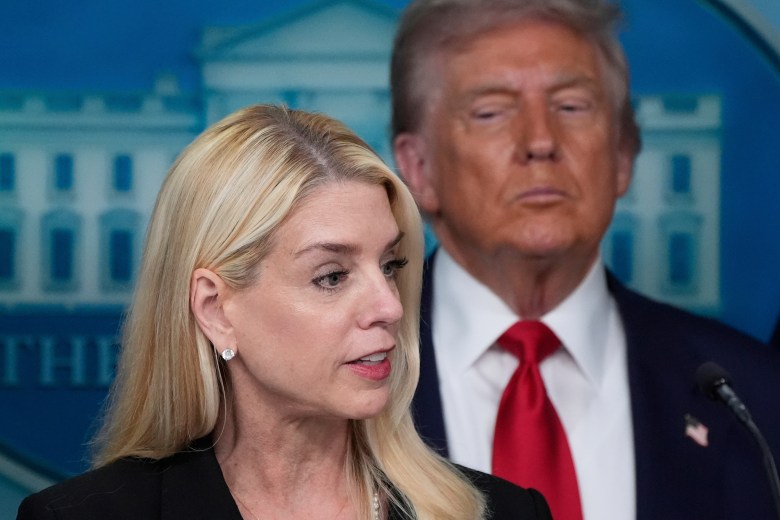
Connecticut received a letter this week from U.S. Attorney General Pamela Bondi alleging the state maintains so-called “sanctuary policies” deemed unlawful by the Trump Administration and demanding a response by Tuesday, Aug. 19.
The letter comes just over a week after the U.S. Department of Justice named Connecticut on a published list of 12 states and other jurisdictions with “policies, laws, or regulations that impede enforcement of federal immigration laws.”
Connecticut Attorney General’s office disputes the characterization.
Bondi’s letter, dated Aug. 13 and addressed to Gov. Ned Lamont, states, “You are hereby notified that your jurisdiction has been identified as one that engages in sanctuary policies and practices that thwart federal immigration enforcement to the detriment of the interests of the United States. This ends now.”
The letter asked for a response “that confirms your commitment to complying with federal law and identifies the immediate initiatives you are taking to eliminate laws, policies, and practices that impede federal immigration enforcement.”
Connecticut Attorney General William Tong confirmed receipt of the letter, and said in a statement that the accusations were false. “There is nothing in our laws or statutes that says Connecticut is a ‘sanctuary’ state. We are not. Trump’s own administration certified Connecticut’s compliance with 8 U.S.C. § 1373 in 2017.”
Tong said nothing has chanced since that certification, “and we will explain that in our response. Any claim or suggestion that Connecticut has violated or is not in compliance with federal law is false. Connecticut is prepared to pursue all legal rights and remedies to defend our sovereignty and the people and families of Connecticut from federal overreach.”
Connecticut’s Trust Act limits cooperation with federal authorities in identifying and detaining undocumented immigrants. Originally passed in 2013, and revised in 2019 and this year, the act limits the circumstances in which police and others can alert federal agents to the location of an undocumented immigrant or detain them for deportation, with exceptions for individuals facing serious criminal charges.
The original Trust Act was passed unanimously during the administration of Barack Obama, but the two revisions during Trump’s first and second terms came on largely party-line votes in a General Assembly dominated by Democrats.
State officials say the law is consistent with the anti-commandeering clause of the Constitution, which bars the federal government from forcing local and state authorities to act as agents of the federal government.
Democrats say the intent of all three laws was to ensure undocumented immigrants will feel safe reporting a crime or seeking aid from police without fear of being turned over to ICE. Republicans say they are too restrictive.
The Justice Department earlier this month published a list of the nine characteristics of sanctuary jurisdictions. Six Connecticut municipalities had also been named on such a list by the Trump Administration in May, but were left off of the August list.