


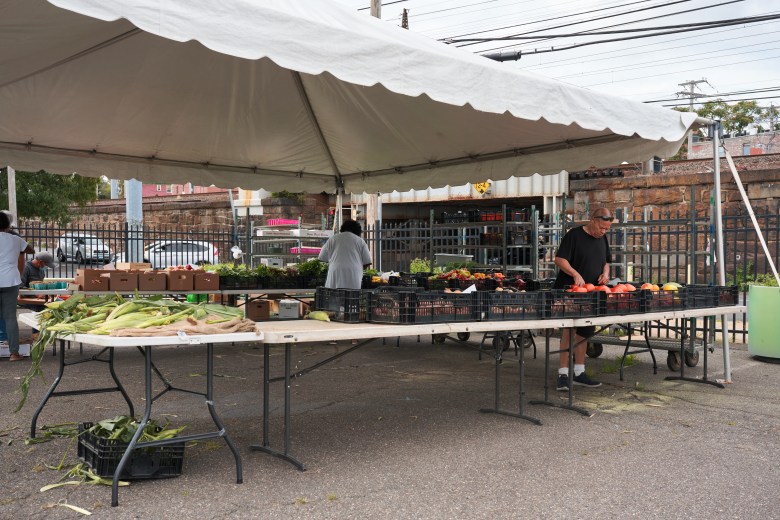
For many Bridgeport residents, accessing fresh, locally grown produce is not always simple. Neighborhoods across the city face nutrition insecurity, limited access to grocery stores and rising food costs. The Bridgeport Farmers Market Collaborative was formed in 2014 to address these challenges, and over the past decade, it has grown into more than just a place to shop for fruits and vegetables. It has become a hub where residents can save money, learn how to cook with fresh ingredients and connect with neighbors.
The collaborative began with a simple mission: to make Connecticut-grown produce accessible and affordable while supporting local farmers and strengthening community ties. Today, it operates multiple farmers markets across Bridgeport, offering three primary programs that help residents stretch their grocery budgets. These programs are: Bridgeport Bucks, SNAP matching and the Farmers Market Nutrition Program. They work in tandem to ensure that families of all income levels can access healthy food.
Here’s more information on the markets and the programs the collaborative offers.
Bridgeport Bucks
Bridgeport Bucks is the flagship program of the collaborative. The initiative provides $5 vouchers that any shopper can use to purchase farm-produced items such as fresh produce, honey and jams. Unlike many assistance programs, Bridgeport Bucks are available to anyone, including people who do not qualify for SNAP benefits.
“People are like, ‘For real? You don’t need anything else?'” said Takina Pollock Shafer, director of the Bridgeport Farmers Market Collaborative.
The vouchers are so popular that they often run out within 15 to 20 minutes of a market opening. The program is made possible through sponsorships from local businesses, organizations and individuals who want to help lower the cost of fresh food in the community. By providing immediate financial relief, Bridgeport Bucks allow families to buy more fruits and vegetables than they might otherwise afford, helping residents make healthier choices while supporting local farmers.
Doubling SNAP Benefits
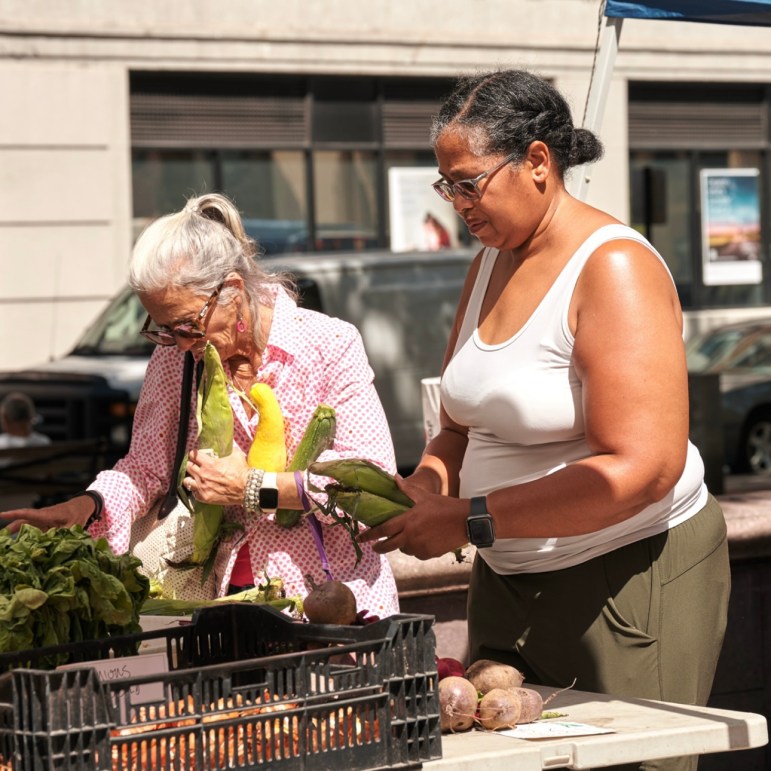
For families who rely on the Supplemental Nutrition Assistance Program, or SNAP, the collaborative offers a dollar-for-dollar matching program through a partnership with End Hunger CT. The program, known as CT Fresh Match, allows SNAP customers to double the value of their benefits when shopping at any participating farmers market in the network. For example, a $10 SNAP purchase earns $10 in matching tokens that can be spent on additional farm-produced items.
“We want to give people a dignified experience. You don’t want to make it feel like something complicated,” Shafer said.
The SNAP matching program not only increases purchasing power for families but also encourages people to try new fruits and vegetables. Customers can use their tokens across multiple markets in the network, providing flexibility and choice. This system allows shoppers to access produce at different market locations and times, accommodating work schedules and transportation limitations.
Farmers Market Nutrition Program
The collaborative also participates in the Farmers Market Nutrition Program, which provides additional support for seniors and WIC recipients. Seniors are eligible to receive $40 vouchers, while WIC participants receive varying amounts depending on household size and eligibility. To extend support further, bonus vouchers are also available, allowing recipients to stretch their benefits even further.
Shafer said the program has a noticeable impact on seniors. “The seniors, they don’t mess around. They’re spending those bucks because we get everything back,” she said.
Cooking Demonstrations
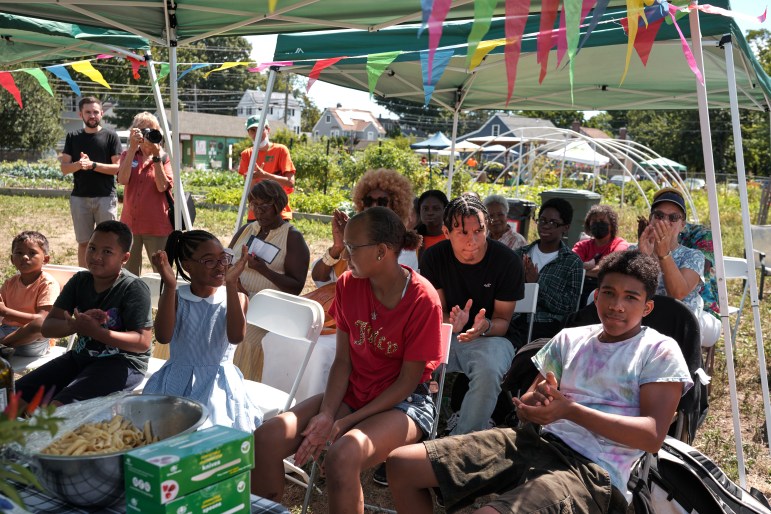
Beyond financial assistance, the collaborative emphasizes education and engagement through cooking demonstrations led by Chef Raquel Rivera of A Pinch of Salt. In these demonstrations, residents are taught how to prepare seasonal produce in simple and approachable ways. Participants can taste the finished dishes, take home recipes and even earn Bridgeport Bucks for attending.
“It teaches people what to do with produce, and that it doesn’t have to be complicated,” Shafer said. Cooking demonstrations encourage residents to try new ingredients and recipes, build confidence in the kitchen and develop healthy eating habits.
Impact and funding
The collaborative operates markets across nearly every Bridgeport neighborhood. Multiple markets run on different days to prevent competition while maximizing accessibility for residents.
Consistency is a key element in building trust, Shafer said. Residents know when and where markets will take place, and regular attendance creates a sense of community among shoppers and vendors alike. “Repetition is what builds community for people. There are just places where people know they can go and get what they need,” Shafer said.
The programs offered through the collaborative also have a measurable impact. Last year, the organization distributed approximately $80,000 in benefits, an increase from $50,000 the previous year.
The collaborative’s programs are supported by a variety of local sponsors, including M&T Bank, Hartford HealthCare, St. Vincent’s Hospital, and Yale New Haven Health. The collaborative also works with other organizations to extend its reach. Partnerships with groups such as the Green Village Initiative are being explored, with the goal of creating a regional food hub that could provide a consistent, accessible market space and long-term sustainability for the programs.
Despite the successes, the collaborative faces challenges. Funding can be inconsistent, and SNAP matching funds are potentially at risk for 2026. The organization remains fiscally sponsored rather than operating as a fully independent nonprofit, which can limit long-term planning.
“Our SNAP matching funds are in jeopardy for 2026. We’ve been doing great and responding to the need that just seems to be growing year after year. So I’m hoping the money grows in the same direction,” Shafer said.
Locations and schedule
The markets run from June through November, and schedules for cooking demonstrations and voucher distribution are available at each location. Here is the schedule for this year’s season:
East End NRZ Market
Sundays, 9 a.m.–3 p.m. | Ends Oct. 26
1851 Stratford Ave.
St. Vincent’s Farm Stand
Tuesdays, 10:30 a.m.–3 p.m. | Ends Dec. 2
2800 Main St.
East Side Market
Wednesdays, 10 a.m.–2 p.m. | Ends Oct. 15
752 East Main St.
McLevy Farmers Market
Thursdays, 10:30 a.m.–2 p.m. | Ends Oct. 30
McLevy Green, 102 Bank St.
Farm Stand at Bridgeport Hospital
Thursdays, 3:30–5:30 p.m. | Ends Oct. 30
200 Mill Hill Ave.
Alliance Farmers Market
Fridays, 12–3 p.m. | Ends Oct. 31
1151 Park Ave.
Green Village Initiative Reservoir Farmers Market
Saturdays, 10 a.m.–2 p.m. (bi-weekly) | Ends Oct. 25
1469 Reservoir Ave.
Stratfield Farmers’ Market
Closed for the 2025 season
