



This past summer, Gov. Ned Lamont vetoed a major housing bill that would have helped build more homes across Connecticut. His message? Local voices matter. Towns should take the lead.
And I wondered – which voices, exactly? And lead in what direction?

It’s now been months since that veto. No special session has been called. And while lawmakers are still working to tweak and refine HB 5002, one truth remains: we can adjust a bill’s language, but unless we’re willing to fight for belonging, we’ll never change the outcome.
I live in Woodbridge, a town held hostage by what I call the No-Growth, No-Opportunity Coalition. If local voices matter to the governor, then I want him to hear this: we aren’t just fighting over buildings, we’re fighting over belonging.
At least, that’s what my dad taught me.
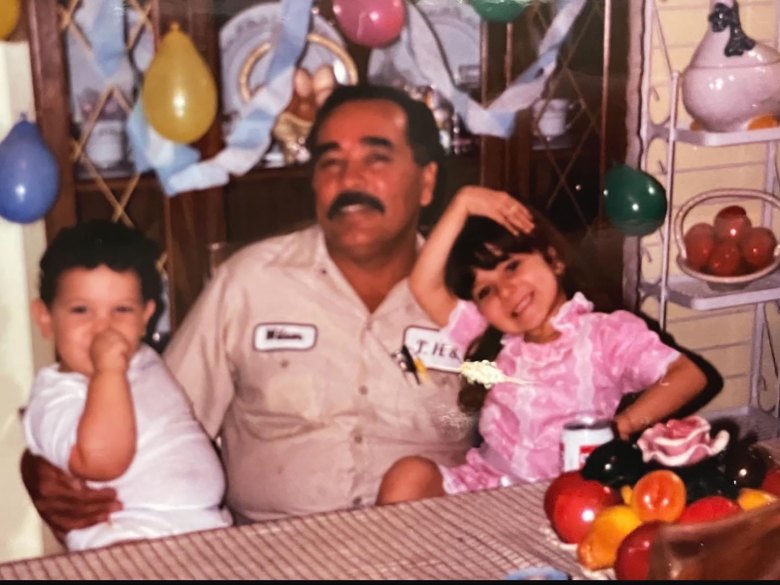
My father was a janitor. He worked in a school, mopping floors, cleaning bathrooms, and keeping the grounds. He loved what he did. As a child, I didn’t understand why.
Some summers, I tagged along – his quiet way of instilling in me a pride in work. One day I asked why he cared so much about mopping floors and replacing urinal cakes. He smiled, saw through my question, and gave me a lesson I’ll never forget:
“I’m not just taking care of floors or bathrooms,” he said. “I’m caring for what happens inside that building – the teachers, the students, the lives being shaped every day. The future. That’s what’s within these walls. That’s what I’m nurturing. Potential.”
That’s how I think about housing. The buildings matter, yes – but what matters most is who gets to live inside them: families, children, futures shaped by access. When opponents block housing, they’re not rejecting walls or blueprints. They’re rejecting people – and their potential.
That’s why housing debates are so charged. I’ve seen it firsthand in Woodbridge, during a recent town meeting where Democrats and Republicans, usually divided, stood united in one effort: blocking a proposed 96-unit apartment building through procedural delay.
It was another reminder that some towns aren’t leading. They’re being held hostage by fear, by a coalition that thrives on saying no.
On my drive home that night, beneath the black oaks reaching toward the stars, something painful settled in. Long before my family arrived, this town had already said no to my child.
The objections I’d heard that night weren’t new. They followed a familiar playbook: process complaints. Traffic fears. Appeals to “neighborhood character.” Invocations of conservation and the environment. And finally, the hardest one to hear: the claim that there would be too many children.
Some concerns — like traffic, environmental impact, or school capacity — can and should be addressed. But appeals to “character” and “aesthetics” are different. They’re vague by design, impossible to measure, and often used to preserve exclusion without saying so outright.
This is the intersection where policy meets bad faith and the result is stalling and stagnation. We don’t lack ideas. We lack moral clarity and resolve.
Consider the scale: Connecticut needs more than 100,000 affordable housing units to meet demand – most of it from lifelong residents priced out of their own communities. Yet in 2024, the state completed just 1,335 state-financed homes — a 33% drop from the previous year, and reportedly the lowest total in more than a decade. That’s not progress. That’s failure by delay.
HB 5002 was a step in reversing that trajectory — not by stripping local control, but by incentivizing towns to take action, offering tools and resources to those willing to build.
We must ask: Can a town truly lead if it’s captive to curators of “taste” — neighbors who cloak exclusion in the language of character, aesthetics, and tradition?
Governor Lamont says local voices matter. I’m asking which ones. The tastemakers? Or the families priced out of opportunity?
Too often, the loudest voices in the room aren’t speaking in good faith. And the people who most need housing? They’re not in the room at all.
Some towns aren’t planning for growth — they’re planning for delay, cloaked in the language of process. And delay, repeated enough, becomes policy by default.
I think often of my dad, who passed during the pandemic. His lesson still guides me: see past the brick and mortar, and focus on the people, the possibility, the futures inside.
That’s what we should be fighting for. That’s what belonging looks like.
But I worry we’re not having the right conversation. Too often, even local Democrats mistake process for progress. They speak the language of inclusion while quietly backing efforts to stall or kill projects. They don’t see that by opposing density, they’ve become part of the very problem we claim to be solving.
We’re not short on ideas or policy tools. What we’re missing is moral clarity.
Because belonging isn’t neutral or static. It must be an active political value — one that both parties can champion.
If we believe in opportunity, in fairness, in a future where working families can thrive, then access to homes people can afford must be central. Some would say: build where it’s easiest. I say: build also where it matters, in communities that offer working families a promise of opportunity.
Yes, HB 5002 may be amended. But the final bill must do more than change words — it must be a step toward changing outcomes. It must free communities held hostage to bad-faith obstruction and performative processes.
Because when we block homes, we’re not preserving our towns. We’re narrowing their future.
Leadership isn’t about letting towns say no — it’s about helping them say yes.
Call the special session, Governor. Moderate exclusion, not opportunity.
That’s how you fight for belonging. That’s how we create more homes people can afford.
Melvin Medina is Vice President of Advocacy and External Affairs at The Connecticut Project.