




This is the second of a four-piece series promoting ways Connecticut people can help overcome the political and social polarization dividing the United States. Here is Part One.
In the face of current events, depolarizing our politics is imperative now more than ever.

I attended Johnson & Wales University for culinary arts. I worked in kitchens 12 hours a day between class and my full-time job, and quickly became burnt out. This was at the height of the 2016 presidential campaign when I told myself, “There’s no way Donald Trump becomes President.”
Shortly after, I switched my major to political science. Since then, I have had countless political conversations turn into arguments. Some feel very silly in hindsight, such as when I argued with another student about whether college classes should require attendance. Others feel much more salient, such as my wife and I having different views on abortion.
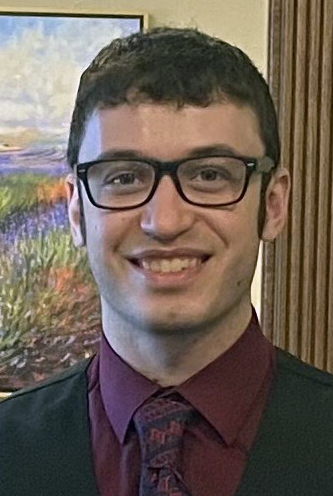
After many political fights over the years, I knew something needed to change. So I contacted Braver Angels, an organization I was familiar with, but never truly engaged with. Integrating my experiences with what I learned from Braver Angels, the following skills are how I have better political conversations. Some of this advice may be self-evident, others more challenging, but trust the process.
Define your terms; not everyone means the same thing even if we use the same words. Do not go into a political conversation trying to change someone’s mind. Lastly, we have more to learn from people we disagree with than those we agree with.
Toward the end of my Political Science degree study, I had the opportunity to spend a semester abroad in New Zealand. One of my roommates and I were up late one night, and politics came up. I do not remember the topic, but what stands out in my memory is that the conversation lasted three hours. Most of the conversation was spent in respectful disagreement until we approached the last hour. This is when I finally asked, “What do you mean when you say . . .” I finally realized that the past two hours had been spent talking around with each other because we had different definitions of the terms we were using. In fact, around 1 a.m., we decided to call it quits because we had actually agreed on the political topic the whole time, not having realized it.
Define your terms. My next principle for better political conversations is much more difficult: Do not try to change people’s minds.
What!? I know what you’re thinking, “Isn’t the point of talking to people about politics to change their minds?” Yes, it is, but how we change minds is more important. Many go into these conversations thinking, “If I just have the right argument, I can logic my opponent into a corner, then they’ll have to take my side! (insert corny maniacal laugh here)” People need to trust you have good intentions to be open to changing their minds. It goes without saying that we aren’t listening when we devote our mental energy to our rebuttal.
Right after college, I joined an AmeriCorps program called City Year.
As someone who believes a life well lived is done in service to others, helping at-risk youth succeed in their education seemed perfect for me. Behind the scenes, I encountered constant political disagreements with my coworkers. At first, we could remain cordial, hoping to convince each other to their side. As time passed, conversations became more tense until the worst of the arguments occurred about halfway through the school year. Looking back on my behavior, I was not listening to them. I thought I could logic my way to getting them on my side, but they did not trust that I had good intentions behind my political beliefs.
Like most of us, I have good intentions; none of the worst stereotypes levied against my side of the political spectrum apply to me. However, I did not earn their trust before expressing why I thought they were wrong. Changing people’s minds about a political position takes time. It stands to reason that few will keep an open mind to admitting they may have been wrong if they are not truly being listened to in the first place.
My frustration at City Year led me to act in ways that cost me friendships. So that your political differences don’t cost you yours, prioritize active listening, and seek to understand your conversation partner’s belief, not some caricature propagated by pundits you agree with. Develop a foundation of trust first, then make the case for your position.
This begs the question, why should we even want friendships across the aisle? After all, aren’t “those people” hateful or bigoted? Not as often as political pundits would have you think.
We have more to learn from those we disagree with than those we agree with. They fill the gaps in our knowledge and point to things we may never have considered. Only by rejecting homogeneous thinking can we gain the whole picture. As people become more geographically segregated by political beliefs, keeping and maintaining relationships across the aisle becomes increasingly tricky. This is where Braver Angels comes in. Many of their virtual events allow us to meet people we would normally never interact with.
I want a future with less political violence. Recently, we have seen quite a lot of it, between the assassination of Melissa Hortman, her husband, and Charlie Kirk. Political violence is unacceptable, no matter who the target, but it will continue if we allow our communication to break down. If you want to keep the conversation going, I hope to see you at a Braver Angels event soon!
Peace be with you.
David McGraw of Willimantic is a member of Braver Angels. The public is invited to participate in a Braver Angels CT open Zoom session Oct. 23. REGISTER HERE.