



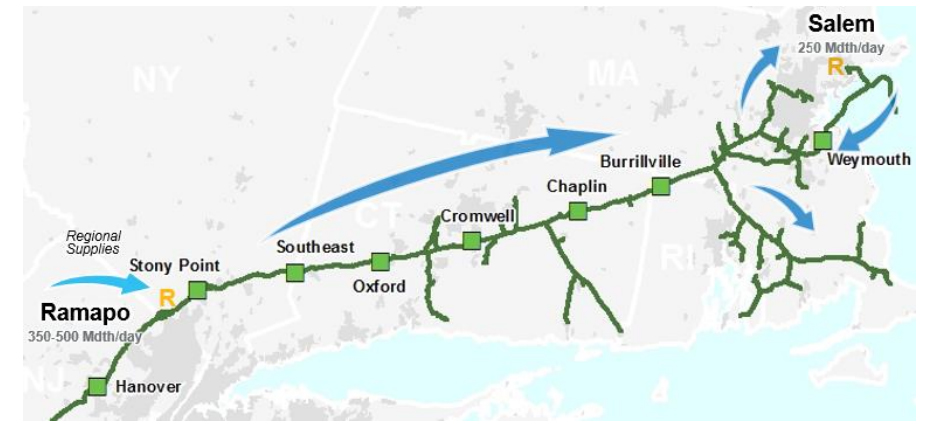
It is hard to overstate the importance of the energy turning point that Connecticut faces right now – and the ramifications to our pocketbooks and our health if we make the wrong choice.
Soaring electricity costs have put enormous pressure on political leaders to cut costs and help justifiably angry customers. New England states routinely finish behind only Hawaii and California when it comes to the cost of electricity.
The reasons for our soaring costs are complicated. We’re not going to solve them with simplistic solutions – no matter how tempting it may be to opt for what is sold as a quick fix.
And that’s what fossil fuel advocates are doing right now – telling us all our problems will go away with one short-term fix: burning more gas. In questionable surveys, hardball Hartford lobbying, and a barrage of media stories, these advocates are pushing Connecticut leaders to build gas pipelines and use more fossil fuels.
We have to pause when paid advocates for fossil fuels call for more oil, coal, or gas. We must question the long-term overall cost and damage of what they are pushing.
Former Congressman Tim Ryan of Ohio is working in Connecticut on behalf of fossil fuel companies that want expanded gas pipelines and more fossil fuels as a solution to high energy costs. The problem? There’s a lot of evidence that Connecticut’s electricity rates are high because the region is heavily dependent on natural gas. The price of gas fluctuates with supply and demand, with war and global turmoil. It is delivered in pipelines that leak and require repair and replacement and burned in power plants that pollute our air. Those charges are all passed on to consumers.
The former Ohio congressman also cites a study paid for by fossil fuel advocates Natural Allies for a Clean Energy Future (NACEF), a group funded in part by companies that build gas pipelines. The study claims popular support for more gas and pipelines. According to that survey, 80 percent of Connecticut residents want the state to burn more gas.
According to a survey not funded by the gas industry, 88 percent of Connecticut residents believe climate change is a real problem, 87 percent want more solar power, and 74 percent want more offshore wind.
To their credit, Ryan and NACEF do call on Connecticut to get more clean energy – they just want us to build more pipelines and burn more gas while that happens. Unfortunately, that risks locking us into years of higher electric bills.
A thoughtful look at the pitfalls of Connecticut increasing gas use by Kat Burnham of Advanced Energy United highlights why gas is a bad deal for our region. Connecticut ranks fourth in America for miles of old pipe needing attention. Massachusetts has had to spend $6 million a mile to replace or fix their old pipes, and the price of gas overall has doubled in the last year. New pipelines take years or even decades to pay off, and customers will have them on their bills for years. Once we have invested that much to repair, replace, expand and build gas pipelines, the industry will have a hold on us: You are paying for our pipes anyway, you should use them to burn more gas.
The worst part? That path will certainly slow down and maybe stop the near-term solution to our electricity problems – more solar, wind, and battery storage. Land-based wind and utility-scale solar are the most economical near-term options and should be prioritized.Calls to build pipelines and burn more gas are part and parcel of an agenda being driven by the Trump administration to gut renewable energy projects, kill local jobs, and slow our buildout of clean sources of power.
So why are Democrats like Tim Ryan parroting Trump’s fossil fuel propaganda? Connecticut doesn’t need more of the same tired talking points from oil-funded campaigns. We need leaders who listen to us: the people who live here, who pay the bills here, who want to power our future with energy that’s affordable and clean.
If we allow gas interests to sell us miles of new or expanded pipes, it will commit us to a future of uncertainties and soaring costs, rob us of local jobs and local energy, and pump out more pollution. There is no question that we’ll continue using gas for some time as we transition to cleaner sources of energy, but simply buying more and increasing our reliance is a false solution —today and for our future.
Shannon Laun is Conservation Law Foundation’s Vice President for Connecticut