


Connecticut’s storms are no longer rare surprises; they are becoming the new normal. On a Monday afternoon last month, 15,000 people lost power, with winds reaching up to 48 mph in Groton and Bridgeport. Trees fell on roads and power lines, heavy rain flooded parts of the state.
Where I live in Willimantic, the lights stayed on, but the scale of the damage elsewhere reminded me of the flooding and extreme weather I faced growing up in Bangladesh. Even in a completely different economic and geographical setting, the effects of climate change are evident, and the same challenges with infrastructure struggling to keep up are clearly visible.
As an environmental engineering student, I am concerned that Connecticut’s infrastructure may not be ready for a changing climate. Each time a major storm passes, the urgency fades. People move on, and the problem resets —until the next round of outages reminds us again. We must start planning and investing now, updating design standards, strengthening power systems, and preparing for the climate we actually live in, not the one we used to.
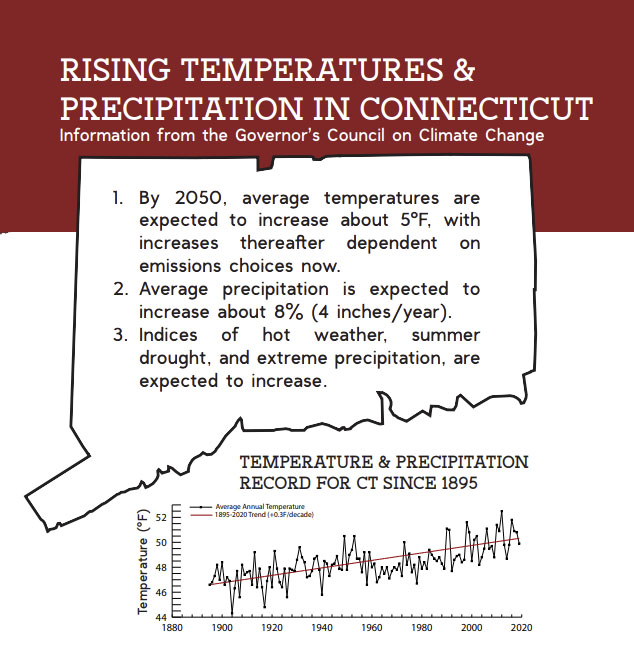
Connecticut’s climate has been changing for decades. The Governor’s Council on Climate Change reported that precipitation has grown by 0.17 inches per decade since 1985, with the largest increases in fall, the very season when nor’easters often strike. Across the state, rain totals were up to two inches during last month’s storm. Days with more than one inch of rain are expected to rise with climate change. In a high greenhouse gas emission scenario, the average annual precipitation could increase 8% (four inches every year). That means wetter soil, more treefall during storms, and higher risks of power outages during storms.
According to CT Department of Energy and Environmental Protection, past guidance for design precipitation about “10-, 25-, or 100-year storms” are no longer reliable. A storm that used to happen once in a century may now happen much more often. Most power lines and roads were built for an older climate, not the new reality of stronger storms. The CT Department of Energy and Environmental Protection’s Stormwater Manual has updated its design standards to account for climate change and resilience considerations.
Eversource, Connecticut’s largest utility provider, has acknowledged that most outages are caused by trees falling on power lines. The company has invested in trimming branches and removing high-risk trees to reduce storm damage. These efforts have helped, but they cannot prevent all outages, especially as storms become stronger and more frequent with changing weather. Even with tree trimming and other maintenance, trees fall more easily because of wetter soil and heavier winds.
Maintaining overhead lines is also expensive: Eversource spent more than $1.5 billion from 2010 to 2019 on repairs and tree removal. Burying lines underground would cost an estimated $28 billion for a quarter of the state, but annual maintenance would drop to $15 million, compared with $130 million for overhead lines, showing that underground lines could save money over time and reduce outages.
Our planning and design practices need to catch up with rising temperatures, heavier rainfall, and the realities of climate change. Decisions about infrastructure, whether to bury power lines or continue maintaining overhead ones, should be based on careful research to find the most effective and sustainable solutions.
Residents can also help by staying aware of storm risks, reporting hazards like unstable trees, and supporting local climate initiatives. The key is to treat these issues seriously and consistently, not to forget them once a storm passes.
Rapid, well-informed action is essential to reduce damage from future storms and protect our homes and communities.
Himel Moulik is a student at the University of Connecticut.