



Growing up in Fairfield County, I was privileged enough to enjoy structured summer activities. I spent my days at my town’s recreation camp with my school friends, my afternoon’s practicing my violin, doing summer math and reading packets, and my evening with my family. As I got older, I got the opportunity to go to sleep-away music camp for many years, and special family trips. Not all students have access to enriching summer activities just because of the socioeconomic status they were born into. However, all children should have access to fulfill their potential, and be supported by summer programs that enrich their learning.
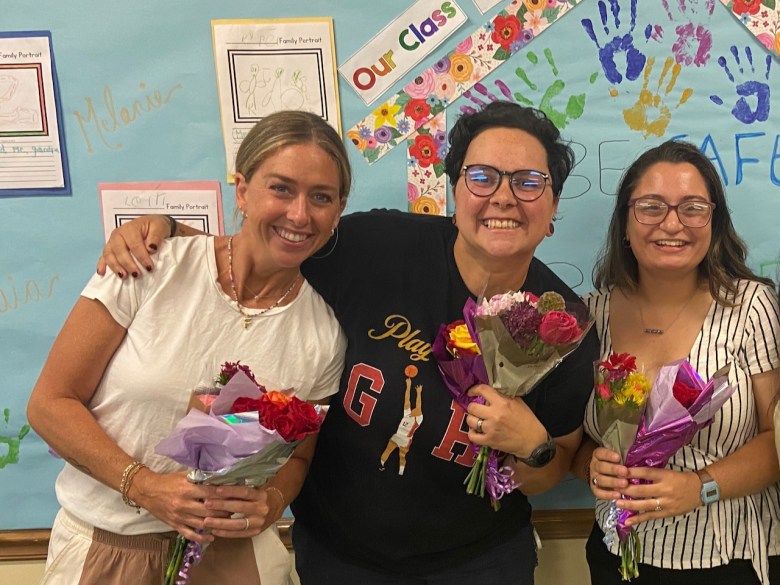
I spent the summer of 2025 working as a teacher’s aide in the Horizons Summer Program at CT State Norwalk, formerly known as Norwalk Community College. The Horizons Program provides a tuition-free, year-round academic and enrichment program for under-resourced students, primarily from the Norwalk and Stamford area, aimed at closing the achievement gap.

The summer program provided Pre-K- eighth grade students the structure of a school day, with the fun of a summer camp. Each day the children received breakfast and gathered in their classroom. The day began with a socio-emotional learning lesson, and then hour-long periods of math, science, and English commenced. A goal of Horizons is to get every student comfortable and confident with swimming. Three times a week, each class would travel to get free swimming lessons. Additionally, enrichment classes such as art, STEM, and karate were provided each week.
In Connecticut, the academic achievement gap between lower-income students and their more affluent peers is the largest in the nation. The achievement gap is perpetuated by the “summer slide”, a phenomenon that occurs when students lose gains on math and reading over the summer, which affects their growth in the upcoming academic school year. The summer slide is cumulative. By the 5th grade, the gap in learning can be nearly three years. Unfortunately, it is under-resourced children who are most affected by the summer slide.
Programs like Horizons are vital in closing the achievement gap. Learning of any kind in the summer helps children reinforce good habits like reading and math. The opportunities afforded to middle-class children sustain their learning during summer breaks, including parental involvement, summer reading, family trips, camps, and spending time at libraries and museums. Fortunately, with the wonderfully constructed Horizons Summer Program, and emphasis on math and reading, children from under-resourced communities have access to similarly enriching experiences as their wealthier peers. Horizons students are able to continue their joy of learning, build the skills needed for the next school year and gain confidence that they will be successful.
Horizons is an incredibly successful program. According to Norwalk State’s CEO Cherly De Vanish, Horizon’s students’ grades improve, their attendance increases by 98%, and Horizons students graduate from High School at a rate of 97%. For high school seniors in the Horizons program, 91% of them move onto college or post-secondary training.
Programs like Horizons at Norwalk State are made possible through funding at the federal and state level, private donations, and volunteer hours. But funding for Horizons is at a plateau right now, as resources at the state level are not enough to cover expenses. The reality is that we are seeing governments struggle with budgets, resulting in funding cuts. In a personal conversation with Horizons at NC State’s Executive Director Renee Rosenbluh, Horizons has received funding from both state and federal grants since 2020. One of the largest influxes of funding included $32,370 in government grants in the 2024-2025 Fiscal Year, which covered less than 10% of total budget expenses.
For the current fiscal year, the organization is operating under the assumption that state and federal funds for the summer program are not available. I strongly believe that the benefits offered by children’s educational programs pay for themselves and are vital investments for the future of our country. I am calling on Connecticut representatives to advocate for an increase in state funding for afterschool programs, to ensure that Horizons and other programs like it can give its students the quality summer programming they deserve. It is incumbent on all of us citizens to advocate for these programs, vote for local leaders who prioritize equity in education, and contribute personally in whatever ways we can using our time, money, or both.
Maya Singh is a recent Psychology graduate from Sacred Heart University.