Local school boards across Connecticut have found a way to violate the spirit of Connecticut’s open-government law — by following the letter of the law.
In the process they are giving their public school students an instructive civics lesson: That our responsibilities as citizens in making government don’t end with passing laws. That’s when the process begins.
The law in question — chapter 166 of the Connecticut general statutes, which is a provision of the Freedom of Information Act — requires school boards to make public copies of their annual evaluations of school superintendents. The reason is clear: Superintendents are the public officials responsible for one of the most important functions of governments, educating our children. They do so with our tax dollars. The public has a right and a need to know how its school boards monitor the work of superintendents they hire.
Elected official often don’t like or want the public to know how they manage government. Hence the need for open-records laws.
Although school superintendents are typically the highest paid employees in local government – in some cases, earning as much as $315,000 annually — more than an estimated one-third of school boards statewide have found a way to avoid scrutiny. They’ve stopped doing written evaluations of superintendents. Instead they conduct oral evaluations. In secret. In executive session.
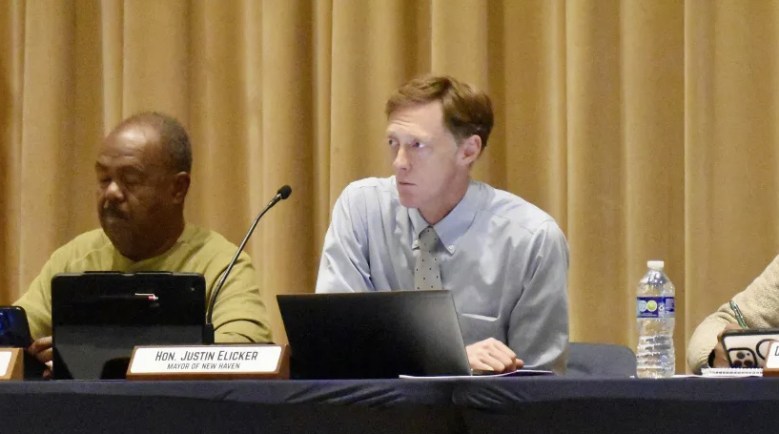
One of the most notorious examples came to light recently in New Haven, where Mayor Justin Elicker, who sits on the school board, was up front about why he and his colleagues chose to forego a written performance evaluation of Superintendent Madeline Negrón for 2024-2025. As a result, there wasn’t a record to release in response to a Freedom of Information Act request.
“In general, we wanted to have a very frank conversation with Dr. Negrón and felt like an oral evaluation, sharing that information directly with her as more of a conversation, is the best way to do that,” Elicker said.
Elicker, who appointed Negron to the top school post in 2023, told the New Haven Independent that he didn’t want to see “a written document that’s going to be in the newspaper. It doesn’t facilitate a very honest and frank conversation and it certainly doesn’t facilitate a back-and-forth.”
At issue here is government transparency and accountability. Taxpayers, and particularly the parents of schoolchildren, have every right to know how well their community’s superintendent is performing and whether certain standards are being met. Are the superintendents setting the appropriate tone for administrators and teachers? Or are the superintendents deficient in one or more ways? In the absence of written evaluations, the public has no way of knowing.
Unfortunately, Elicker — a self-styled progressive who has taken a similar approach to following the letter of the law while violating its spirit in documenting evaluations of other top officials — is not alone in trying to hide from the public the annual assessment of a town’s highest paid employee. An increasing number of school boards are using oral evaluations as a way of sidestepping the FOI Act.
Elected officials work for the public. They spend the public’s money. They carry out public functions. They work in the public interest.
People who operate in the public arena must accept a higher level of scrutiny. If they prefer to operate in private, they should manage a McDonald’s. If they choose to subvert the state’s open-government law, they ought to be replaced.
For members of school boards, it’s doubly important to serve as role models for the students and teachers on whose behalf they make decisions.
The public has a role to play as well. Public officials can often get around following the law and being transparent if the public itself tolerates it. We hand our public officials the responsibility of making decisions and governing day to day. We never relinquish our own responsibility to hold them accountable for doing so.
Paul Bass and Michele Jacklin are members of the Connecticut Council on Freedom of Information.