


The Connecticut Restaurant Association, a once-anemic trade group that found its voice during the COVID-19 pandemic by negotiating aid and creative public-health rules as it flexed newfound influence, is rebranding itself as an advocate for the broader $21 billion hospitality industry.
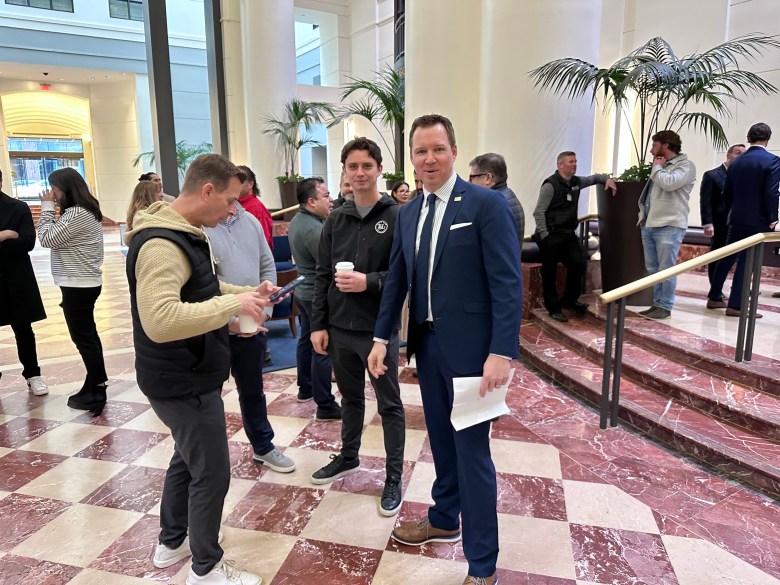
With Gov. Ned Lamont in attendance, the association reintroduced itself Tuesday as the Connecticut Restaurant and Hospitality Association, a move that takes in a still-struggling hotel industry amid grumbling over the administration’s tepid support for tourism marketing.
“We will speak with one voice, and that is a voice lawmakers cannot ignore,” said Scott Dolch, the group’s chief executive. “It’s about ensuring that policies made at a local, state and national level support the businesses that employ over 170,000 people in our state.”
Lamont has been a source of both support and frustration, personally promoting the state’s hotels, restaurants and tourist attractions and signing off on low-budget social media that generated earned media. But his administration’s annual marketing budget is $4.5 million, down from $12 million a few years ago.
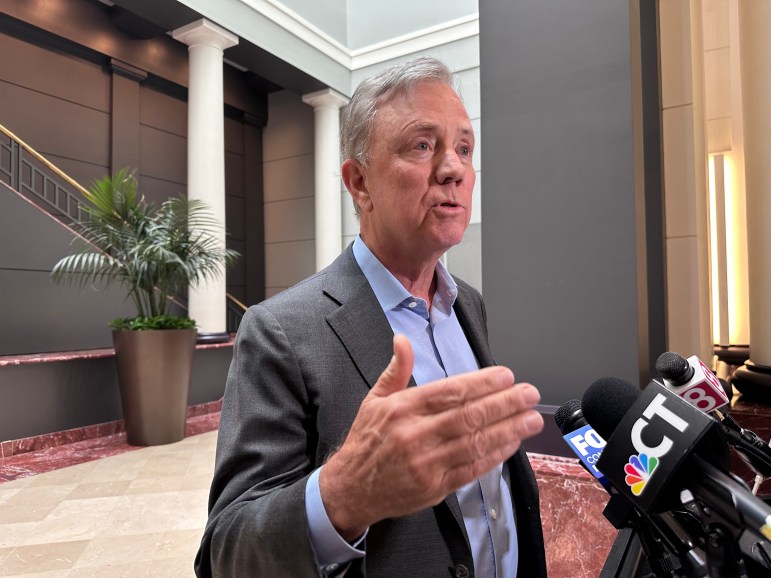
“It’s less than it was during COVID, more than it was, you know, 10-plus years ago,” Lamont said. “I try and get this balance right. I know this is a time of year where I’ve got everybody saying we need more, and I try and get that balance right.”
Dolch said the state, which imposes a 15% hotel occupancy tax that he says is the highest in the U.S., should be spending at least $20 million on tourism marketing, money that research indicates produces greater returns. The hotel industry has yet to fully recover from COVID.
Lamont’s attendance at the kickoff event in the atrium at the Goodwin Hotel, a short walk from the state Capitol, is evidence of a generally constructive relationship established in March 2020, when the Lamont administration ordered a closure of bars and restaurants, then approved flexible terms for takeout, outdoor dining and a return to indoor dining with certain precautions.
“It was awful for the industry, but it made us relevant and made us have a bigger seat at the table with the administration and the governor and legislators, and really, the battles that we had to fight, even down in D.C.,” Dolch said in an interview before the announcement.
Dolch, a Maryland native who come to Connecticut to play quarterback for a championship team at Central Connecticut State University, was hired by the restaurant association in 2018. His previous experience was sports marketing, including for the Travelers Championship.
Today, the association represents 2,100 of the 9,000 eateries in the state, nearly a sixfold increase from the 370 when he was hired. That is about 23% of all restaurants, while Dolch says many strong associations in other states have 35% or more.
“When I took over the CRA back in 2018, one of the lines a lot of people said was, we’re a paper tiger at the Capitol, meaning we didn’t have the members and the voices and the support that we needed,” Dolch said.
Dolch is ambitious, and he has been eyeing expansion for at least two years, inviting hoteliers to sit on his board.
But the rebranding of the restaurant association was deemed less-than-hospitable by some hotel owners, who see both commonality and differences with restaurants.
Twice, the restaurant association and Connecticut Lodging Association engaged in merger talks, each ending in failure.
“The lodging association has since 1904 been the singular voice for lodging within the state,” said Meri Wick, the president of the lodging association and operator of two hotels, the Westbrook Inn and the Captain Stannard Country Inn, both in the shoreline town of Westbrook.
The lodging association has hired a new executive director, who will succeed its long-serving leader, Ginny Kozlowski, who retiring.
Wick said membership in two groups long has overlapped, with many hotels also operating restaurants. But she said hotels and restaurants also have unique characteristics and needs. Restaurants tend to be locally owned, while hotels are have a mix of local and national ownership.
Business travel was much slower to recover than restaurant patronage after COVID, making hotels more reliant on leisure travel than restaurants. But Wick and Dolch are in agreement on lobbying the state to boost its marketing.
“We’re unsure how working with this new organization will go, but, of course, our goal is to partner with any organization that is going to have lodging as a priority,” Wick said.
The state’s chief marketing officer, Anthony Anthony, has left the state Department of Economic and Community Development, where he worked on a thin budget with some success. Wick and Dolch both say Anthony’s campaign declaring Connecticut both a foodie capital and pizza capital, as declared on highway signage and social media, has brought business.
The chief marketing position still is open, and the hospitality industry is eager to get it filled — and preferably with a greater budget. But Lamont offered little encouragement about greater state spending. In fact, he is urging the industry to fund marketing about Connecticut’s colonial past in advance of America’s 250th birthday this summer.
As for the chief marketing post, Lamont said it will be filled.
Anthony left DECD to open his own marketing firm in January. He was at the kickoff event Tuesday. One of his clients is the expanded Connecticut Restaurant and Hospitality Association.