Lawmakers considering several bills that could fundamentally change the nature of the landlord-tenant relationship heard from a number of tenants on Tuesday who described losing their homes, unfair rent increases and poor living conditions.
The public hearing before the legislature’s Housing Committee grew tense during questioning from Sen. Rob Sampson, R-Wolcott, the ranking member of the committee.
One of those bills under consideration would require landlords to provide a reason when they evict tenants, and another would take steps to limit rent increases when new owners purchase a building.
More than 100 people signed up to testify at the public hearing, and many were talking about an eviction reform measure that has come before the Housing Committee over the past few sessions but hasn’t been called for a floor vote. Senate Bill 257 would largely end no-fault or lapse-of-time evictions, which typically occur at the end of a lease.
Sampson has had tense debates about eviction reform with tenants over the past few years. Sampson, who is a landlord, said he doesn’t want to see owners lose property rights. He’s said the government shouldn’t interfere with private contracts.
[RELATED: Nearly 1 in 5 CT lawmakers are landlords. Could that affect policy?]
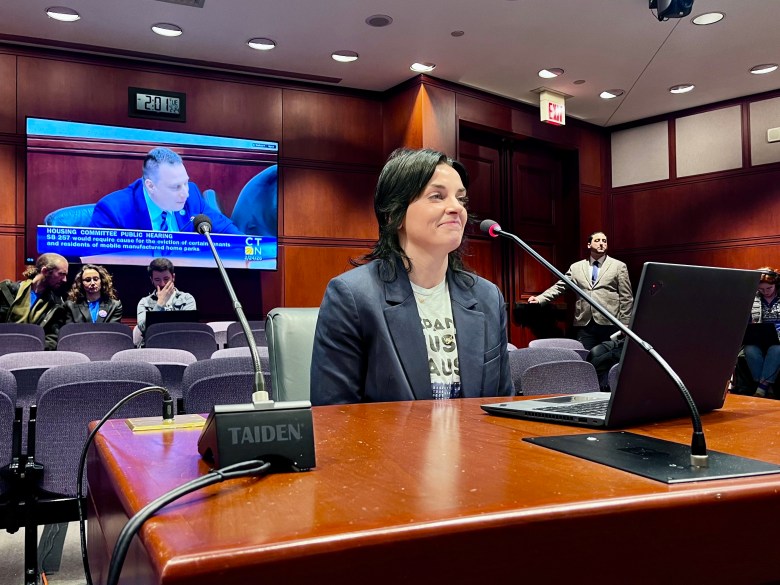
On Tuesday, Sampson questioned Chelsea Connery, a staff attorney with the Connecticut Fair Housing Center, about why the end of a lease isn’t sufficient reason to evict someone. She said that it was inaccurate to say the change would violate a contract between people and that it would only mean landlords have to provide a reason when they evict someone.
“I’m very confused,” Sampson said. “I think that the expectation is that at the end of that lease term, that everyone knows … that the continuation of that lease is subject to an agreement with the landlord in the future.”
“I believe that maybe part of your confusion is that you actually weren’t listening to me respectfully,” Connery said. “The landlord is providing a home over someone’s head, and there is an inherent power imbalance there.”
“I assure you, I listened to you this time and the time before,” Sampson said. He was soon cut off by Housing Committee co-chair Sen. Martha Marx, D-New London, who asked him to spend less time narrating to set up his questions for people giving testimony.
“I’m just respectfully asking you to just ask the question and not too much narrative, just ask,” Marx said.
“Madam Chair, I’m working up to a question,” he said, adding that others on the committee were able to frame their questions.
“OK, I’ll keep asking,” Marx said.
Landlords also said the bill would make it harder to provide housing and would weaken their control of their properties.
“This lease is a contractual agreement between the tenant and the landlord, and it has a start and end date. The bill will cause increases in court, increases in conflict and [will] strain relationships between tenants and management,” said April Conquest, a property manager and member of the Connecticut Apartment Association.
The committee also heard testimony on House Bill 5092, proposed by Gov. Ned Lamont, that would allow fair rent commissions to deem any rent increase above 5% unfair if the landlord had purchased the apartment within the last year. There are exemptions if the landlord has completed substantial renovations that cost more than $50,000 per unit.
“The power dynamic that has been created by corporate landlords gambling on our housing like the stock market is untenable for CT renters. Losing your home and losing your profit margin are not the same,” said Sarah Giovanniello, a New Haven renter and tenant union member in written testimony.
Supporters of both bills said that many landlords, especially out-of-state landlords, evict people or raise rents by large percentages when they purchase a building. Some of these evictions are no-fault evictions, which tenant union members said are also used to retaliate against renters who complain about housing conditions.
“What we’re trying to do is protect those residents that have limited income at a time that someone comes in and jacks up the price 20 to 30%,” said DOH Commissioner Seila Mosquera-Bruno.
“Expecting a basic standard of safety and cleanliness is something that puts us at risk of eviction when the landlord is able to evict [for] any reason. This perpetuates a cycle where the landlord invests little to no money into their units,” said Hartford renter Rhett Tock.