


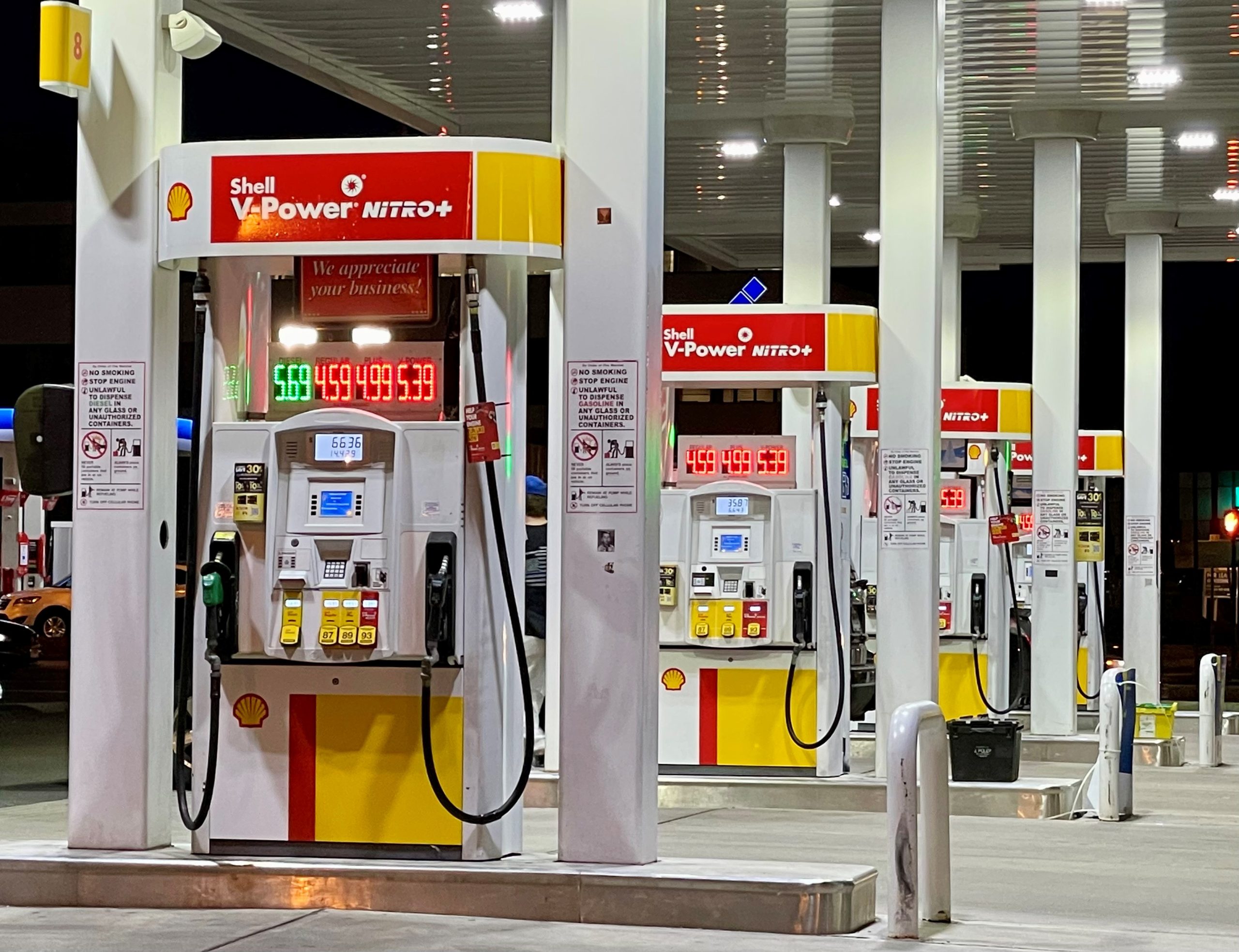
Gov. Ned Lamont floated the prospect of a short-term gasoline tax holiday Tuesday to mitigate a recent price increases at the pumps triggered by the war between the United States and Iran.
Speaking during a mid-morning press conference about the war and Connecticut’s economy, the governor said he would talk with lawmakers about suspending the state’s 25-cents-per-gallon retail levy on regular gasoline and its 48.9-cent diesel tax.
Since the U.S.-Israeli conflict with Iran broke out and interrupted oil supply lines from the Persian Gulf, fuel prices nationally have shot up. The AAA reported an average gasoline price Tuesday in Connecticut of nearly $3.45 per gallon.
“You know, we’ve been talking about affordability a lot, and you’re not serious about affordability unless you’re talking about energy prices,” said Lamont, who held a Tuesday morning at a Meriden home heating oil business.
A one-month suspension of the retail gasoline and diesel taxes would cost the state budget’s Special Transportation Fund, which helps finance highway, bridge and rail infrastructure repair, about $40 million. But Lamont officials could shield the STF from that loss by scaling back the $500 million sales-tax-rebate program he presented to lawmakers in February.
A second option the administration is considering to pay for any holiday would involve drawing about $40 million from a $500 million fund lawmakers established last fall to mitigate federal cuts to human service programs. According to Lamont’s budget office, that response fund still holds more than $300 million.
“Maybe there’s a way that we can peel off some of that [$500 million for rebates] and take a pause in the gasoline tax,” said Lamont. “That would be very helpful in the near term. You don’t have to wait for that rebate check.”
The governor, who is seeking reelection, proposed late October rebates for about 2.2 million residents, specifically $200 for individuals who earn less than $200,000 per year and $400 for couples below $400,000.
State Comptroller Sean Scanlon, who appeared with Lamont at the Meriden press conference, noted that regular gasoline prices in Connecticut are up more than 50 cents per gallon since March 1 and that diesel prices have grown even faster.
“It can be easy to look at the news and see something happening hundreds of thousands of miles away and think that it’s not going to impact us, but global issues impact main streets, and these things are having an impact on the people of Connecticut right now,” he said.
Lamont did not set a specific target date for any fuel holiday but added, “I’ll sit down with the legislature and see if that’s something they want to prioritize.”
Legislators want to go further with tax relief
Connecticut legislative leaders had mixed reactions to Lamont’s proposal, though all have ideas to expand relief options.
Lamont’s fellow Democrats in the legislature’s majority praised him for starting the conversation.
“The governor is on the right track,” said Senate President Pro Tem Martin M. Looney, D-New Haven, and added that officials should explore a holiday that affects three state fuel taxes, not two.
Besides the diesel and retail gasoline levies, Connecticut also imposes a tax on wholesale fuel transactions that affects local stations.
It applies an effective rate of 0.881% to the wholesale price until that price hits $3. Once the price exceeds that level, the tax still is calculated based on a $3 price, setting its ceiling at 26.4 cents per gallon.
But gasoline stations routinely build that full wholesale tax burden into the retail price, transferring the cost to motorists.
Freezing retail taxes but not wholesale isn’t the best solution, Looney said.
“If we’re going to address the problem in that way with a short-term remedy, we should make sure it’s actually going to be a remedy,” he said
House Speaker Matt Ritter, D-Hartford, said “I look forward to having that conversation with the governor” but said legislators also should consider additional aid to cities and towns that have been harmed by higher fuel prices, federal tariffs and inflation.
“I think it all goes back to affordability,” he added.
Republicans also were open to fuel tax relief but said Connecticut should be looking farther down the road.
“I think we should have a conversation about permanently capping” fuel tax rates, said House Minority Leader Vincent J. Candelora, R-North Branford, who said state government has a bad track record of ignoring inflation because it tends to drive up fuel and sales tax receipts.
“We’re not recognizing the pain that is compounding onto our taxpayers,” he said.
Senate GOP Leader Stephen Harding of Brookfield also said the focus should be on long-term tax breaks.
Earlier this year, Harding’s caucus recommended a plan to deliver $1.5 billion in annual relief, chiefly to middle-class households, by cutting income and payroll tax rates and expanding income tax credits.
“Connecticut is unaffordable under one-party Democrat rule,” Harding said. “We need all sorts of relief.”
Last gasoline tax holiday began almost four years ago
But if the governor and legislators agree on a fuel-tax-holiday, it would be the second temporary relief plan of this type in four years. The last one, though, was much longer in duration.
With inflation heading toward a 40-year high, Lamont and the General Assembly waived the full 25-cents-per-gallon retail tax on regular gasoline from April through November 2022. They also waived portions of that levy for another five months through April 30, 2023.
