


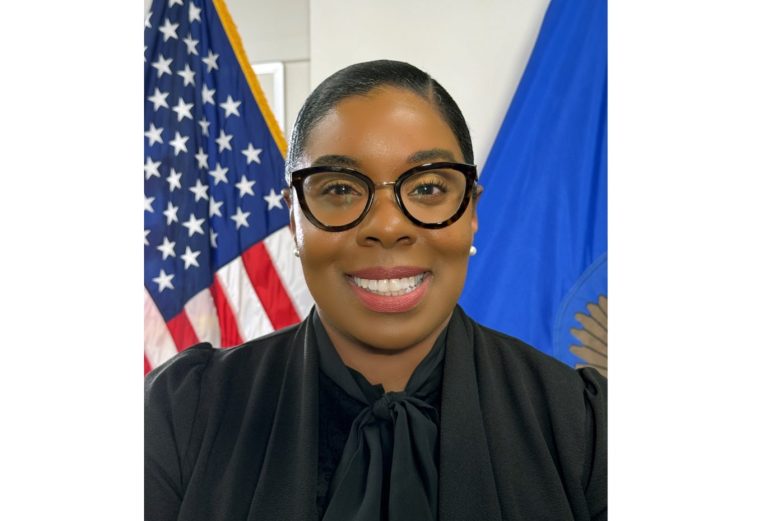
Sharonda Carlos will take over the position of Commissioner of the state Department of Correction when Commissioner Angel Quiros steps down in May.
Gov. Ned Lamont announced the selection of Carlos on Thursday. Carlos has served as deputy commissioner for the department since December 2020.
Lamont noted that Carlos is already well known to the agency and has years of experience there, having worked as a substance abuse counselor and a warden at York Correctional Institution.
Carlos said in a statement that she was committed to training staff in new practices around the correctional system and to promoting transparency within the department.
“My commitment to staff training and development will guide our efforts to enhance progressive correctional practices while fostering an environment of safety, security, and dignity,” Carlos said. “Creating a culture that provides accountability and transparency both internally and externally will make it possible for the Connecticut DOC to be a leader in the field of corrections.”
She assumes the role as commissioner at a time when the department is under scrutiny for reports of drug overdoses, including the deaths of two young men who died after being administered too much methadone while incarcerated at Garner Correctional Institution. The department has been criticized for high overtime rates, and it was recently the subject of a report by Disability Rights Connecticut which found the department failed to protect women with mental illness from sexual abuse.
A report from the state’s Corrections Ombuds — which detailed unsanitary conditions in the facilities, delays in necessary medical care and staffing shortages that regularly confined incarcerated people to their cells — has also raised concerns among lawmakers and advocates. And concerns about strip searches and the quality of health care provided in DOC facilities have spurred calls for change.
Carlos has worked for the department for about two decades. Prior to that, she worked as a substance abuse counselor for the Southeastern Council on Alcoholism and Drug Dependency in the town of Lebanon.