


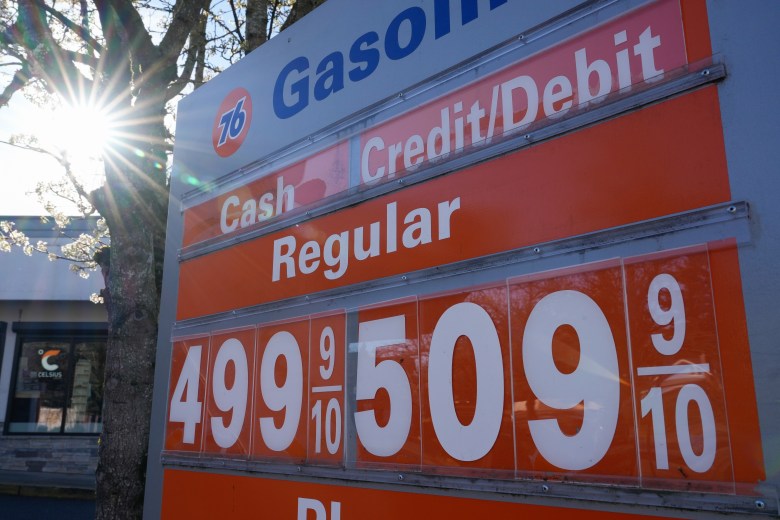
It’s been nine days since Gov. Ned Lamont floated the idea of a state gasoline tax holiday to blunt the price surge at the pumps triggered by the U.S. war with Iran.
But while state officials overwhelmingly have spoken in support of a holiday, they also haven’t met to discuss anything and remain focused on other non-fuel-related tax relief programs.
Meanwhile, the situation at the pumps is getting worse daily. And in the first 19 days since the conflict began, state taxes alone on regular gasoline have jumped more than 7 cents per gallon.
So is a gas tax holiday in the works, or was it a passing comment from the governor during press event earlier this month?
“You know, we’ve been talking about affordability a lot, and you’re not serious about affordability unless you’re talking about energy prices,” Lamont said at a March 10 news conference at a Meriden home heating oil business.
The administration billed the event as a discussion of the “economic impact in Connecticut of President Trump’s war with Iran.” And as the discussion turned to skyrocketing prices at the pumps, Lamont suggested the state could relax its retail taxes for one month on regular gasoline and diesel fuel, which are 25 cents and 48.9 cents per gallon, respectively.
Connecticut imposes a second tax that also affects the regular gasoline prices. The petroleum products gross receipts tax charges 8.1% on wholesale transactions, such as when gas is delivered to local stations. A surcharge effectively raises that tax to 8.81%. And gas station owners have long conceded that they build this expense into the retail price, meaning consumers pay that as well.
The AAA reported an average price of almost $3.70 per gallon for regular gasoline in Connecticut on March 18, up nearly 80 cents since the war started on Feb. 28.
But not all that growth was tied solely to market conditions.
Over the same period, climbing wholesale prices drove Connecticut’s gross receipts tax from 17.6 cents per gallon to 24.9 cents, a jump of 7.3 cents.
Yet since Lamont floated the idea, sparking statements of support from both parties, nothing specific has been announced and no meetings have been held.
When asked this week if Lamont wants a holiday, budget spokesman Chris Collibee said, “The governor will work with legislative leaders to pass measures that are in the best interest of Connecticut families and businesses to mitigate the financial damage caused by this federal administration.”
Legislative leaders’ answers are much the same.
“I’m glad to look at it,” said House Speaker Matt Ritter, D-Hartford, who added his caucus is open to any relief “making a tangible difference for families.”
“We are open to the governor and [majority] Democratic legislators coming to the table with us and discussing any form of relief,” said Sen. Ryan Fazio of Greenwich, ranking GOP senator on the Finance, Revenue and Bonding Committee and a gubernatorial candidate.
Leaders of the Senate Democratic and House Republican caucuses also expressed their willingness to listen to proposals.
In other words, Lamont is inviting legislators to send him a bill. Legislators want the governor, who first floated the idea, to bring top lawmakers to the table and explain what he wants.
CT officials have other relief priorities besides a gas tax holiday
Meanwhile, Lamont and legislators — who are up for reelection this year — have more pressing tax relief proposals demanding their focus.
The governor pitched a one-time, $500 million tax rebate plan that would deliver $200 per person this October to about 2.2 million taxpayers.
Democrats in both chambers are backing an ongoing state income tax credit that could deliver up to $1,800 per year to low- and middle-income filers with children.
And House Democrats this week suggesting scaling back Lamont’s proposed rebate by about $100 million to $150 million and redirecting those funds as grants to local school districts.
House Republicans would add up to $700 to the income tax credit that offsets a portion of local property tax bills.
And the Senate GOP last month proposed big income and payroll tax cuts that could deliver more than $1,500 per year to middle-class households. But that plan also would eliminate most or all state budget surplus funds and potentially push finances into deficit in the next few years, based on the latest budget and revenue projections.
Fazio said officials’ chief focus should be on providing long-term relief, given the state’s high cost of living and the huge budget surpluses amassed over the past decade.
“There is no time like the present to discuss serious tax relief for Connecticut residents,” Fazio said, adding that since Lamont first discussed the gasoline tax holiday, he should take the lead in building support, if it’s a priority.
When asked about the prospects of a break on fuel taxes given all of the other relief proposals competing for lawmakers’ attention, Senate President Pro Tem Martin M. Looney, D-New Haven, said, “I couldn’t predict that. … Everything is sort of fluid right now.”
Gas tax holiday, despite popularity, is complicated
Looney and other leaders also noted a gasoline tax holiday is not free of complications, despite the interest offered by many state officials.
Legislators from both parties have noted that a gasoline tax holiday’s benefit wouldn’t be limited only to Connecticut residents. Motorists from other states also could take advantage of the reduced prices.
And both Looney and House Minority Leader Vincent J. Candelora, R-North Branford, said the benefits of waiving the 25-cents-per-gallon retail tax on gasoline as Lamont suggested are mitigated if lawmakers do nothing about the rising wholesale tax.
The state places a limit on that wholesale levy, which effectively bars the tax from rising above 26.4 cents per gallon — the rate once wholesale prices reach $3 per gallon. But even if the cap is triggered, the wholesale tax would be 9.2 cents per gallon greater than it was when the Iran war began less than three weeks ago.
But if all state fuel taxes are waived, a one-month holiday would cost the state’s transportation program closer to $70 million, rather than the estimated $40 million hit it would face if only retail taxes were suspended.
The state budget’s $2.3 billion Special Transportation Fund, which helps finance highway, rail and bridge upgrades, is on pace for a $46 million surplus this fiscal year but also holds more than $400 million in reserve, according to Lamont’s budget office.
“We shouldn’t be benefiting from the pain our residents are feeling,” said Candelora, who added that Connecticut should consider reforming its fuel taxes so burdens don’t increase at the same time oil prices do.
The House GOP leader also sent a letter to Lamont this week, urging him to take initiative with the tax holiday idea he floated.
“Given the volatility of the fuel market and your expressed desire to act quickly to help Connecticut motorists,” Candelora wrote, “we respectfully urge your office to schedule that meeting at the earliest opportunity so that a consensus proposal can be developed in a timely manner.”