Gov. Ned Lamont has got a sweet deal for Connecticut small businesses struggling to provide health insurance coverage to their employees.
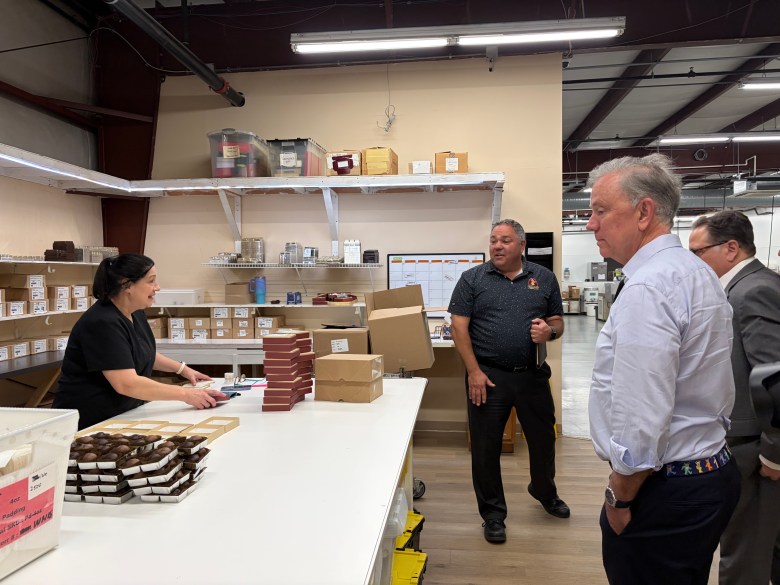
Lamont kicked off a Wednesday afternoon press conference with a tour of the factory at Fascia’s Chocolates in Waterbury, which churns out 100,000 lbs. of chocolatey treats every year.
The governor took the opportunity to tout a proposal he introduced this year to provide tax credits — called “Individual Coverage Health Reimbursement Arrangements” or ICHRAs — to small businesses that reimburse employees for purchasing health insurance.
“We’re trying to make sure small businesses also can provide health insurance and little ways that we can make a difference,” Lamont said.
The arrangement would work like this: Businesses that help cover the cost for an employee who pays for their own individual health insurance plan would be eligible for a tax credit of up to $1,000 per employee per year. The credit would be available only to employers with fewer than 50 employees.
Chris DiPentima, president and CEO of Connecticut’s largest trade group, the Connecticut Business and Industry Association, said the proposal would provide particular relief for businesses with 10 or fewer employees. He estimated that “tens of thousands” of Connecticut companies could take advantage of the benefit.
The program would cost the state up to $5 million a year beginning in fiscal year 2027, in addition to a one-time cost of $30,000 to establish and administer the program.
Carmen Romeo, president of Fascia’s Chocolates, said he, like many small business owners, has struggled for years with how to provide health insurance for his employees as the cost of coverage continues to rise.
Years ago, the business offered its employees coverage through a small group plan. As premiums increased, many of Romeo’s employees couldn’t afford the coverage, he said. Eventually, Fascia’s insurer dropped them because there weren’t enough people on the plan. Now, it’s up to each of Romeo’s employees to figure out how to get coverage.
“We’re committed to our employees. Anything we can do to help them, we’re going to. And these ICHRAs are a good way to help,” Romeo said.
The bill passed the Human Services Committee in March. Committee co-Chair Matt Lesser, D-Middletown, who often criticizes the governor for underfunding health policy issues, called the tax credits “a smart idea” that could save small businesses money “right away.”
The bill now heads to the legislature’s Finance Committee before going to the House for a vote. Lamont said he’s heard strong support for the plan in the legislature.
Earlier this week, another proposal geared towards helping small businesses provide employees with coverage, failed to pass the Appropriations Committee.
The bill, HB 5378, sought to permit the establishment of “multiple employer welfare arrangements” or “MEWAs.” MEWAs — also referred to as “association health plans” — allow for two or more employers to pool resources in order to pay for their employees’ health insurance.
Supporters said the plans offer small businesses a much needed, cost-effective way to provide health coverage to their employees. But, several patient advocacy groups said the savings would come at the expense of patient protections. MEWAs use medical underwriting, which could lead to higher costs if employees have complicated medical histories or require expensive care.
DiPentima said the industry would continue to fight for association health plans in Connecticut. But establishing ICHRAs would provide small businesses with another tool in the meantime, he said.
“Today, our businesses in Connecticut don’t need perfection. They just want progress. And this bill today is real progress to addressing the health care affordability issue,” DiPentima said.