



In the aftermath of trauma, we often ask people to do something they may not yet be able to do: talk about it.
For decades, much of mental health care has centered on language: diagnosis, discussion, interpretation. These tools matter. But neuroscience is increasingly revealing something many clinicians, educators, and artists have long understood: healing does not begin with words. It begins with helping the body feel safe enough to engage.
When a person experiences overwhelming stress, whether from violence, instability, loss, or chronic adversity, the brain’s survival systems take priority. The nervous system shifts into fight, flight, or freeze. In those moments, the parts of the brain responsible for reasoning and verbal expression are offline.

So when we ask someone in that state to explain what happened, we may be asking them to use a system that is not yet available.
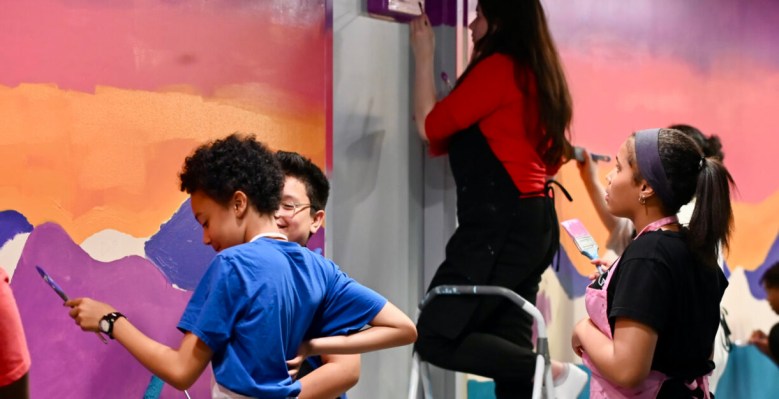
But offer that same person a drum, a paintbrush, clay, movement, rhythm, or music, and something often shifts. Breathing slows. Muscles soften. Attention returns. The body begins to settle, not because someone is being asked to explain, but because they are given a way to express without needing the right words.
This is not simply creativity at work. It is neurobiology.
Creative and sensory-based experiences engage the brain in ways that help restore balance. Rhythm can steady breathing and heart rate. Movement can release stress and restore body awareness. Visual expression allows feelings to take shape before they can be named.
In short, the arts offer the brain a pathway back to safety, making connection and learning possible again.
This matters everywhere, but especially in communities like Bridgeport, which is both a federally designated mental health provider shortage area and home to a vibrant arts community. These are complementary assets that can expand access to care.
We are beginning to see what this can look like. Partnerships that link healthcare providers with community-based creative resources are emerging. In Connecticut, social prescribing models, including collaborations with organizations like SocialRx, point to a more integrated approach to health.
Locally, we are exploring this through a pilot led by LifeBridge Community Services in partnership with St. Vincent’s Medical Center, connecting behavioral health support with community-based creative experiences. Early insights suggest that when people have accessible, nonverbal ways to engage, they are more likely to participate and benefit from care.
There is also a compelling economic case. Expanding access to mental health support through community-based partnerships can reduce reliance on higher-cost interventions such as emergency department visits and inpatient care, while supporting local artists and small businesses.
In this way, investment in the arts is not only a cultural priority. It is a public health and economic strategy.
We see the power of these approaches most clearly in children. When they are overwhelmed, they move, draw, build, and sing. These are not distractions; they are how children process their experiences.
That capacity does not disappear with age. Adults also turn to music, movement, cooking, gardening, and creative expression to manage stress. These are everyday ways the body finds its way back to steadiness.
Yet many systems, including schools, healthcare, and social services, treat creative expression as enrichment rather than essential support. In doing so, we have sidelined tools that help people regain the ability to engage in care.
What if we have been approaching this backwards?
What if the arts are not an accessory to healing, but a gateway to it?
The implications are far-reaching: schools that use art and movement to support readiness to learn; workplaces that integrate creativity to reduce burnout; healthcare systems that partner with community artists; and policies that recognize these approaches as fundable components of care.
These approaches do not replace traditional mental health services. They make them more effective.
Because healing is not only about reducing symptoms. It is about restoring connection, identity, and the capacity to engage with others and the world.
At a time when so many are navigating sustained stress, we are being called to broaden our understanding of what healing can look like.
Sometimes it begins not with a conversation, but with a rhythm, a brushstroke, or a movement.
And from there, something essential becomes possible: the capacity to think, connect, communicate, and begin healing.
Edith Boyle is President and CEO of LifeBridge Community Services. John Ogrodnick is a Bridgeport native visual artist and public art collaborator.