




This story has been updated.
When the emails began arriving after 10 p.m., most of the recipients could not believe what they were reading.
Nearly every employee at the Blue Hills Civic Association was told that the nonprofit, which had served residents in Hartford’s North End for more than six decades, was out of money and that they were immediately out of a job.
“Due to unforeseen financial challenges, the board has made the tough decision to reduce our BHCA team. Subsequently, your employment with BHCA is terminated effective today, April 8, 2025,” the message from Blue Hills’ board chairwoman read. “You will not need to return to the office after this date.”
Kelvin Lovejoy, a community organizer at Blue Hills, and many of his coworkers assumed the message had to be a scam or a poorly timed April Fools joke, because, as far as they knew, Blue Hills had plenty of money and had actually been growing in recent years.
“We were like, this can’t be real,” Lovejoy recalled.
They quickly came to realize, however, that the layoff notices were no prank.
More than a year later, it’s also become apparent that Blue Hills and its former employees were just the first casualties of a growing political scandal that has cast a shadow over Hartford’s nonprofit community and is now threatening to topple a senior state Democratic lawmaker.
The Connecticut Mirror reviewed thousands of internal records from the nonprofit and interviewed seven former Blue Hills employees and contractors in an effort to understand the events that preceded its collapse.
That reporting reveals how state Sen. Doug McCrory, who has represented Hartford’s North End for more than two decades, reshaped Blue Hills into an arm of his political office and used the nonprofit to direct state taxpayer money to other organizations, some of which were operated by close acquaintances.
Emails, meeting minutes and bank statements show that McCrory forged a relationship with Blue Hills’ executive director that enabled him to influence the spending of millions of dollars between 2022 and early 2025.
Those documents also highlight how McCrory used that relationship to burnish his reputation as a politician who could deliver state funding to an impoverished community — by spending money on social events, small business grants and aid to “well-known” members of the community.
The message wasn’t always subtle. He once delivered a giant novelty check from Blue Hills to a local nonprofit — at a campaign event that he organized.
It’s crazy how the integrity of an institution just got washed down the sink like dirty water from dishes.
Beverley Hines, who led Blue Hills’ Parent Power Initiative
McCrory’s influence at Blue Hills and some of the larger expenses that he authorized sparked questions from the nonprofit’s attorneys and a financial consultant raised concerns about “excessive” spending and “potential risks” to the organization.
And his involvement at Blue Hills eventually drew the attention of the FBI, which began investigating the Democratic senator more than two years ago.
Several months after Blue Hills’ layoffs were announced, the nonprofit and its former executive director, Vicki Gallon-Clark, were both named in subpoenas that were issued as part of that ongoing criminal investigation.
A subsequent audit commissioned by state officials also reported that McCrory used Blue Hills to funnel millions of dollars in state funding to other entities, including several businesses owned by Sonserae Cicero, whose relationship with the senator is being scrutinized by the FBI.
Blue Hills former employees watched over the past 12 months as details about their former workplace slowly spilled into public view. But many of them said they still don’t fully understand how a 62-year-old institution — a pillar of the north Hartford community — could crumble seemingly overnight.
“It’s crazy how the integrity of an institution just got washed down the sink like dirty water from dishes,” Beverley Hines, who led Blue Hills’ Parent Power Initiative, said. “Nobody wants to stand up for the integrity of this place. What made Blue Hills stay in existence for 60 years?”

Like Hines, many of the former employees said they are frustrated that the nonprofit was cast aside so easily. But even more, they said, they are concerned about what the loss of Blue Hills will mean for the wider community.
For decades, they said, Blue Hills provided a voice to the low-income neighborhoods throughout Hartford’s North End.
The nonprofit and its staff helped to rally support to save Weaver High School more than a decade ago. It staffed a permanent office in that school where Blue Hills employees provided tutoring and other support to students. And its youth summer employment program was one of the largest in the city — training and engaging hundreds of teenagers every summer, keeping them off the streets and out of trouble.
But much of that legacy vanished last year when Blue Hills locked its doors.
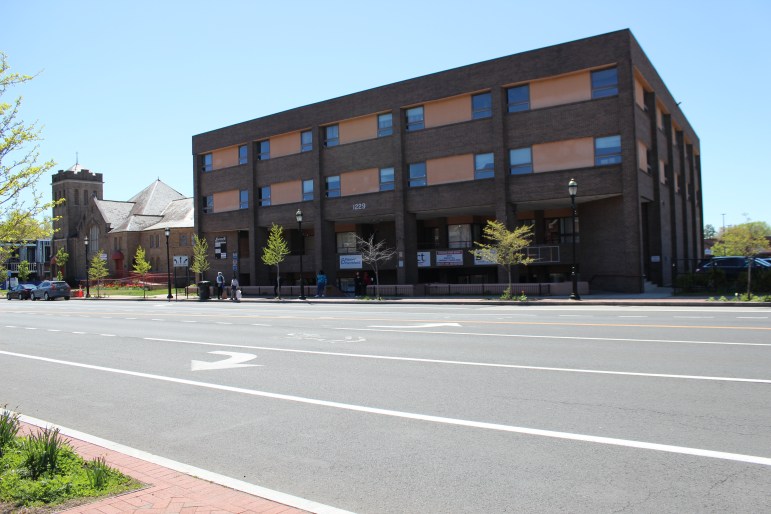
Inside the Blue Hills office
In recent years, records show, there were two distinct sides to Blue Hills operations.
On the one side were Blue Hills’ staff members, who continued to mentor high school students, run the local senior center and manage more than 400 kids through their summer jobs program.
And on the other were McCrory and Gallon-Clark, who privately decided how to subgrant millions of dollars in state funding to other entities.
It was that second less-visible side of the operation that ultimately contributed to Blue Hills’ downfall last year, after a $300,000 payment — one of many subgrants authorized by McCrory — was stolen and Connecticut officials decided to freeze all of the nonprofit’s funding.
Most of the former employees said they were completely unaware of McCrory’s involvement at the nonprofit, outside of him advocating for the organization at the state Capitol.
They would see McCrory at Blue Hills’ office on occasion, they said, but that wasn’t unexpected for a state lawmaker who grew up in the area and had spent more than 20 years representing the community in the state legislature.
Other staffers, however, said there were signs in recent years that McCrory was making executive and board-level decisions at Blue Hills, despite having no official role there.
[Vicki Gallon-Clark] was naive. She’s a church girl.
Ralph Knighton, former consultant for Blue Hills Civic Association
Ralph Knighton, a former economic development consultant for Blue Hills, said there seemed to be some type of agreement between Gallon-Clark and McCrory.
Gallon-Clark, he said, gave McCrory a free hand to direct millions of dollars through Blue Hills, and, in return, McCrory ensured the nonprofit consistently received enough public funding to maintain and grow its own operations.
The forensic audit released earlier this year showed that, between 2023 and 2025, McCrory helped to award more than $11 million to Blue Hills through legislative earmarks, but the nonprofit only kept roughly $2.3 million. The rest was sent to other organizations and individuals based on McCrory’s instructions.
In hindsight, Knighton said, McCrory was clearly influencing Gallon-Clark, who assumed the senator was acting in Blue Hills’ best interests.
“She saw it as an opportunity to get funding” for the organization, Knighton said of Gallon-Clark.
“She was naive,” he added. “She’s a church girl. She don’t know nothing about the damn streets.”
In a statement written by her attorney in response to questions from the Connecticut Mirror, Gallon-Clark expressed regret over how she handled the $300,000 that was stolen in late 2024 and said she was disappointed by the collapse of Blue Hills. But she and her attorney declined to address her relationship with McCrory.
“After working for so many years at the Blue Hills Civic Association … it saddens her to see not only her efforts but all the efforts by BHCA and its employees questioned,” wrote Richard Brown, her attorney.
“Ms. Gallon Clark is asking the community to continue to stand behind BHCA to allow it to continue serving the community in a very positive way, as it has for over 60 years,” Brown added.
A ‘conduit’
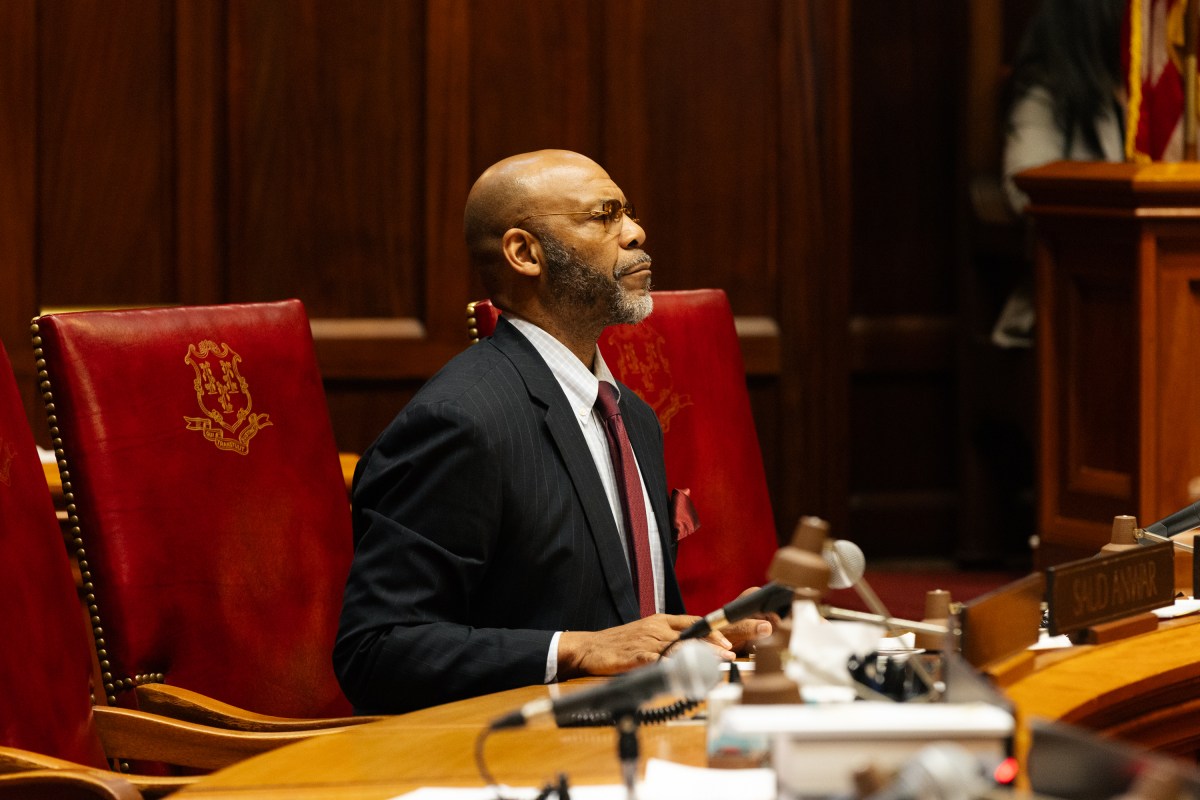
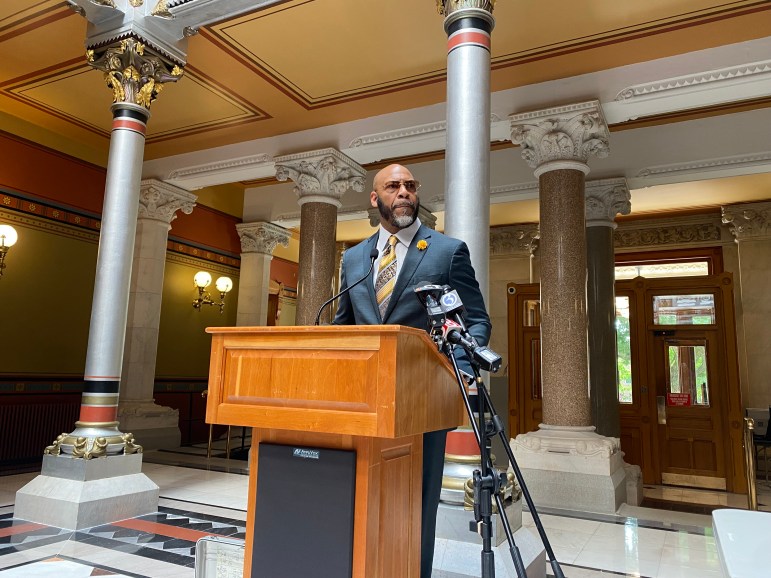
McCrory, who is running for reelection this year, did not respond to multiple phone calls and emails for this story.
But in a recent television interview, McCrory denied that he was ever involved in the day-to-day operations at Blue Hills, and he argued that his relationship with the nonprofit was no different than any other politician who advocates for organizations in their community.
“I don’t monitor what goes on at Blue Hills. It’s not my job. I’m not into the day-to-day operations of that organization,” McCrory said during the March 15 televised interview on WTNH.
Internal documents from Blue Hills, however, show the influence McCrory exercised over the state taxpayer money that arrived in Blue Hills’ bank accounts between 2022 and 2025.
Those records, which have been turned over to auditors and the FBI, include instances in which Gallon-Clark acknowledged McCrory’s influence over the funding.
In one email from early 2024, for instance, Gallon-Clark described Blue Hills as a “conduit” through which McCrory could “funnel more funding” into the community.
Documents show Gallon-Clark also assembled lists of the various organizations that McCrory was considering subgranting money to.
“PER CONVERSATIONS WITH SENATOR MCCRORY,” one of those lists was titled.
Emails from Blue Hills show Gallon-Clark and McCrory were in regular contact. And when the $300,000 was stolen from Blue Hills, Gallon-Clark told McCrory about the missing money weeks before state officials and the nonprofit’s board of directors were alerted.
The six members of Blue Hills’ board, including state Rep. Joshua Hall, D-Hartford, did not respond to phone calls for this story.
But in recent hearings in front of the state’s Freedom of Information Commission, Blue Hills’ former chairwoman Kaydian Reid testified that the board played no role in determining how the nonprofit divided up and distributed more than $7.6 million in state funding over a three-year period.
“I’m not privy to how that came about, honestly,” Reid said.
Documents obtained by the CT Mirror show Reid and the other board members were aware that McCrory was steering that process, however.
Meeting minutes from 2023 show McCrory met with the board that September and explained his plans to use Blue Hills to distribute millions of dollars to other organizations.
And as recently as January 2025, Blue Hills’ board members continued to receive reports from Gallon-Clark about how the funding decisions were being “determined with Sen. McCrory.”
Despite those records, Reid testified under oath that she and the other board members were “shielded” from many of the decisions that were made in the nonprofit’s executive office in recent years.
Political and professional ties
By the beginning of 2025, McCrory had directed Blue Hills to award subgrants to more than 30 other businesses and nonprofits.
Emails and other accounting records show that several of the entities that received that funding were owned or operated by individuals with political or professional ties to the state senator.
A combined $1.3 million, for instance, went to organizations that were controlled by members of the state’s Minority Business Initiative Advisory Council, of which McCrory is a member.
The Prosperity Foundation, a nonprofit founded by Howard Hill, the chairman of that council, received $1.1 million in 2023. And RH Realty Services, which is owned by Roberta Hoskie, another council member, netted $225,000 from Blue Hills over two years.
Hoskie and Hill did not respond to emails or phone calls for this story.
The taxpayer money that McCrory helped to secure for Blue Hills was also spent on several consulting firms, which are now being investigated by the FBI.
Records show Blue Hills paid KTH Advisors, a company owned by Kevin Henry, McCrory’s former campaign treasurer, roughly $11,000 per month for consulting services between October 2023 and April 2025.
It’s not clear what type of work Henry, who is an attorney, performed as part of that consulting agreement.
There are emails that Henry was copied on in which Blue Hills staff discussed state and federal grants and several proposed development projects. McCrory also floated the possibility of Henry starting a new program at Blue Hills to help people obtain judicial pardons.
But the invoices Henry submitted to Gallon-Clark did not include any detail on what assistance he provided to Blue Hills month to month. Meanwhile, the two contracts that Henry signed with Blue Hills in 2023 and 2024 described his services as “consultations, meetings, phone calls, emails, participation in negotiations, and the development of business strategies related to local, state, political, and community engagement.”
“The firm will not be responsible for drafting documents and agreements,” the contract added.
During the first five months that Henry was reportedly advising Blue Hills, judicial records also show that he couldn’t practice law. His license was suspended due to a failure to pay an annual fee, which is required of every practicing lawyer in the state.
Henry’s defense attorney, Thomas Murphy, declined to comment on his client’s work with Blue Hills.

‘Excessive’ compensation
During that same period, Blue Hills also paid half a million dollars to SHEBA Consulting in order for the company to advise the nonprofit on its human resources policies.
That company is owned by Cicero, whose relationship with McCrory is now being examined by the FBI.
Cicero’s businesses later received an additional $1.2 million through Blue Hills in 2023 and 2024.
In at least one of those cases, the records show Blue Hills’ financial consultant privately questioned the size and scope of those expenditures.
There is the issue of how BHCA would justify a $600,000 consulting expenditure.
Matthew Burry, BHCA Financial Consultant
Matthew Burry, an accountant with Whittlesey who was reviewing Blue Hills expenditures, emailed Gallon-Clark in March 2024 to flag several potential issues with one of the two $600,000 payments that Cicero’s businesses received.
Burry explained to Gallon-Clark that it was unwise to award Cicero’s company that amount of money without having a contract in place that stipulated what type of work she would perform. He also warned Gallon-Clark that a consulting contract of that size, which was funded exclusively with state taxpayer money, may need to be put out to bid so other businesses could compete for the work.
“There is the issue of how BHCA would justify a $600,000 consulting expenditure,” Burry wrote.
“The absence of a consulting contract with SHEBA awarded through a competitive process would likely raise serious issues, including questions about whether the compensation was excessive in relation to the benefit received by BHCA,” he added.
Five minutes after Gallon-Clark received that email, she forwarded the message to McCrory.
“Please let me know when you have some time to review and discuss this,” she wrote.
It’s unclear if McCrory responded.
Shrey Sharma, Cicero’s defense attorney, told the CT Mirror that his client stands behind the work that her company performed at Blue Hills and through several other state-funded grant programs.
“Ms. Cicero built her reputation through her longstanding dedication and staunch advocacy for her community. She will continue to stand by her principles and will not be dissuaded by conjecture and rumour,” said Sharma, who is a senior attorney with Oberheiden P.C., a national law firm with offices in New York City.
“Ms. Cicero is prepared to defend her character against unproven allegations,” he added.

Gathering momentum
Most of Blue Hills’ former employees said they had little to no insight into the nonprofit’s finances or the consulting agreements it entered in recent years.
All they knew was that Blue Hills was receiving a significant amount of state financial support and that the nonprofit, by all indications, was thriving like never before.
“We would hear that we got funding coming in, and for us, we were like, ‘yes.’ That means longevity. It means sustainability,” said Lovejoy, who worked for Blue Hills for roughly 18 years and led the youth summer employment program.
With a steady stream of cash coming from the state, Blue Hills was able to hire a chief financial officer for the first time. The nonprofit was drafting blueprints for a new headquarters on Homestead Avenue. And Knighton and other staff members were developing a program to help elderly Hartford residents pay for deferred maintenance on their homes.
That growth and success also carried over into the programs that Blue Hills was already known for in the community.
Dean Jones, who ran the after school program at Weaver High School, said his team of roughly eight employees was assisting dozens of students every day, providing tutoring, as well as one-on-one interventions for kids who were having trouble outside of school.
The youth summer employment program continued to place a record number of high-school seniors at businesses throughout Hartford, where they could obtain job experience and net some additional income for their families.
Meanwhile, the number of people participating in Blue Hills’ Parent Power Initiative continued to swell.
Hines, who was in charge of that program, said more and more parents were beginning to engage in the monthly meetings where they received resources and guidance on how to access things like child care, mental health counseling and assistance on their utility bills.
“We were gathering momentum, and people in the community were seeing the effects of the program,” Hines said.
McCrory’s influence within Blue Hills also continued to blossom during that time.
Making arrangements
McCrory’s relationship with Gallon-Clark proved to be advantageous for the senator as he worked to solidify his political standing in Hartford’s North End neighborhoods.
It gave him the ability to quickly route money to members of the community when they sought out his help.
When a “well known senior” in Hartford needed a new furnace for their house, McCrory was able to instruct Gallon-Clark to wire them $4,000 to help cover the expense.
He also directed tens of thousands of dollars to a select group of small businesses that approached the senator seeking financial assistance. That included a restaurant, a coffee shop and a dentist’s office.
Gallon-Clark was always quick to remind those recipients of who they could thank when the money came through. “This is made possible through the advocacy efforts of Senator McCrory,” she frequently wrote in emails.
Senator McCrory has made arrangements to rent the entire Hartford Stage Theatre for community agencies, seniors, students and churches.
Vicki Gallon-Clark in an email to Blue Hills staff
In early 2025, McCrory also used part of the money he awarded to Blue Hills to pay for several social events, which the senator was publicly credited with sponsoring and organizing.
McCrory arranged for Blue Hills to spend more than $21,000 in taxpayer money to rent out the Hartford Stage and to give away tickets for the premiere of the play “Two Trains Running,” which he attended alongside Cicero.
He also instructed Blue Hills and another nonprofit to spend thousands of dollars on a local entertainment and marketing firm to promote the event.
“Senator McCrory has made arrangements to rent the entire Hartford Stage Theatre for community agencies, seniors, students and churches,” Gallon-Clark explained in an email.
Several weeks later, Blue Hills also contributed $20,000 to the inaugural “When Black Men Lead” event, which McCrory was credited with hosting alongside former state Democratic lawmaker Brandon McGee.
McGee, who is now the executive director of Connecticut’s Social Equity Council, said the money Blue Hills contributed helped to pay for scholarships, which were awarded as part of the event. And he said McCrory was involved because he is a “senior statesman” in Hartford.
McGee said that he was never informed that the $20,000 that Blue Hills contributed came from state grant funding.
“We were told that these are funds for the community, to support the community, and I didn’t ask any other questions of it,” McGee said.
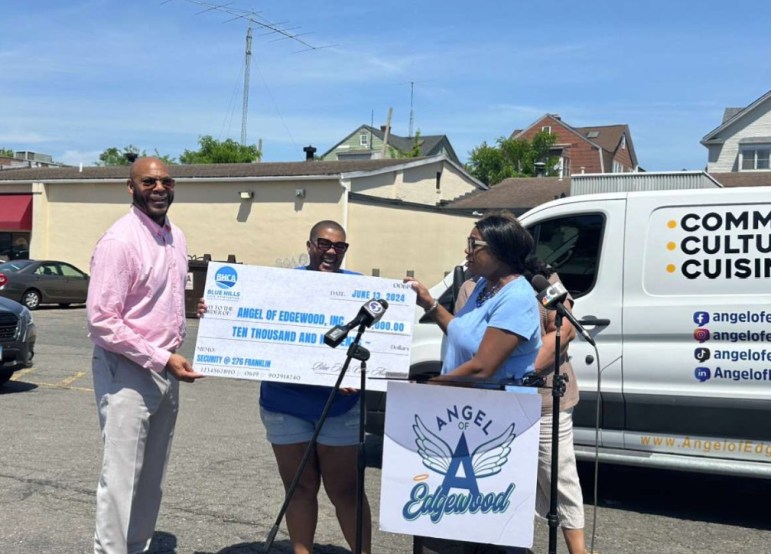
A check from Blue Hills
At times, the line between Blue Hills and McCrory’s political office became difficult to distinguish.
In June 2024, for instance, McCrory organized a political campaign event in which he presented a giant Blue Hills check to Angel of Edgewood, a small nonprofit that provides food, clothing and other emergency assistance to families in Hartford’s North End.
That summer, McCrory was locked in a competitive Democratic primary for his senate seat.
Jendayi Scott-Miller, the founder and director of Angel of Edgewood, said she received the funding from Blue Hills after visiting the state Capitol earlier that year.
She said she was at the legislature seeking money to help cover a security deposit for a space that could temporarily house the nonprofit’s commercial kitchen when McCrory approached her.
According to Scott-Miller, McCrory invited her to his legislative office and explained that he could solve her funding needs. All she needed to do was ask, he said.
Scott-Miller was familiar with obtaining money through the state’s annual appropriations process, she said. Her nonprofit had previously netted funding through the state budget with the help of friendly legislators.
But McCrory proposed a different solution, she said. According to Scott-Miller, McCrory called up Gallon-Clark during their meeting and instructed Blue Hills’ executive director to wire $10,000 to Angel of Edgewood.
Not for the likes of this world did I think this is something that would turn into this fiasco, this whole blowup, this catastrophe, with the FBI and subpoenas and investigations and interviews.
Beverley Hines
Before leaving McCrory’s office, Scott-Miller said, she gave Gallon-Clark her banking information, and less than two days later, bank records reviewed by CT Mirror show the money was in her account.
The decision to accept that money, however, is something that Scott-Miller has come to regret, she said.
Shortly after the meeting in McCrory’s office, Scott-Miller was approached by FBI agents, who began asking her questions about McCrory and how money moves through Hartford’s nonprofits, she told the CT Mirror.
And earlier this year, the state froze all public funding to Angel of Edgewood as part of the ongoing audit of Blue Hills and the organizations it subgranted money to.
Losing hope
Some of Blue Hills’ former employees initially held out hope that the nonprofit could reopen once the state finished its audit and lifted the freeze on Blue Hills accounts.
But with the federal criminal investigation proceeding and auditors continuing to track down the money Blue Hills spent, many of them are coming to the conclusion that the community nonprofit may be gone for good.
“Not for the likes of this world did I think this is something that would turn into this fiasco, this whole blowup, this catastrophe, with the FBI and subpoenas and investigations and interviews,” said Hines, who is still searching for a new job to support herself and her five children.
Unfortunately, [Blue Hills] fell into some hard times, but it can bounce back, and our community can bounce back from that.
Doug McCrory
In Blue Hills’ absence, state and local officials have been forced to step in to maintain or supplement the work that the nonprofit previously performed.
The city of Hartford took over management of the North End senior center, which the nonprofit had been staffing and running. State lawmakers also had to appropriate roughly $1 million to other organizations in Hartford last year in an effort to replace Blue Hills’ youth summer employment program.
“Blue Hills was an entity that was meant to both provide direct services within that community, and also be able to advocate for the needs of the community,” said Hartford Mayor Arunan Arulampalam. “I think we are thinking through the infrastructure of nonprofits that are left and how we fill those gaps.”
During his recent appearance on WTNH, McCrory suggested that Blue Hills could still be resurrected.
“Unfortunately, it fell into some hard times, but it can bounce back, and our community can bounce back from that,” McCrory said.
Lovejoy, who has continued to work as a community organizer in North Hartford helping to field calls from parents and run a pop-up food pantry, is not so certain.
He said many people in the community – including young adults who previously participated in the youth summer employment program – have approached him over the past year asking about the status of Blue Hills.
“That’s the question that many people are asking, and I don’t have enough data to properly answer that question,” Lovejoy said. “But I haven’t seen evidence that gives me hope.”
Correction:
A previous version of this story incorrectly identified Matthew Burry as an auditor for BHCA. He was the nonprofit’s financial consultant, not the organization’s auditor.

