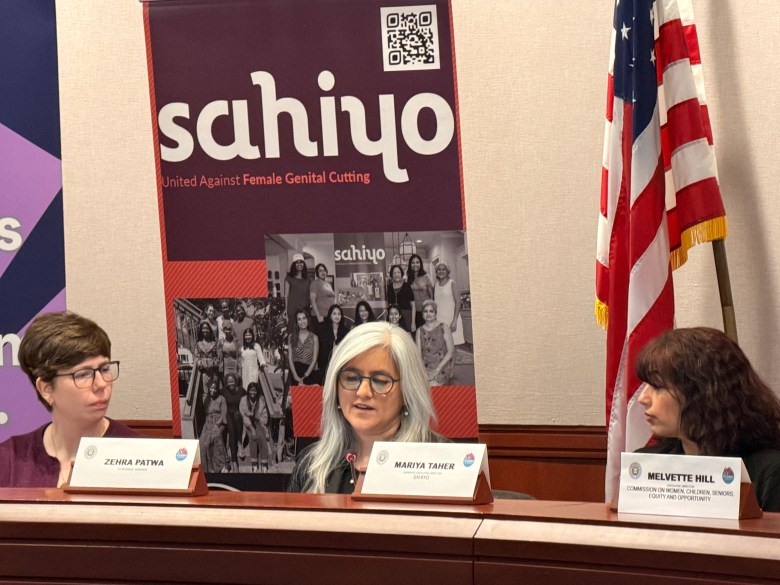
A bill that makes female genital mutilation a crime in the state of Connecticut, among other provisions, received final passage in the House on Tuesday afternoon with the unanimous support of those voting. For survivors, the bill’s passage was a hard-fought victory, with several other attempts at legislation failing to cross the finish line in recent years.
Zehra Patwa, one of the advocates who has been working on the bill and a survivor of genital mutilation, said that she watched the vote take place in a live feed on CT-N and was feeling “phenomenal.”
“It’s been a very long six years so just watching that moment happen kind of took my breath away,” she said. “I’m in awe of people who stand up for other people, who don’t have a personal experience of something like this and yet they stand up for others.”
Patwa said that Gov. Ned Lamont has been “very supportive” of the bill and is expected to sign it into law. That signature would make genital mutilation of a girl under age 18 a class D felony, allow children under 12 to testify outside the courtroom with a trusted adult present, and allow a child to file a lawsuit against their parent if they experienced the practice. It would also allow individuals who experienced genital mutilation as a child to file a lawsuit within 30 years after they turn 18.
The bill is a concrete way to prevent girls from experiencing a practice common in certain cultures. Patwa was born in the United Kingdom to a family from the Bohra community, which mainly resides in India. Her community, like some other cultures, practice female genital mutilation. She said that 79 out of the 80 women she interviewed in her family had been cut. Patwa said it can be difficult to put estimates on the number of girls impacted by this in Connecticut, but that based on the state’s population that number could be more than 2,600 girls.
Patwa said the bill has received strong support from a coalition of lawmakers and advocates.
Those lawmakers include Rep. Nicole Klarides-Ditria, R-Seymour, who spoke on the House floor on Tuesday, saying Connecticut should join the majority of other states that have already criminalized the practice.
“It pains me to know this practice is still legal in the state of Connecticut,” she said.
Rep. Jillian Gilchrest, D-West Hartford, who is co-chair of the Human Services Committee, also spoke in support of the bill.
“If we can give just one survivor some semblance of justice, I’m so glad we’re able to do that,” she said.