


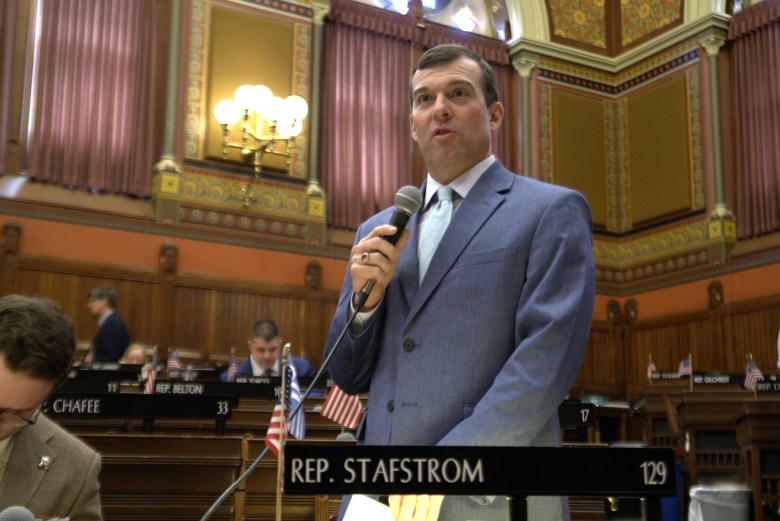
Members of the Connecticut House of Representatives debated and passed a bill Wednesday that would make changes to prison health care and nutrition policies following reports of extensive health-related problems within the state Department of Correction.
They called the legislation “a start.”
House Bill 5567 would give additional power and resources to the state’s correction ombuds to investigate complaints around medical care, including allowing the ombuds’ office to add a mental health clinician. It also would require changes to the way DOC maintains medical records, as well as how it handles medication distribution and provides incentives for nurses.
“The Judiciary Committee continues to hear repeated concerns from those who are incarcerated, from staff, from family members, from advocates and others about those who are entrusted to the care of the state through DOC not receiving timely access to their medication, not receiving routine medical treatment and not receiving — in some instances — the life saving treatment that they need to come back out of prison on the other side,” said Rep. Steve Stafstrom, D-Bridgeport, co-chair of the legislature’s Judiciary Committee.
Stafstrom said medical care in the state’s prisons was “at a crisis level.”
The bill had strong bipartisan support and passed the House easily with a vote of 148-2. It heads now to the Senate for final passage.
Under the legislation, the Department of Correction would have to create an online system that allows incarcerated people to make requests for medical care and access their health records electronically. The department would be given a quarterly “medical scorecard” based on its staffing levels, vacancies, use of temporary staff and the number of people who have been dismissed or suspended. It would also have to create a “staffing contingency plan” for operating when staff fall below certain levels.
Several modifications to medication distribution are also contained in the bill. It would require the department to create a list of “time-critical” medications and adopt protocols for how these medications would be distributed within certain time windows during a lockdown. They must also develop a pilot program so people with chronic conditions could administer their own medications.
In an effort to retain medical staff, the bill authorizes a student loan reimbursement program, granting nurses who work in the Department of Correction up to $5,000 a year in student loan forgiveness, up to a total of $20,000.
Stafstrom said the provisions in the bill stemmed partially from prior audits of the Department of Correction and from public hearings conducted on the issue. It also follows the publication of a report by the Correction Ombuds that detailed unsanitary conditions, poor dietary options, delays in medical care and staffing shortages across the correctional system.
“When there is a disruption in the provision of their health care, or when they don’t receive the care they need while incarcerated — that can have long-lasting, if not life-altering effects on those individuals, which is not what they were sentenced to,” Stafstrom said.
The bill also addresses food quality, requiring the state auditor to audit the department’s food and nutrition program — including the nutritional value of meals and whether people with restricted diets have access to specialized meals.
Rep. Craig Fishbein, R-Wallingford, called the bill “one of the most important pieces of legislation that we are going to pass this session.”
“When we have people that end up being incarcerated, we have a duty to make sure they don’t die while they’re in our care. And certainly I want them to be productive individuals once they get out of incarceration, productive members of society,” Fishbein, the ranking Republican on the Judiciary Committee, said.
Both Fishbein and Stafstrom acknowledged that the bill was only “a start” to what would need to be a larger plan for the department’s medical system. Part of the bill includes the formation of a Correction Medical and Health Commission, which would be tasked with creating a 10-year plan for improving medical services in the state’s correctional facilities.
The House also gave final passage to S.B. 89, which codifies federal standards of the Prison Rape Elimination Act as they were written in 2024. The bill requires that all incidents of sexual assault be reported to the correction ombuds and that victims be given access to sexual assault crisis services.
“The intent of this legislation is to make abundantly clear that we have zero tolerance for sexual assault in our prisons,” Stafstrom said.
The bill comes in the wake of a four-year investigation by Disability Rights Connecticut that found that DOC failed to protect women in custody with mental illness from sexual abuse by correction officers.
“Certainly, when we have individuals behind bars that are being attacked we should be doing what we can to prevent that,” Fishbein said.
