This story has been updated.
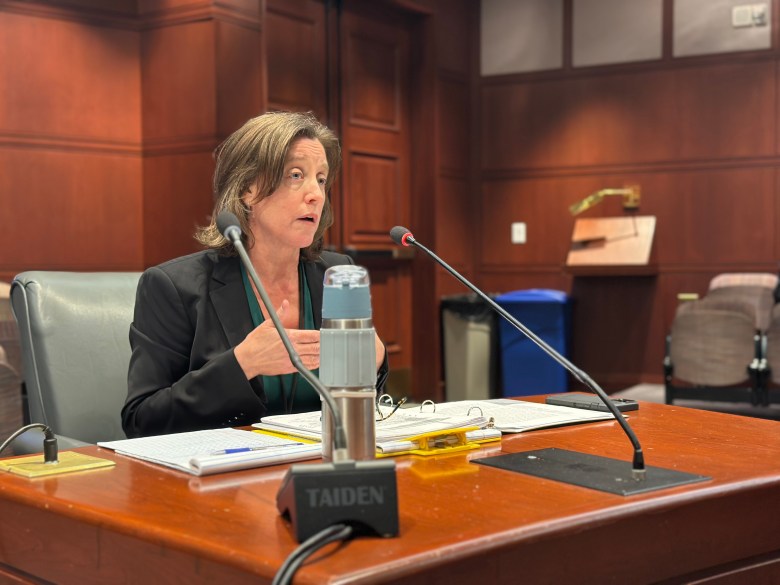
One day after releasing a letter about the latest in a string of tragedies involving children known to the Department of Children and Families, Acting Child Advocate Christina Ghio told the Connecticut Mirror that while she would not be revealing any identifying information about the recent death, she had decided to make an extraordinary bid to call attention to the matter out of concern it would have otherwise escaped public notice.
“This is a child death that would have gone completely unnoticed if we had not published something, and I could not allow this,” Ghio said.
Ghio said she released the public letter to cite her concerns about DCF’s handling of the case, which she worried may not have received the same attention as the deaths of Jacqueline “Mimi” Torres-García, an 11-year-old who died of malnutrition and abuse, or Eve Rogers, a 12-year-old whose cause of death is still being determined.
Both of those children died after coming to the attention of the child welfare agency.
According to police records, Torres-García died months before DCF was successfully tricked by her mother into doing a video call with a woman who has said she was asked to impersonate the child. And Rogers was found dead in her home a week after DCF opened an investigation into the family based on a referral from police who had picked up the child on a call for a theft and brought her home to a mother who did not realize she was gone.
Unlike those cases, few details other than what Ghio shared in her letter are known about the child who died in an apparent suicide last week — a manner of death that is still being confirmed by the medical examiner.
According to Ghio, the information is confidential by statute.
Sarah Eagan, a former child advocate who is now executive director of the Center for Children’s Advocacy, said some children’s identities may already have appeared in the media and therefore appear in OCA reports. But information about children whose identities have not been made public is confidential, and therefore OCA de-identifies those children in its publications as much as possible. In the most recent case, Ghio said she will not release the child’s age, location or gender.
“Given that, thank God, the numbers of individual youth where they may die by suicide is small, releasing information about age or gender may be identifying,” Eagan said.
The letter released Thursday by the Office of the Child Advocate said the child’s death happened less than an hour after a DCF staff member made a home visit, during which the child said they “did not feel safe and asked to come into foster care.”
The family also had a lengthy history with the child welfare agency, did not have stable housing, and “none of the children were enrolled in school.”
“Despite these facts and all of the information available to DCF, DCF made a decision to leave the child with the parent, indicating that coming into care was not an option,” the letter stated.
The OCA has opened an investigation to review all of the circumstances.
“It’s too early for us to draw conclusions quickly but one of the big questions is, given everyone the department knew, and their policies and protocols, how did that decision get made?” Ghio said.
The letter also includes statistics about declines in the quality of casework being performed at the agency.
DCF Commissioner Susan Hamilton said in a statement on Thursday that in the wake of the death her agency has “commenced a multidisciplinary review that will include our knowledge about the family, casework decisions, supervisory and managerial oversight, and adherence to policy and best-case practice standards.”
Ghio said that so far the facts available raise big questions, foremost, why did the caseworker tell the child that foster care was not an option?
Ghio said critical incident reports, often involving an injury of a child in DCF care, get reviewed by her office on a daily basis. In each instance, her office looks at case practice: is the social worker assigned to the case following the policies and protocols that have been designed to safeguard children, like making the required home visits, following up with contacts like doctors and teachers, and filing reports?
“We’ve been reading these critical incidents for a very long time, and what we are seeing right now is deeply concerning,” Ghio said. The policies are created to ensure that workers don’t miss critical details and endanger a child.
“There may be cases that come to our attention because something horrible happens as a result, but we worry about the day to day, and if case workers are making decisions without information, that creates the possibility that we are leaving children in homes that are not safe,” Ghio said.
The House passed a bill on Thursday that aims to, in addition to 23 other provisions, create a new oversight body to monitor the work of DCF and make policy recommendations. It passed by 149-0, with two lawmakers not voting.
If you or someone you know is in mental health distress or is thinking of suicide, please call or text 988 for the 988 Suicide & Crisis Lifeline, or chat through www.988lifeline.org. In an emergency, call or text 911.