



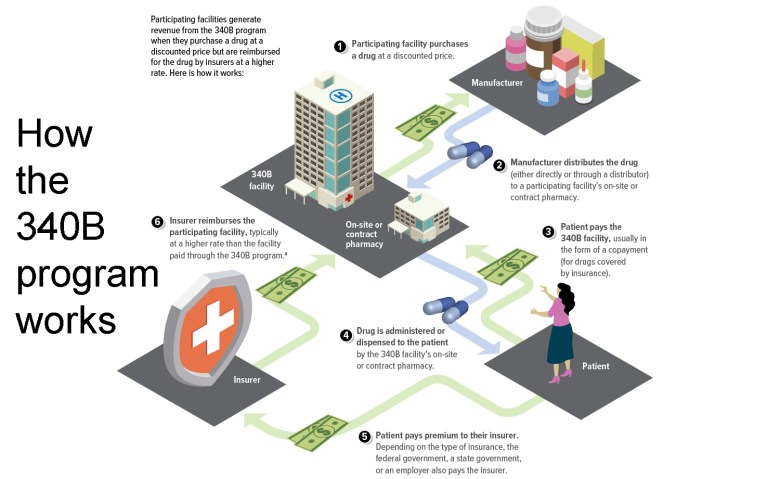
Recently, the Human Services Committee of the Connecticut General Assembly reported a bill out of the committee with proposed changes to the 340B Drug Pricing Program. The legislation as amended, SB 494, includes a provision that would require biopharmaceutical manufacturers to ship 340B drugs to all contract pharmacies that contract with 340B “covered entities,” and by extension offer 340B pricing at these locations.
The 340B language changes also include a claims and utilization data prohibition that would prohibit the collection of claims data by manufacturers as a condition of receiving 340B-priced drugs. Both provisions, while well intentioned, would do nothing to shrink the out-of-pocket costs cancer patients face and would reduce transparency in a program that already lacks accountability.
Like our legislators in Hartford, I agree that we must continue to investigate ways to bring down the cost of healthcare. In late 2024 I served on the CGA’s bipartisan Prescription Drug Task Force, which brought together a group of stakeholders (legislators, providers, patients and patient advocates, and other industry experts) to address the rising cost of medications and the challenges in prescription drug access and pharmacy care across Connecticut. I even served on the 340B and Drug Pricing subcommittee, where we investigated the very issues this legislation seeks to address.
Sections 4 and 5 of SB 494, if enacted, would do nothing to bring down the cost of prescription drugs for the patients the 340B program intends to help. In fact, these changes would exacerbate existing issues by expanding the program and reducing oversight.
Originally, the federal 340B Drug Pricing Program was established to support safety net hospitals that met specific levels of inpatient indigent care to balance those losses with discounted drug purchases for their existing outpatient care. Over the last decade, the program revenues have ballooned through the unanticipated providers’ aggressive expansion of the outpatient care drugs purchased with those discounts – but there remains little evidence to indicate that the savings hospitals receive from the program actually go towards care for uninsured and underinsured patients.
For-profit pharmacies are reaping huge profits by contracting with these hospitals to get access to those outpatient drug discounts. There is no excuse for any huge national for-profit contract pharmacy to collect federal funds related to inpatient hospital indigent care.
The bipartisan Prescription Drug Task Force’s own final report stated that “Hospitals participating in the 340B Drug Pricing Program benefit from significant discounts on outpatient drugs, yet there is limited reporting on how these savings are utilized. Research suggests that disproportionate share hospitals (DSHs) use 340B savings to improve margins rather than directly subsidizing patient care.” (Connecticut General Assembly Prescription Drug Task Force: Final Report and Recommendations 2025)
In addition to diverting 340B funds intended to support indigent patient care and medical debt, there is growing evidence to suggest that 340B hospitals used those funds to acquire private oncology practices. Hospital based practices charge higher total rates for the same care previously delivered in private practices, so aggressive use of 340B hospital revenues to increase oncology outpatient facilities also actually drives up the cost of care for oncology patients and local employers. A Bloomberg investigative report from December 2025 found that there were huge price variations in the cost of cancer drugs in hospitals across the country, and that some hospitals were marking up the price of generic cancer drugs by thousands of dollars.
Proponents also argue that expanding the 340B program to allow more hospital-based outpatient drug volume would come at zero cost to the state and its taxpayers. However, a recent study on the impact of 340B on state health plans indicates the contrary. From 2024 – 2025 alone, prescription markups from 340B providers resulted in Connecticut state employee health plans and their enrollees paying an extra $40.4 million for their medicines.
Unfortunately, stakeholders like patients and providers did not have the opportunity to give legislators this type of feedback on the proposed language changes. Connecticut should not permit further expansion of this out-of-control drug pricing program without clear evidence that patients with cancer achieve real savings, especially those with limited financial resources. Yet the 340B language that was recently added into SB 494 offers no such assurances and risks increasing costs for the very patients it purports to help.
Tell your legislator to put the brakes on expansion of 340B drug revenues, and build controls for how those raging revenue streams are used. Patients in need of financial support should not be left behind and harmed when Connecticut hospital 340B revenues that only exist because of indigent care are literally pouring into the hospitals’ pockets.
Dawn Holcombe is Executive Director of the Connecticut Oncology Association.