


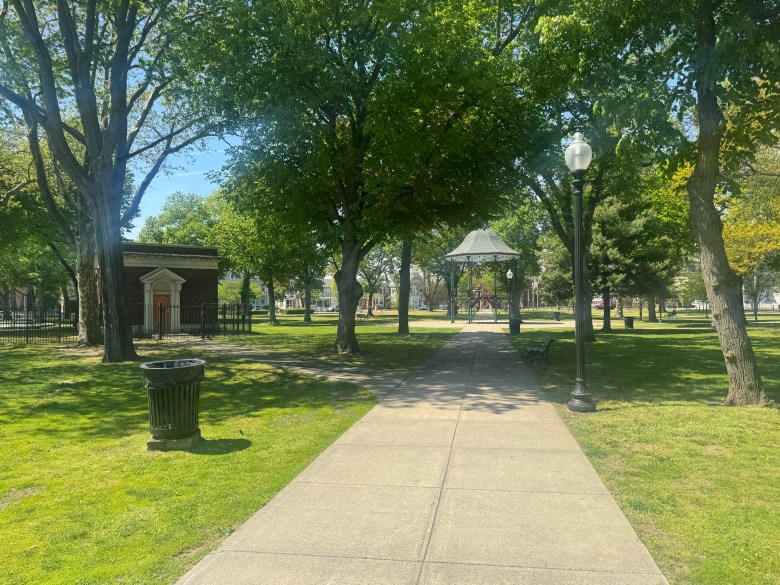
In Bridgeport, the nickname “Park City” carries pride, history and expectation.
For generations, parks have been part of how residents experience the city, from waterfront views along Long Island Sound to neighborhood playgrounds tucked along residential blocks.
The green spaces are where community gathers, kids grow up and people go for respite in a dense urban environment. But a new detailed analysis of the city’s park system shows that while parks are widely present and often well cared for, the benefits they offer are not shared equally, and the system itself reflects decades of uneven investment.
A custom ParkScore report from Trust for Public Land — developed in partnership with the Connecticut Green Bank, PT Partners and the city — gave Bridgeport an overall score of 45 out of 100 after evaluating all 61 publicly accessible parks in the city. The report measures access, acreage, amenities, investment and equity to understand how parks function across neighborhoods and how they compare to other cities.
Bridgeport’s score placed it below the national average and behind peer cities like New Haven at 60 and Hartford at 59, while landing close to Stamford at 44.
The findings show a system with strong fundamentals but clear gaps. About 83% of Bridgeport residents live within a 10-minute walk to a park, compared with 75% nationally. That level of access means that for most residents, a park is nearby and within reach.
At the same time, the city’s parks are generally in good physical condition, averaging a 92% condition score, higher than cities like Newark and Hartford. That reflects consistent maintenance and care, even with limited resources, the report said.
Walker Holmes of Trust for Public Land said those strengths matter because parks play a direct role in people’s daily lives. “Parks are places where people come together. They’re places where community happens,” he said. “When we’re there outdoors, it actually reduces our symptoms of stress and anxiety and depression.”
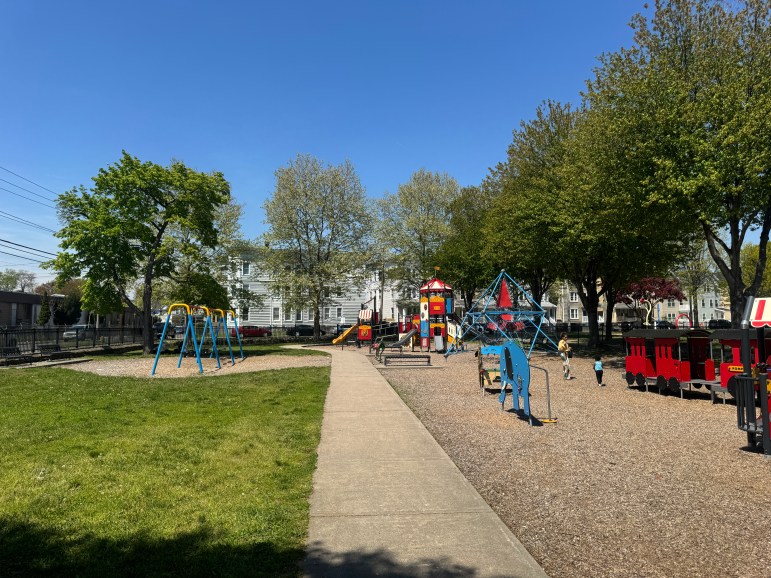
But the report notes that proximity does not equal equity. While many residents can walk to a park, the size, quality and experience of those parks can vary significantly depending on where you live. Bridgeport has about 856 acres of parkland, making up roughly 8% of the city’s land area, but the median park size is just 2.1 acres, about the size of a schoolyard.
Compared to other cities, that means fewer large-destination parks and more small neighborhood spaces. For residents in lower-income neighborhoods, the disparity is even more pronounced. The report found that those communities in Bridgeport have 40% less park space per person than higher-income areas, despite having similar walkable access. Similar patterns exist along racial lines, reflecting broader national trends where communities of color often have less access to large, resource-rich parks, according to Trust for Public Land.
That gap is not just about space. It shapes what people can do in their parks and how long they spend there. While Bridgeport scores relatively well on amenities overall, with features like splash pads and dog parks exceeding national averages, it lags in areas like playgrounds, basketball courts and recreation centers, which are often essential for youth and community programming, according to the report.
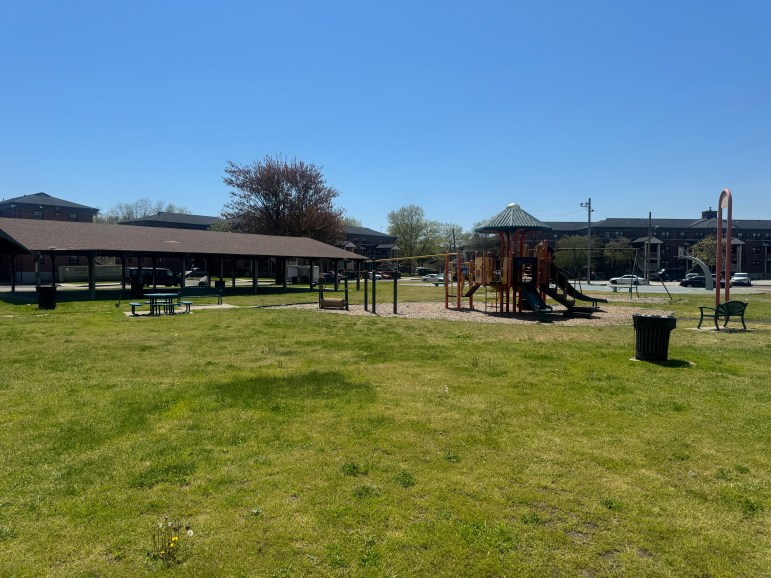
Across the system, assessors repeatedly pointed to missing elements like shade, restrooms and play areas. In some cases, parks scored high for physical condition but low in how appealing they felt. Under the report’s scoring system, parks began with a baseline score based on cleanliness, maintenance and usability of amenities, but could earn bonus points for features considered “like new,” allowing some parks to score above 100%.
One green space, Majestic Park on Main Street in downtown Bridgeport, received a condition score above 100%, meaning its amenities were in excellent physical shape and included newer or exceptionally maintained features. But the park still earned a low community rating because, as one assessor noted, there was little shade and few reasons for residents to spend time there.
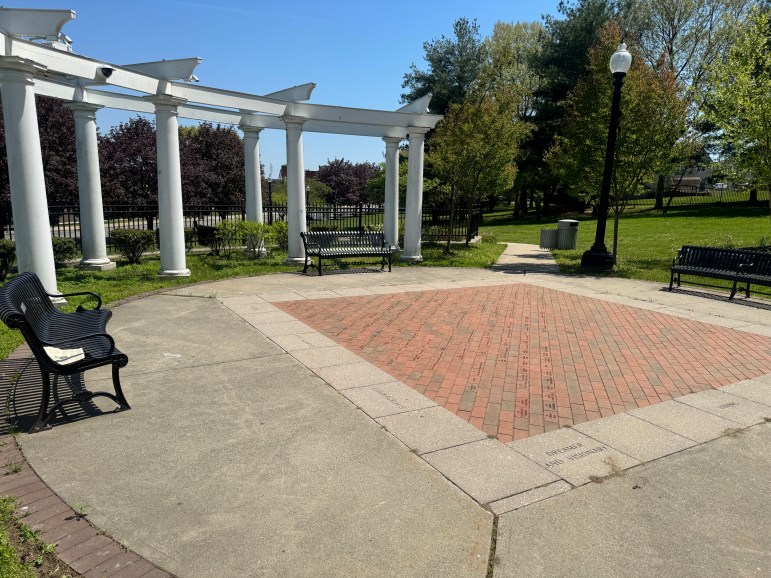
Nearly half of the parks surveyed received a community rating of 6 out of 10 or lower, suggesting that maintenance alone does not determine whether a park feels usable or welcoming.
The biggest factor shaping those gaps is funding.
Bridgeport spends about $54 per resident on parks and recreation each year, far below the national median of $133, according to the report. That gap contributed to an investment score of just 5 out of 100, placing the city among the lowest spending park systems in the country.
Even compared to its Connecticut peers, Bridgeport invests less. While 92% of that funding comes directly from the city, contributions from nonprofits and other partners remain limited. The report also found there is little financial support from additional public agencies, specifically county park systems or regional park districts that exist in many other states and often help fund, operate and maintain local parks and recreational spaces, but do not exist in Connecticut.
Holmes, of the Trust for Public Land, said the challenge is not unique to Bridgeport but reflects a broader pattern. “Across the board, investment into the park system is very low,” she said, pointing to the need for statewide solutions and stronger partnerships.
For many involved in the report, the significance of parks goes beyond recreation or aesthetics. Parks are increasingly viewed as essential infrastructure that supports public health, climate resilience and community stability. Holmes described parks as natural systems that help cities adapt to environmental challenges.
“Parks reduce flooding. They are actual sponges. They soak up stormwater,” Holmes said. “They also make our cities cooler, reducing the ‘feels like’ temperature by as much as 36 degrees.” In a coastal city like Bridgeport, where flooding and extreme heat are growing concerns, that role becomes even more critical.
Ashley Stewart, senior manager of environmental infrastructure outreach at the Connecticut Green Bank, said the organization is now applying its clean energy financing model to parks, land conservation and resilience projects. “This expansion brings our mission to confront climate change into new areas, including parks and recreation, land conservation and resilience,” she said.
The Connecticut Mirror sent requests for comment to the Bridgeport mayor’s office and Park Commission representatives, but they did not respond in time for publication.
Gathering the data
In Bridgeport, the ParkScore report is meant to identify where investment is most needed and to help direct funding toward communities that have historically been underserved.
What sets this effort apart is the way the data was gathered and the role residents played in shaping it. Rather than relying solely on national datasets, the project incorporated a community-driven approach through partnerships with local organizations like PT Partners, which is made up of residents of the PT Barnum Apartments.
Residents and youth teams surveyed more than 60 parks across the city, documenting conditions, counting amenities and sharing their experiences. That process revealed not just what parks look like on paper, but how they feel to the people who use them. Vanessa Liles, of PT Partners, said the work was about more than evaluation. It was about building systems that reflect community needs.
“What can you build? What can you put in its place? What can you make systemic that is healthy for all of us,” she said. “We hope that with this project, we can turn it over to people to have ownership of their neighborhoods, of their parks, and to make it a better place.”

That sense of ownership is central to how the report is intended to be used. The findings identify specific parks and neighborhoods that should be prioritized for investment, including areas like the Hollow, East Side, West Side and Mill Hill, where park access, acreage and amenities are most limited.
The analysis also highlights individual parks in need of rehabilitation, such as West Side II Park on 19 Anthony St, Seabright Park on the southern end of Seabright Avenue in the Black Rock neighborhood and William Barnum Park, also known as Seaside Park ON 1 Barnum Dyke. It also presents opportunities to expand shade, improve health programming and address flooding risks. By combining data on conditions, health outcomes and environmental factors, the report offers a roadmap for how the city can make the most impact with limited resources.
The report also places Bridgeport’s challenges in a broader national context.
According to the report, there is a $60 billion backlog in deferred park maintenance across the country, and many cities have less park space per person than they did a decade ago due to population growth and limited land. In Bridgeport, the report says those pressures are compounded by a history of disinvestment and planning decisions that have shaped where parks are located and how they are developed. The analysis also notes that legacy issues such as redlining and segregation continue to influence access to green space, contributing to disparities that remain visible today.
Despite those challenges, the report points to a clear opportunity.
Bridgeport’s parks are already widely accessible and well-maintained, which suggests that with increased investment, the city could significantly strengthen its system and address long-standing gaps the report said. The recommendations focus on expanding funding, building partnerships with nonprofits and healthcare institutions, improving amenities and exploring new ways to create park space in a largely built-out city, including transforming schoolyards or underutilized land.
For organizations like Trust for Public Land, the path forward depends on collaboration. “People come first. We don’t just build parks, we build them with communities,” said Cally Guasti, CT Senior Program Manager at Trust for Public Land. “By connecting neighbors, organizations and decision-makers, we can co-create spaces that address real challenges and foster a stronger sense of belonging.”
That approach reflects a broader shift toward making parks not just public spaces but shared investments shaped by the people who use them.
For Bridgeport residents, the findings offer both validation and a challenge. The city has a strong foundation, with parks that are close, cared-for and deeply valued. At the same time, the report makes clear that being the Park City is not just about how many parks exist, but about how well they serve every neighborhood. The data provides a clearer picture of where inequities exist and what it will take to address them.
What happens next will depend on how that information is used. The report is intended to guide city planning, inform funding decisions and support community advocacy, giving residents and leaders a shared set of facts to work from.
