



In September 2025, I attended a workshop co-hosted by the Centre for the Study of Democratic Institutions and the Electoral Integrity Project , with support from the Carter Center . The workshop invited “scholars, election officials, civil-society organizations, and digital experts” from around the globe to share research on technology and the future of democracy .
My presentation focused on the use of generative AI tools in elections , the novel capabilities and risks introduced by these systems, and the emerging regulatory responses to AI in the European Union, Canada, and the United States.
Connecticut is right to begin regulating artificial intelligence (AI). But beginning is the key word.
With Senate Bill 5 now signed into law and House Bill 5312 placed on the consent calendar as of May 5, the state legislature has taken meaningful steps toward a more transparent and accountable digital information ecosystem. H.B. 5312, in particular, creates civil remedies for victims of unlawfully disseminated synthetic intimate images, commonly known as “ deepfakes .” These bills start from a sensible premise: when powerful technologies shape people’s work, safety, privacy, and public life, the public deserves transparency, enforceable rights, and institutions capable of preventing and responding to harm.
SB 5 is especially important because it recognizes that AI is already impacting everyday life through hiring processes, workplace evaluations, consumer subscriptions, online companionship, synthetic media, and economic planning. Its disclosure requirements for automated employment systems, protections against algorithmic discrimination , notice requirements for AI companions, and detectable markings for synthetic content are all common-sense AI safety measures.
At the most basic level, people should know when a machine is helping decide whether they get a job, when a chatbot is presenting itself as a human confidant, and when a video, image, or audio clip –especially one designed to influence public opinion — has been artificially generated. These safeguards matter not only for consumer protection, but also for combating misinformation and disinformation, preserving informed public deliberation, and ensuring equal protection in a world where automated systems can reproduce and amplify biases and inequalities at scale.
HB 5312 addresses another novel and urgent issue: the weaponization of AI to create intimate images and videos without consent.
Deepfakes can humiliate, threaten, extort, and traumatize a real person. In 2019, a Deeptrace Labs report found that “deepfake pornography is a phenomenon that exclusively targets and harms women,” with 96% of deepfakes online being nonconsensual depictions of women.
The targets include celebrities, private individuals, and public officials alike. Boston University Law Professor Danielle Keats Citron writes in her book Hate Crimes in Cyberspace (2016), “It is terrifying, embarrassing, demeaning, and silencing… [saying] to individuals that their bodies are not their own.”
By empowering victims and the attorney general to pursue civil remedies against bad actors and platforms that fail to respond, Connecticut is recognizing that digital harm requires more than criminal punishment after the damage is done. It requires tools and remedies that can stop circulation, give victims some measure of agency, and impose liability and meaningful standards of due diligence on developers, platforms, and users.
That is the good news. The harder truth is that there is much more work to be done.
The next phase of AI governance in Connecticut should focus more directly on AI’s foreseeable economic disruptions. AI is not merely another productivity tool. It is a general-purpose technology that can reorganize labor markets, deskill both high- and low-paying professions, intensify workplace automation and surveillance, and shift bargaining power away from workers and toward employers, platforms, and investors. A disclosure that an automated system is being used in hiring is an important measure for protecting civil rights. But it does not answer the deeper question: what happens when the same systems are used to reduce headcount, accelerate workloads, weaken unions, or begin to replace jobs in both the public and private sectors?
Connecticut should build on SB 5 by requiring AI impact assessments in workplaces where algorithmic systems materially affect hiring, firing, promotion, scheduling, wages, benefits, or job classification. The state should also create a standing AI & Labor Commission, with labor, business, civil rights, education, and technology experts at the table. Its job should be to identify where displacement is likely, where reskilling is actually realistic, and where public policy must protect workers from being treated as disposable inputs in someone else’s efficiency experiment. Senate Bill 515 pointed in this direction. But the bill stalled in April.
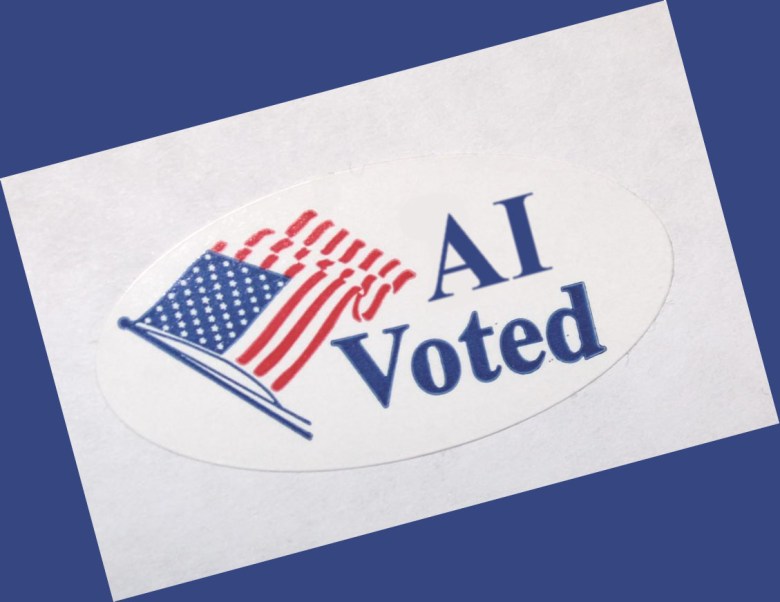
The same is true for elections. In my presentation at the Electoral Integrity Project workshop, “Generative AI’s Implications for Democratic Elections in a World at Risk,” I argued that generative AI threatens democratic politics not only by producing fake content but also by destabilizing the shared conditions under which citizens decide what is real, whom to trust, and how to make informed decisions. AI-generated robocalls, deepfake videos, fake candidate statements, synthetic news clips, and microtargeted disinformation campaigns launched by bad actors can move faster than election officials, journalists, or campaigns can correct the record.
SB 5’s synthetic media transparency provisions point in the right direction, but Connecticut could go further to protect electoral integrity directly. In the previous legislative session, Raised H.B. 6846 was proposed to “prohibit distribution of certain deceptive synthetic media within the ninety-day period preceding an election or primary.” The bill did not budge after making it out of committee, but it provides a solid basis to revisit and expand.
In addition to the proposed temporary prohibition on synthetic media in the weeks leading up to elections, the legislature should allow the State Elections Enforcement Commission ( SEEC ) to set clear, actionable rules for political ads that use AI-generated images, audio, or video. If intended to influence prospective voters, such content should carry clear, front-facing disclosures, not buried disclaimers. Furthermore, campaigns and PACs should be required to keep records of any AI-generated content they distribute. The state could also create a rapid-response electoral integrity protocol ( e.g., Canada’s Critical Election Incident Public Protocol ) so candidates, voters, journalists, and local officials can report suspected deepfakes quickly and receive authoritative guidance before falsehoods harden into belief. And while additional expenditures are always hard to justify, state legislators might consider funding digital literacy initiatives for voters, poll workers, municipal clerks, and local newsrooms.
The central question for the future of democracy is not whether AI will be used. The question is whether its use can be governed by democratic values and aligned with the public interest.
Connecticut has made the right first move. SB 5 and HB 5312 show that the state does not have to wait idly for the federal government or the tech industry to solve problems they have been slow to confront. But these bills should be treated as part of the nascent phase in a broader effort to build a more trustworthy and accountable digital information ecosystem.
On the whole, Connecticut is already one of the leading states on AI safety. If it wants to remain a leader, it must also protect the economy on which its citizens depend and the elections through which they govern themselves.
Robert T.F. Downes is a PhD Candidate in the Department of Political Science at the University of Connecticut, with a specialization in political theory and public law. He is also a Beneficial and Ethical Artificial Intelligence at UConn (BEACON) AI Safety Policy Fellow.