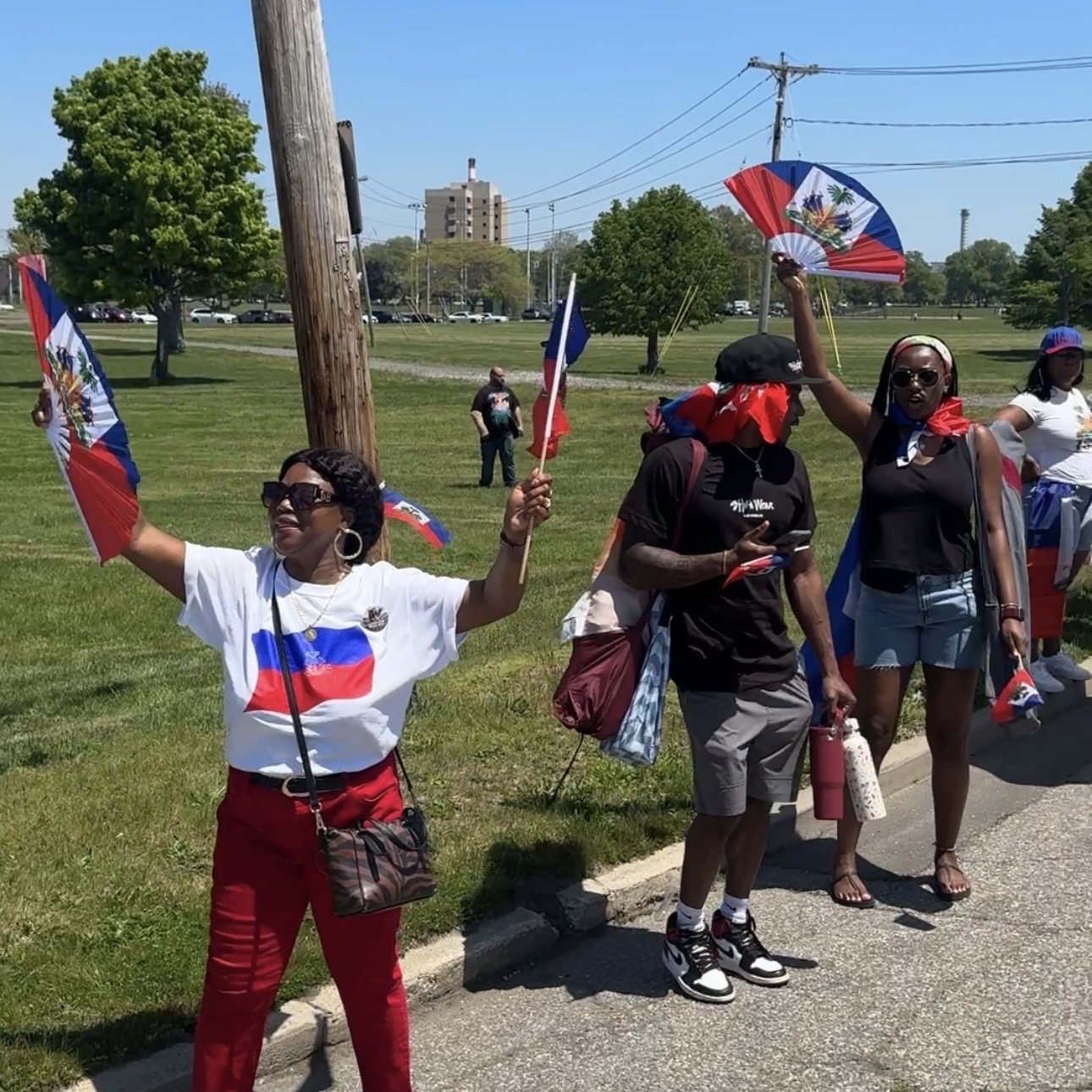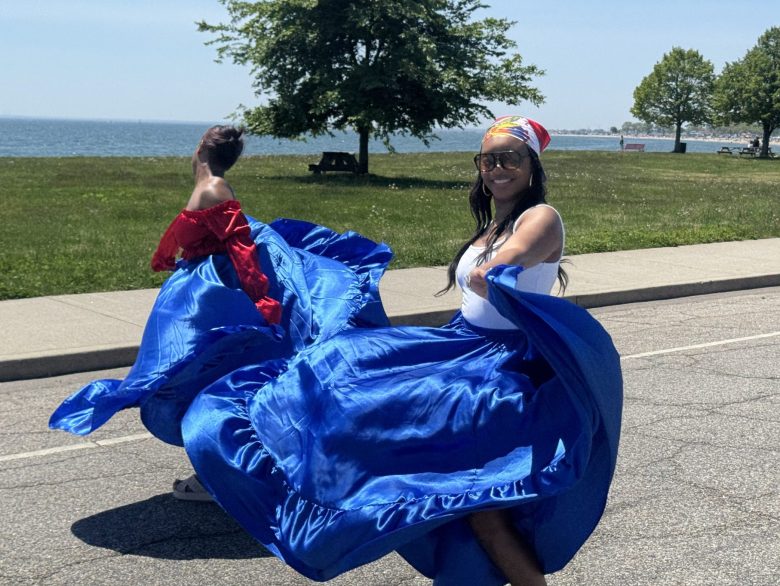
Blue and red Haitian flags waved across Bridgeport on Saturday, as music echoed through Seaside Park, dancers moved through the crowd and families gathered for the city’s first-ever Haitian Flag Day Parade.
For many attendees, the event was more than a celebration. It was recognition.
The inaugural parade, held ahead of National Haitian Flag Day on May 18, brought together residents, organizers, performers, business leaders and community groups for a day centered on Haitian culture, history and pride. The event featured traditional music, dancing, food and a parade, with hundreds gathered along the waterfront.

“This is the first, and I think it’s the beginning of a great tradition,” Bridgeport Mayor Joe Ganim said while looking over the crowds. “I’m happy and honored to be a part of it.”
National Haitian Flag Day commemorates the creation of the Haitian flag in 1803 during the Haitian Revolution, which led to Haiti becoming the first free Black republic and the first nation born from a successful slave uprising. Across the Haitian diaspora, communities celebrate the holiday every May.
Organizers said bringing the public celebration to Bridgeport was years in the making.
“Honestly, something that we’ve been trying to do for years,” said organizer Danny Senecal. “We haven’t really known exactly where to go, how to start it.”
Senecal said organizers wanted to move beyond the traditional Haitian Flag Day parties typically held at night and create something visible for the entire community.
“We wanted to be the first one to actually do a festival,” he said. “I want everyone to come and experience our culture, and how we were raised and where we come from.”
For many at the parade, the event represented visibility for a community they say is often overlooked despite having a strong presence in Bridgeport.
“I feel like we’re not as celebrated here, we’re not as recognized,” said Larissa Joseph, a Haitian participant marching with 100GirlsLeading Inc., a nonprofit organization that provides mentorship and leadership programs for underserved girls ages 9 to 18. “So it’s really cool to just have something just for us for once.”
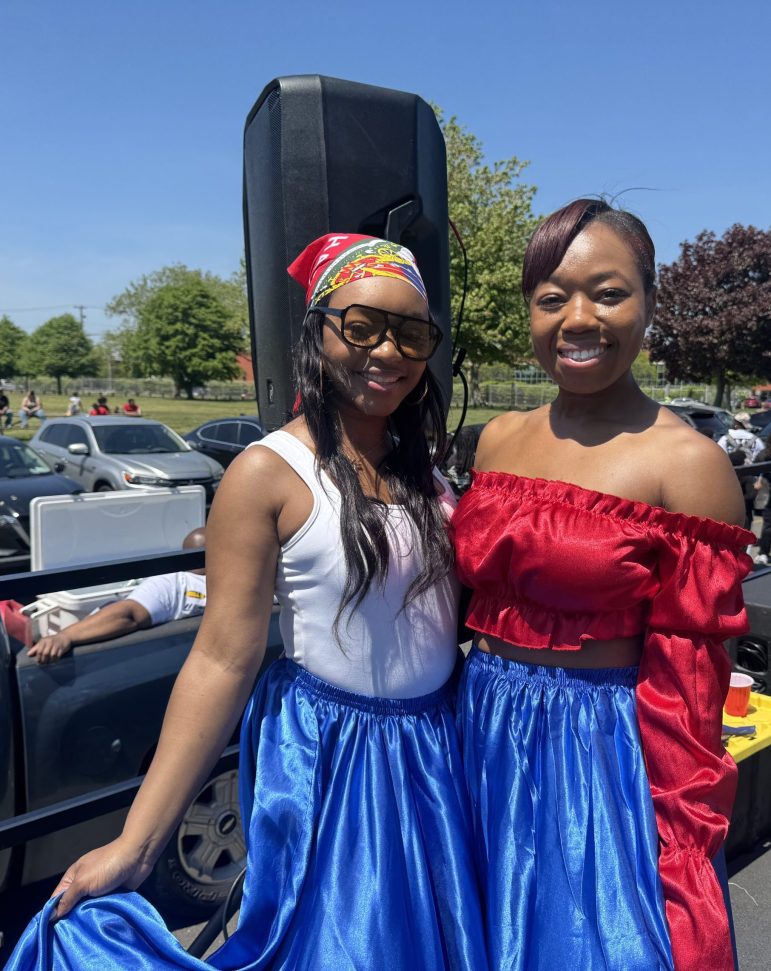
Throughout the afternoon, crowds danced behind music trucks while children waved Haitian flags and families gathered under tents serving traditional food. Performers in colorful attire showcased Haitian dances while community members stopped to take photos and cheer them on.
Kimberly Charles, one of the dancers participating in the parade, said the event reflected Haitian resilience and unity.

“It shows our resilience,” Charles said. “And how it brings us all together, just to show the world like we’re still here.”
Jacqueline St. Louis, another dancer, said she hoped people left the event with a deeper understanding of Haitian culture and community.
“Community is important, and it’s beautiful,” St. Louis said. “No matter what we’ve gone through, we still embrace our pain and make it into culture.”
Several attendees said the celebration also challenged stereotypes often associated with Haiti and Haitian people.
“I want them to learn that what they see out there is not us,” Larissa Joseph said. “We’re really nice people… we’re more than what people see.”
For others, the parade was about creating something lasting for future generations.
“You know, we got kids,” organizer Max Lafontant said. “Now my kids got something to think about and understand how big this is. This is going to be big generationally, and we want to keep it going.”
Organizers said they also hoped the parade would give people outside the Haitian community an opportunity to learn more about Haiti’s culture and history.
“People that don’t know about Haiti can actually get to understand the culture, understand the history as well,” organizer Mitchell Noel said. “It gives a little lesson.”
Askar Morisseau, director of grants and development at Southwest Community Health Center, said the event filled a gap she had long noticed in Connecticut.
“They have it in New Jersey, Miami, Boston,” Morisseau said. “Bridgeport and Connecticut needs it.”
She described the celebration as “something positive, uplifting, and bringing people together.”
That sense of togetherness was visible throughout the day as Haitians and residents from other Caribbean communities danced side-by-side through the park.
Organizer Walex Bolivar said the goal was to create the kind of energy often associated with larger Haitian celebrations in cities like Miami or Brooklyn, but right in Bridgeport.
“You don’t got to spend your money and go all the way to Miami,” Bolivar said with a laugh. “We bring Miami here.”
As the music continued into the evening and crowds filled the park with chants, dancing and Haitian flags, many attendees said they hoped the parade would become an annual tradition in the city.
For a community celebrating its culture publicly on this scale for the first time in Bridgeport, Sunday felt less like a one-day event and more like the beginning of something larger.