



I snap on my gloves and silence my work phone, taking a breath and mentally preparing for another initial palliative care consult. Another family carrying the impossible weight of loving a medically complex child in a world that makes them fight for every ounce of support.
But before I knock, I hear laughter and celebration.
Inside the room, a mother is crying happy tears into her husband’s shoulder. A teenage girl is grinning, vocalizing, and clapping in bed while her adult sisters crowd around her. Everyone is talking all at once — hugging, crying, laughing again.
The mother looks up at me through tears, “We just got the call. After almost five years, we finally got off the waitlist for the waiver.” At the time, I didn’t yet understand the significance of this moment, but the relief and joy in the room were palpable.
For years, this family had to fight for everything. They fought to keep their jobs while juggling appointments, therapies, hospitalizations, and sleepless nights. They fought insurance companies for wheelchairs and feeding supplies. Every piece of equipment in their home represented paperwork, persistence, appeals, and hours spent on hold.
And after five years, one phone call finally gave them access to the support they should never have had to wait for in the first place.
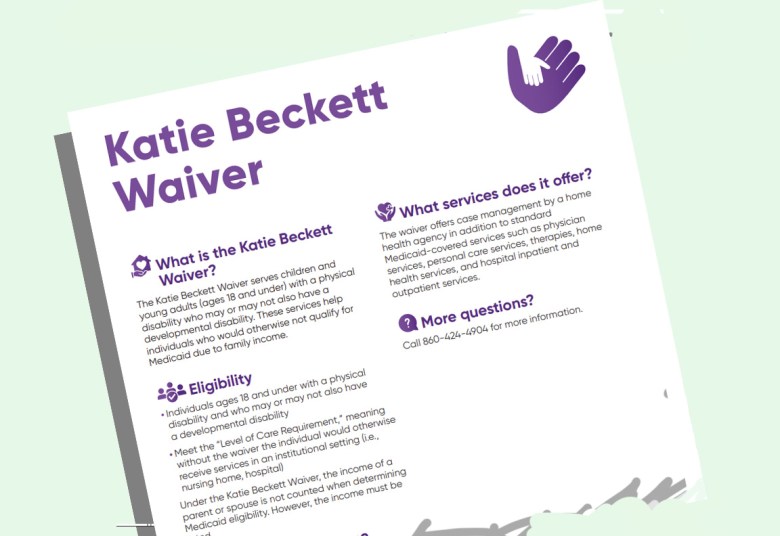
In Connecticut, children with medical complexity face a five-year waitlist to access essential care at home. Connecticut lawmakers can fix this healthcare gap by eliminating the waitlist for the Katie Beckett waiver.
The Connecticut Katie Beckett waiver was originally designed to help families access comprehensive home care, like physical therapy and nursing, when their private insurance doesn’t cover these essential services. While the intention of this waiver is altruistic, the reality is that children with life-limiting conditions wait a lifetime on the waitlist, unable to access care. This is because, unlike the rest of New England, Connecticut is the only state with a cap on the number of qualified individuals accepted into the waiver program.
Legislatures attempted to improve this system in May of 2025, passing a bill requiring the Department of Social Services (DSS) to develop a five-year plan to eliminate the waiting list. A working group of state representatives, physicians, and parents of terminally ill children also published a report last year, emphasizing the need for DSS to identify policies and funds needed to eliminate the waiting list. Since then, little progress has been made in removing this barrier, leaving over 300 Connecticut families struggling without support.
For parents already navigating relentless uncertainty, the waiting itself becomes another burden. As one Connecticut parent of a medically complex child describes it: “There is so much fight in having a medically complex child. What people may not realize is that there is an equal amount of waiting. You wait for appointments, medication approvals, specialists, and insurance companies to call you back. The waiting never ends.”
Besides its ethical implications, time spent on the waitlist decreases parental contribution to the workforce and costs the state money. Other states with similar programs have proven that expanding home care is a cost-saving endeavor. Colorado’s “Children with Life-Limiting Illness” waiver, which has no cap on enrollment, saves approximately $15,000 to $20,000 per enrolled child each year, primarily by reducing emergency department visits and avoidable inpatient stays. Some argue that these future savings don’t validate the up-front cost of eliminating the waitlist. Connecticut researchers would disagree. The nonpartisan Office of Legislative Research determined that eliminating the waitlist would cost about $8 million. Connecticut’s budget for FY 26 is nearly $27 billion. By contributing 0.03% of the next fiscal budget, the waitlist would dissolve instantaneously.
The question is not whether Connecticut can afford to eliminate the waitlist. It is whether we are willing to continue asking families to bear the cost instead. As one parent wrote, “To take this burden of waiting off of those already fighting a fight they never wanted to enter would be life-changing.”
Connecticut cannot wait any longer to address this pressing need. Families should not have to wait years for that moment I witnessed in that hospital room – that moment of relief and joy at being given the support they’ve deserved all along.
Kristen Campbell is a Pediatric Palliative Care APRN in New Haven. Teresa Elmore MD and Caitlin Thornbill contributed to this commentary,