



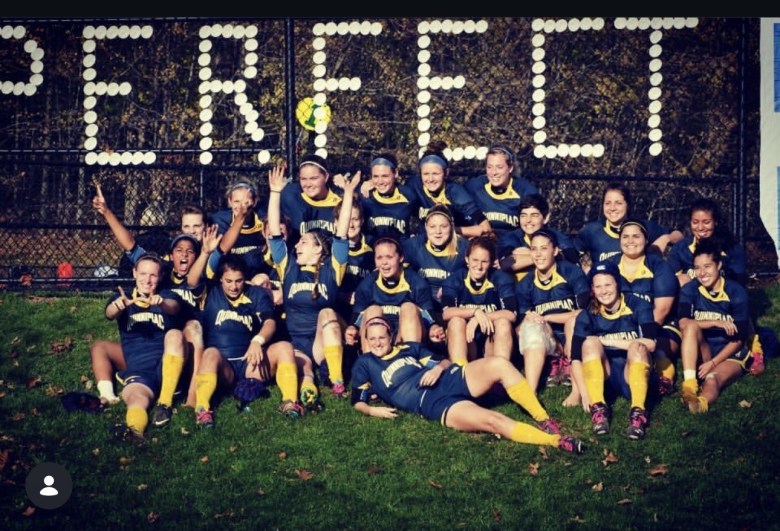
On April 12, the three-time national champion Quinnipiac women’s rugby team hosted a sevens tournament, reuniting QU head coach Becky Carlson with her former assistant coach, Michelle Reed (now the head coach at Sacred Heart), as well as current Army West Point head coach Jenn Salomon-Clayton, who played for Carlson from 2011-2015. With a third-place finish, Quinnipiac ended its spring season with high hopes for the future.
Two days later, the players were hastily called into a meeting with school administrators who read a short statement announcing the termination of the women’s varsity rugby program, refusing to take questions, leaving 27 female athletes sobbing and even throwing up in the hallway, according to freshman Emily Hartman in Front Office Sports.
Having produced Olympic Bronze Medalist Ilona Maher, coach Carlson has attracted many top athletes from across the country who aspire to play at the international level. But since the NIRA transfer portal closed on April 1, it has been difficult for these elite female rugby players to find a new home for the fall.
The decision to terminate the program (which was added as a varsity sport at Quinnipiac to help remediate a previous Title IX violation) and replace it with a long-distance men’s track team, consisting primarily of existing varsity athletes, appears to be legally questionable.
On June 5, 23 members of the Quinnipiac women’s rugby team filed a federal lawsuit demanding the program’s immediate reinstatement, citing unequal treatment based on sex and retaliation against coach Carlson for raising Title IX concerns in the past.
As a long-time member of the Connecticut rugby community and the former head coach of Eastern Connecticut State University’s women’s rugby team, I have always looked up to what coach Carlson has done for that program, but I had no idea of the disadvantages they have faced for the past 15 years.
The laundry list of mistreatment is notable, between a school president not acknowledging a national championship, inadequate facilities (they practiced in a parking lot for an entire season), no team-branded merchandise offered to the student body, and disproportionate press coverage relative to other QU athletics teams, it is easy to ascertain that the administration never wanted a varsity women’s rugby program and as soon as they felt they had political coverage a move was made to terminate the school’s most successful athletics team.
Former Quinnipiac flanker Marie McCarthy told me, “The University’s culture has long felt unsupportive of women who speak out. This Title IX lawsuit is a necessary reckoning for an administration that chose to eliminate a cost-efficient, championship legacy. This decision follows a highly visible pattern of Quinnipiac’s extensive history of Title IX litigation, including its recent settlement with the former women’s lacrosse coach. By taking this fight to court, these athletes are rightfully forcing the transparency and accountability that leadership has resisted.”
Last year, the Trump administration revoked Biden-era Title IX guidance focused on gender equality and deliberately downsized Title IX enforcement at the Office for Civil Rights, reducing accountability for private schools like Quinnipiac.
But rugby takes courage, and these women are prepared to fight for their team.
Tyler Kania lives in Columbia.